


Acts 20 finds Paul on the move, setting his face toward Jerusalem, fully aware that suffering and arrest await him there. What strikes us first, though, is not his destination but his company. Paul does not travel alone. He is surrounded by companions drawn from the very churches he had planted along his missionary journeys — a reminder that Paul’s apostolate was never a solo performance but one carried out in community, alongside fellow labourers he himself had formed. Even under the shadow of what lay ahead in Jerusalem, Paul kept the young Church’s growing custom of gathering for the Eucharist wherever he went.
That custom gives us one of the most vivid scenes in all of Acts. At Troas, the disciples gathered upstairs on the first day of the week, lamps burning, and Paul — knowing he would be leaving the next day — preached long into the night. A young man named Eutychus, seated in the window, was overcome by sleep and fell three storeys to the ground below. He was picked up dead. Paul went down, bent over him, took him in his arms, and restored him to life. Then, remarkably, Paul went back upstairs, broke bread, and continued preaching before a community now transformed from grief to joy.
Luke is a careful storyteller, and he loves to let his Gospel and Acts echo one another. An upper room, the first day of the week, the breaking of bread: this scene is built to remind us of the resurrection of Jesus himself. Even a death in the middle of the gathering could not stop the word from being preached or the bread from being broken — the two resumed as soon as they possibly could. It is worth pausing on that. When we come to Mass, we too receive both the word and the Bread of Life. Both are life-giving in themselves. But how much life we actually draw from them depends, as it did for the disciples at Troas, on the openness and disposition of our own hearts.
This passage is also one of the earliest pieces of evidence that the first Christians had already begun to set aside Sunday, rather than the Jewish Sabbath of Saturday, as their day of worship — because Sunday is both the day of the Resurrection and the day of Pentecost. Interestingly, the older Jewish practice of beginning a feast the evening before never disappeared; it lives on in the Church’s own liturgical life, and remains especially vivid in the Eastern Churches, where the liturgical day traditionally begins around four in the afternoon. In many Eastern parishes, the faithful can choose between the Divine Liturgy on Sunday morning or the Vigil the evening before, sometimes called an all-night vigil. In city parishes it is rarely literally all-night, though in some monasteries it still is; typically it weaves together elements of Vespers, Compline, and Matins in a fuller, more elaborate form.
That same instinct — beginning the feast the evening before — is also behind something closer to home for Latin-rite Catholics: the Saturday evening Mass. In earlier generations, only a Sunday morning Mass was offered; Father Dolindo Ruotolo’s advocacy helped bring the vigil Mass into wider practice. It is no coincidence that the Church’s Liturgy of the Hours already provides First Evening Prayer for Sunday to be prayed on Saturday evening. The rhythm of “beginning the feast early” runs deep in Christian worship, East and West alike.
The chapter closes with one of the most moving scenes in Acts: Paul’s farewell to the elders of Ephesus, whom he summoned to meet him at Miletus. This is not a speech to unbelievers, nor a defence before accusers, as Paul will later give. It is a father’s farewell to his own spiritual sons. Rather than laying out doctrine, Paul looks back on how he actually lived among them for three years. He took advantage of no one. He sought no comfort for himself. He worked with his own hands so as not to be a burden to anyone. In short, he taught not only by word but by example.
Knowing that after his departure “savage wolves” would come in among the flock, Paul entrusts both the elders and their people to God, commending them to the word of his grace. He even hands on a saying of the Lord Jesus not recorded anywhere in the Gospels: “It is more blessed to give than to receive” — a quiet reminder that not everything Jesus said made it into the written Gospels; some sayings were preserved simply by word of mouth, passed on within the community. At the end, the elders kneel with Paul in prayer, and all of them weep and embrace him, grieving above all that they will never see his face again.
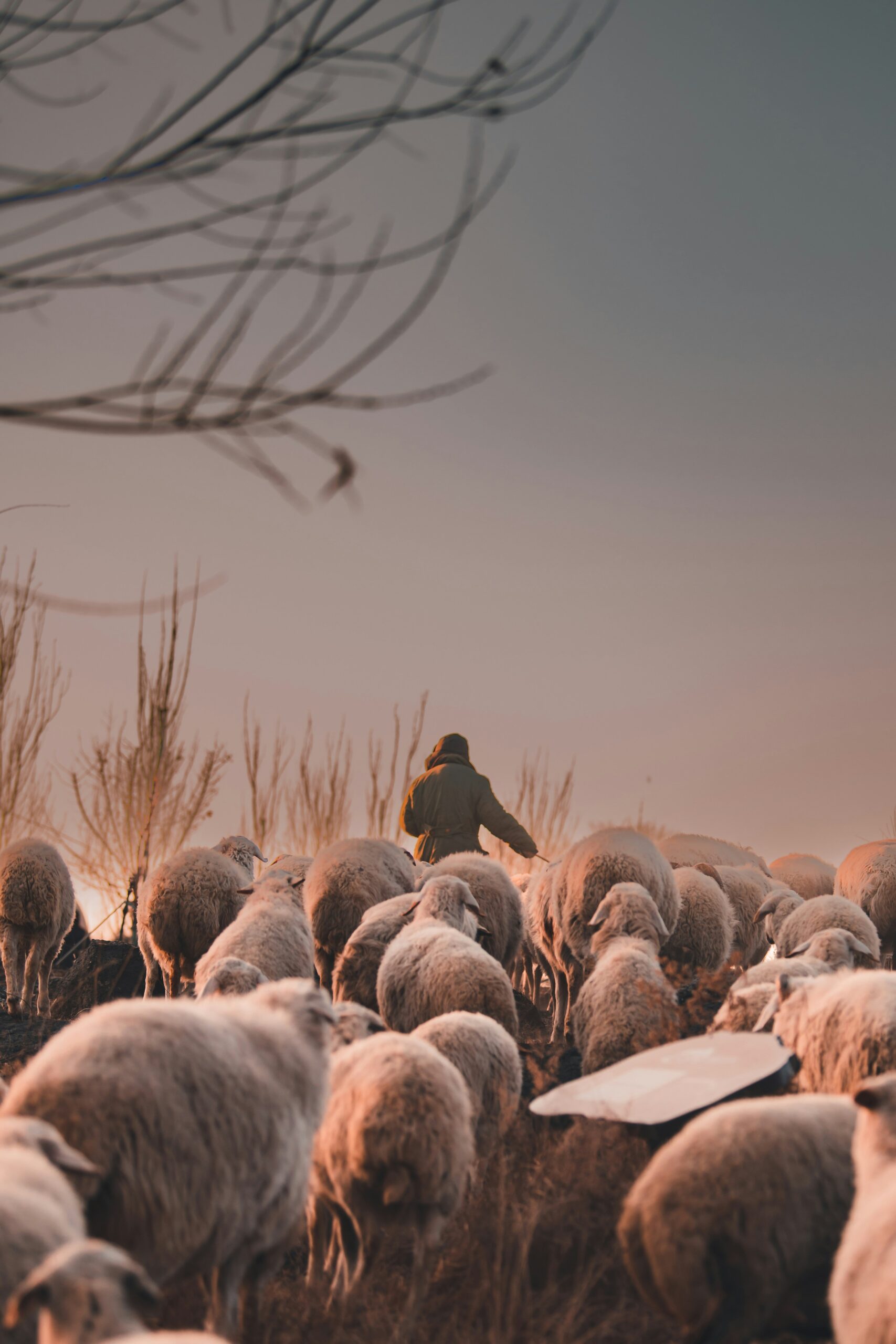
Taken together, the chapter gives us a portrait of Paul as shepherd: a shepherd who works alongside others rather than alone, for whom the Eucharist remains central even amid a young man’s death and restoration to life, and who teaches, above all, by example. It is the same selfless pattern we see at length in his letters, especially to the Corinthians — a pastor who sought, always, the good of his people over any advantage to himself.







