


It is customary when reviewing a film to mention any caveats that serve to warn potential viewers of concerns about the film, even when it has much to recommend it.
In the case of Judas and the Black Messiah, I feel obliged to offer so many warnings that it’s important to first make it abundantly clear that the film has a great to deal to recommend it and is certainly worth viewing.
Nevertheless, the film is decidedly problematic. The first difficulty with the film is that it assumes a knowledge of the historical background of the story that many (particularly Canadians) may not have. Thus, it assumes that one knows that William O’Neal (the Judas of the film’s title) in the late 1960s was instrumental in infiltrating on behalf of the FBI the Chicago branch of the Black Panther movement.
The case culminated in O’Neal assisting in organizing a raid on the home of Black Panther leader Fred Hampton – a raid that is generally believed to have been nothing less than calculated murder by the authorities involved.
The difficulties, however, start from the opening of the film with an unexplained clip from an interview of O’Neal for the 1980s Eyes on the Prize television series tracing the history of the U.S. civil rights movement.
After this somewhat cryptic opening, with little to help the viewer understand who is who, the film plunges the viewer into a generally factual account of how O’Neal, a petty crook, was recruited by an FBI agent to act as an informant in the Illinois chapter of the Black Panthers.
In return for non-prosecution of a charge of car theft, O’Neal was to gain knowledge of supposed criminal activity by the 21-year-old charismatic Hampton, the “Messiah” of the title.
This, of course, leads to the second problem with the film. Christians may be able to accept O’Neal as a Judas-like character who betrays his leader to avoid arrest and for material gain. Some may also see a parallel between the ruthless and racist J. Edgard Hoover and the Jewish leaders who attempted to end Christ’s ministry.
However, to see Hampton as a Christ figure may well seem decidedly irreverent. Certainly Hampton was a persuasive orator, never used or sold drugs, did admirable work in the Chicago community to provide breakfast and clothing for poor children, and attempted a social revolution among underprivileged people of various ethnic backgrounds, forming alliances with other racially founded gangs – the so-called Rainbow Alliance. But he was acting not from a Christian perspective but rather an essentially Communist viewpoint.
He also despised the police who, with some justification, he constantly derided. He had a bodyguard and a plentiful stock of guns. This certainly does not sound like Jesus, who ultimately took no political stance, even in a country occupied by a foreign power.
Even if one manages to embrace all this, a further problem remains in that the characters logically and authentically speak the language of their culture. Not being familiar with Ebonics, I quickly found the solution to my lack of understanding of the dialogue by turning on the closed captions, though the constant use of objectionable language did get decidedly annoying.
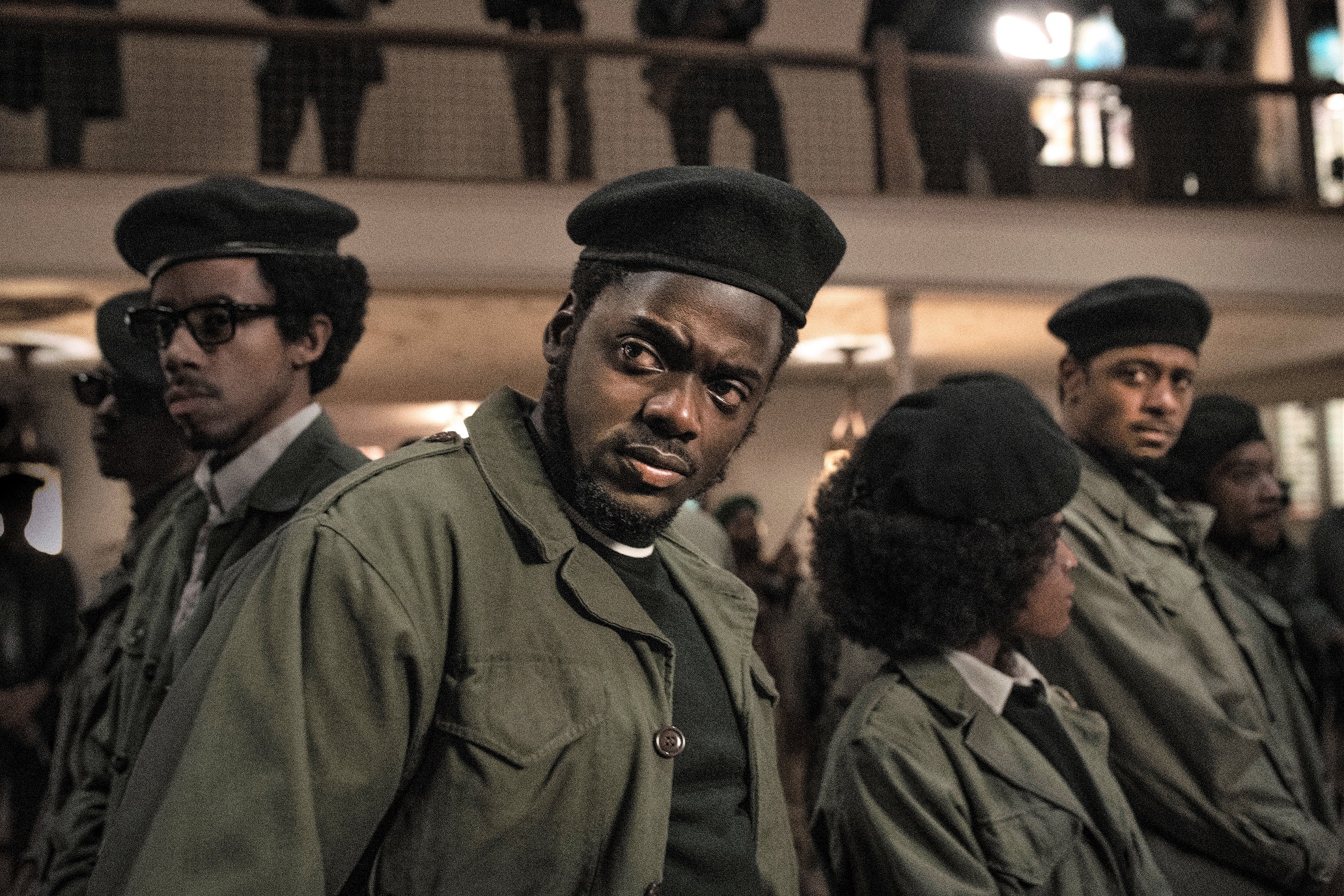
Despite the difficulties, I was able to watch and appreciate Judas and the Black Messiah as a gritty, intense, timely, and gripping narrative, tautly directed by Shaka King and superbly acted by a talented cast. In fact, I watched the film twice one day in appreciation of its cinematically brilliant production.
Daniel Kaluuya’s performance as Hampton certainly justifies the widespread acclaim that it received, though he is clearly far older looking than was the real Hampton.
As a portrait of the Black Panther movement, the film may well provide a balance to the decidedly negative and to a large extent somewhat unjustified view of the movement as being intent only on violence.
Indeed, perhaps the greatest aspect of the film is that it may well cause viewers to do some research into the history of the entire history of black Americans’ struggle for civil rights. In these days of the Black Lives Matter movement, that is no small achievement.







