

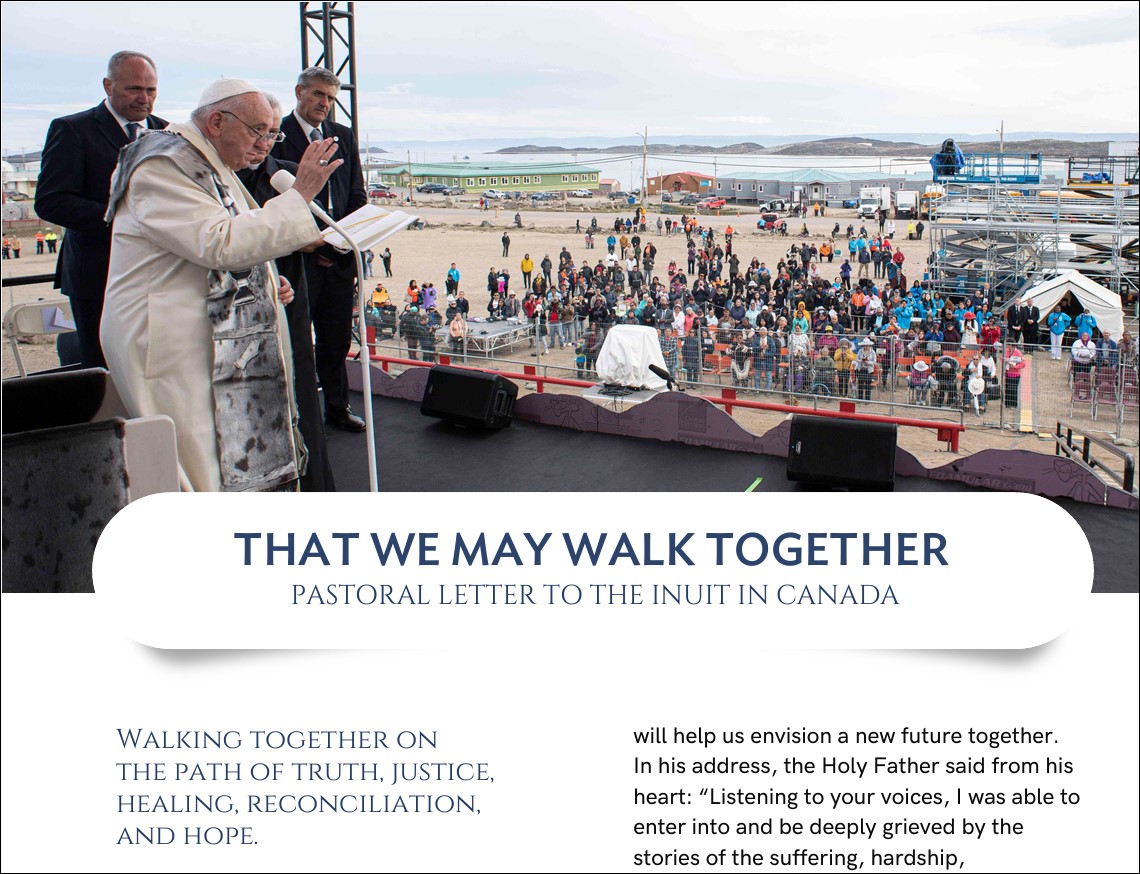

I appreciate the opportunity to review and reflect upon the Canadian bishops’ pastoral letters That We May Walk Together and the commitments made in the pledge to walk together into the new era of reconciliation and healing for Indigenous people and Catholics alike.
There are several ways I could review these letters: in my capacity as CISVA interim education consultant, as an elected community leader, as a collective community tribal chief, and as a professional.
At first reading, I am immediately overcome by emotion and reminded of my late mother and grandparents – survivors. I believe it is most meaningful to look through the lens of my teachings, teachings I received from the warriors in my family and truly understanding why they fought for me before they knew me. The belief in a better tomorrow, for their legacy and all next generations of Indigenous people. This hope for a stronger future is what resonates in the commitments outlined.
I appreciate the acknowledgement that certainly the approach has not been perfect. In my opinion and honouring the voice of my late family, we are not seeking perfection, we are seeking progress, appreciation, and respect for our shared dark history.
Together, in this space of humility, we can shift our energies from a concentration on what has not worked, the magnitude of work in front of us, and the unknown and fear of making additional mistakes, to the relationships we could build while remaining grounded in our aligned faith and culture.
While the UN Declaration on the Rights of Indigenous Peoples (UNDRIP) is mentioned, there is an absence of reference to the Truth and Reconciliation Calls to Action that point in the “not without us” direction necessary to realize the history of attempted genocide and colonization of Indigenous people.
I see thoughtful and deliberate commitments that can be achieved while walking together in partnership and I feel hope when I envision our collective next steps.
I raise my hands to the bishops for the humility expressed in the risks that they are taking in the letters, in the commitments, and the achievable action of reconciliation.
With honour to all of those who survived to bring us to this new era of truth-seeking, listening, healing, and reconciliation, the letters and commitments outlined provide us with the foundation in which we can all do just that.
Alexis Grace is a CISVA educational consultant and a Seabird Island Band councillor.







