


Corpus Christi, Year A
First Reading: Dt 8:2-3, 14-16
Second Reading: 1 Cor 10:16-17
Gospel Reading: Jn 6:51-59
This Sunday we celebrate Corpus Christi: the true body and blood of Christ, together with his soul and divinity, under the appearances of bread and wine in the sacrament of the Eucharist.
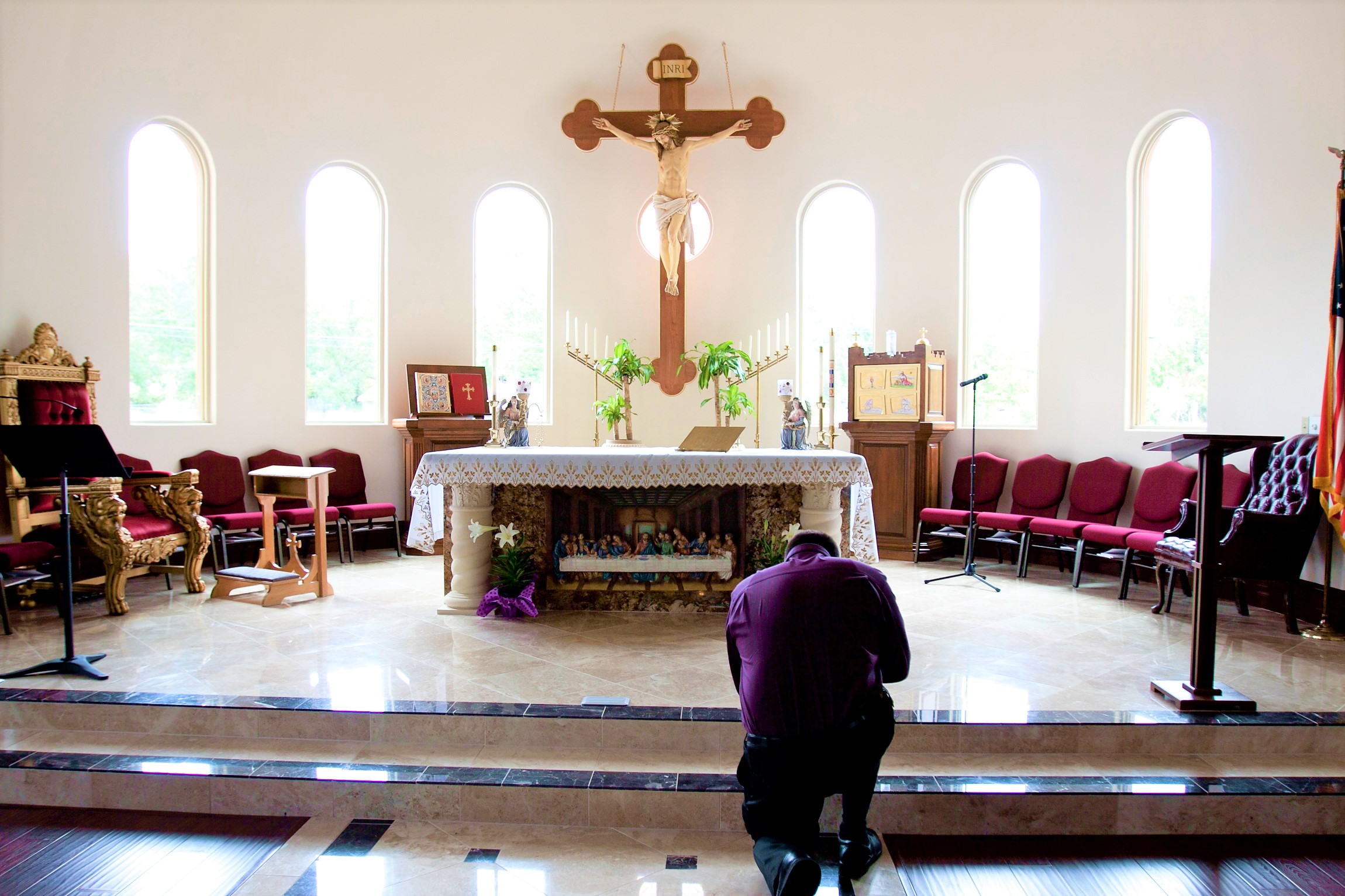
Before the consecration, what is on the altar is a piece of bread. I could toss it out, stamp on it, or give it to the birds. I certainly would not adore it. After the consecration, what still looks like bread is not; it is Jesus, the second Person of the Holy Trinity, “my Lord and my God.”
If I eat an ordinary piece of bread – something inferior to me – my body absorbs it and it becomes part of me. If it could talk, it might say, “I am taking on human life.” However, if I eat Christ’s body, I consume something infinitely superior to me. It does not become part of me: rather, I become a member of it; I take on the life of God.
As “I live because of the Father, so whoever eats me will live because of me,” Christ said. He promised that those who eat him “will live forever,” for he will “raise them up on the last day.”
Once, God fed the Jews with manna. Now he feeds us with his Son’s body and blood. Our response should be love and gratitude. The very word “Eucharist” means “thanksgiving.”
Always, God has compared his love for Israel and the Church to the love of a bridegroom for his bride. How do loving husbands and wives treat each other?
We have all seen young lovers. We have heard them on the phone: “Good-bye, darling,” “Good-bye, darling,” “Good-bye,” “Good-bye,” neither wanting to hang up first.
That should be our response to the Eucharist. Christ never wants to leave us; he is permanently on our altars. How can we rush out of church right after Communion?
We have all seen mature husbands and wives. Even if our own marriages have been lacking, we all know what we would like them to be: spouses living together, wanting to be together, working for each other, each feeling incomplete when they are apart, always conscious of what Pope St. John Paul II called the “unity of the two.”
In Fiddler on the Roof, Tevye asks his wife Golde, “Do you love me?”
She answers, “For 25 years I’ve washed your clothes, cooked your meals, cleaned your house, given you children, milked the cow … If that’s not love, what is?”
The question is not “Are you in love with me?” but “Are you committed to me as my spouse?” Loving husbands and wives may not remain “in love,” but they continue the acts which, freely performed, constitute the daily living out of their commitment.
Christ said, “If you love me, keep my commandments.” The first and greatest is to love the Lord our God with our whole heart, mind, and soul.
Feelings are not that important. We cannot control them. When God sends us feelings of love for him, we should thank him for them, but we must not let our love die when the feelings go, as they will.
We must keep doing the things we know he wants: spending time with him in the Eucharist, telling him we love him and how much we appreciate his gift, asking him for help in the things that trouble us, even just sitting thinking about him, resting in his presence. We should come early for Mass and linger afterward.
In consuming Christ’s sacramental body, we become members of his mystical body, all directed by the same head. Accordingly, the second commandment is to love our neighbours. They, too, are members of Christ’s mystical body, just as our hands and feet are members of our own body.
“The man who loves me is the man who keeps my commandments,” Christ said: love God, and love your neighbour.







