


In a recent column, I suggested that much good may come out of the crisis precipitated by the COVID-19 epidemic. Many of us will have gained respect for “essential workers” and the job they do, often for low compensation; many of us will have learned how to make better use of free time; and many young people may have learned new skills and possibilities as they had to explore ways to cope with isolation and online experiences. However, perhaps the most important aspect of the imposed restrictions is that they may have caused many of us to reassess the way we have become accustomed to living our lives.
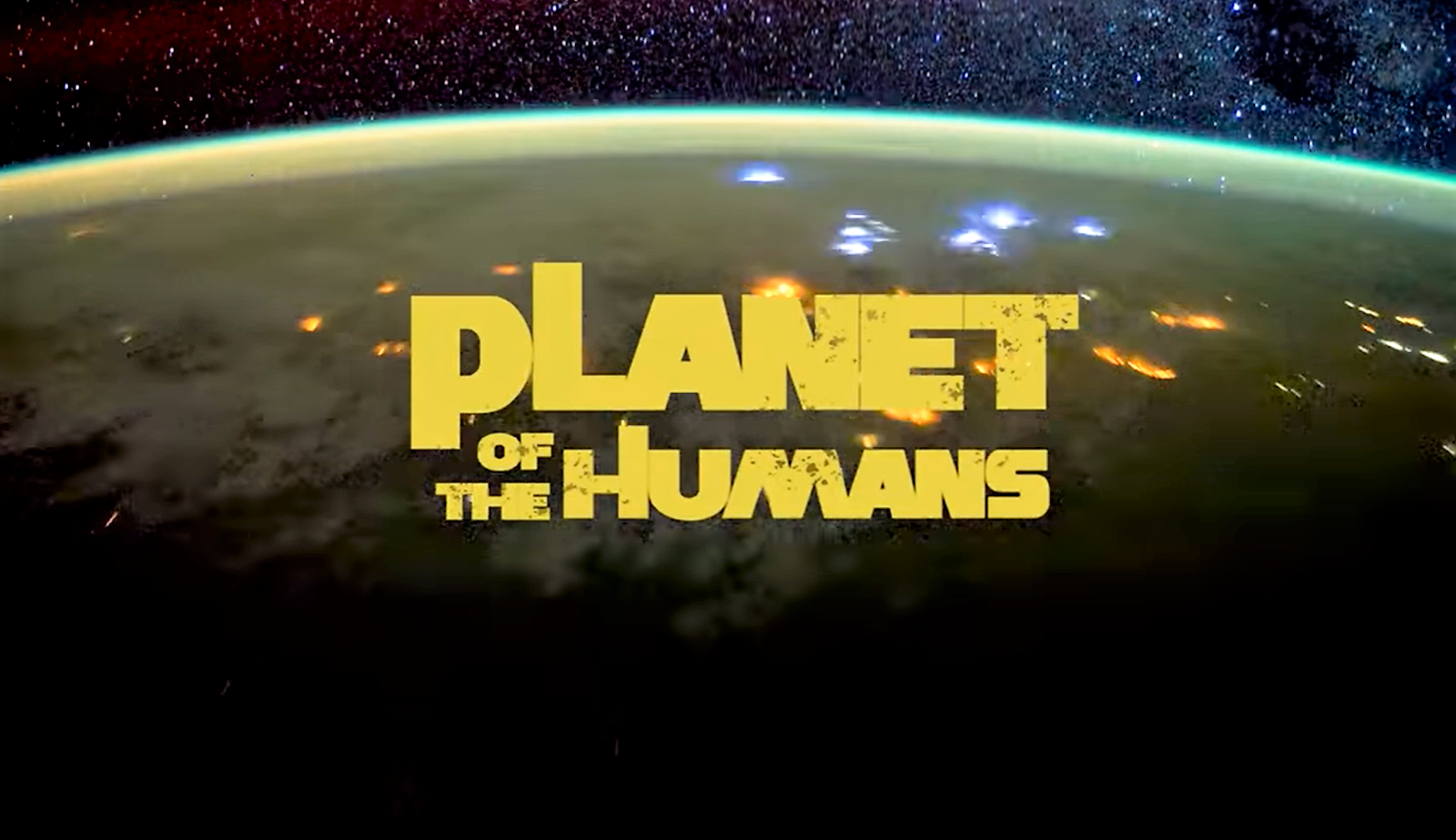
In case people needed to be prompted to engage in this reassessment, they might well watch the documentary Planet of the Humans, easily accessible on YouTube. However, first a word of warning. One is accustomed to any documentary associated with its producer, Michael Moore, such as Roger and Me and Bowling for Columbine, not only to deal with a serious topic, but to do so with considerable humour.
Such is not the case with this new production. Instead, it mounts a grimly serious (and overwhelmingly depressing) attack on much of what has been suggested as ways to combat global warming. Windmills, electric cars, and solar panels are all depicted as ultimately using as much of the earth’s resources as devices powered by fossil fuels.
To my shame, not knowing enough about the science behind such a view, I can only note that the film has come in for a huge amount of criticism from people who seem to be well-informed in regard to the issue. Clearly, one of the advantages that may arise from seeing the film is that it may prompt viewers (including me) to explore the matter further.
Despite charges against it of inaccuracy, the film does make one statement that is clearly valid. Its overriding point is that humans cannot reasonably continue to put an infinitely growing demand on the finite resources of the earth. As the population of the planet continues to grow and as people’s expectations continue to rise, this seems to be a timely warning – especially in the light of the pandemic experience.
While, sadly, many have suffered economically during the last few weeks, others – those with accumulated savings, those who have been able to keep their jobs by working from home or because they work in essential industries, and those who have a fixed income – have been forced to engage in a limited lifestyle. No restaurants, no beauty salons, no outings to sports events or movies, and no shopping expeditions to the mall.
Not spending money on such activities, several of my friends have stated that they have actually saved money over the last few weeks. Their wine bill may have increased, their grocery bill may be bigger, but their cost of living has gone down. In all this, they have been able to eat, keep warm, and survive in physical comfort.
The lesson is obvious: many, many people are spending money on things that can only be described as inessential to a decent way of life. While the life of social isolation is hardly desirable, it has become clear that life without restrictions can be lived without having recourse to the multitude of toys and diversions which have become for many so much a part of normalcy.
When I was young, most families lived in modest homes with only one wage earner. Things have changed behind the white picket fence. In many families, there are now two wage earners – in fact, modern living standards make this essential for those families. The average home in Vancouver is now almost twice as large as in the Fifties. While houses have become bigger, families have become smaller. Whereas families once aspired to owning one modest sedan, now each member of the household over 16 aspires to own a car – and car sizes have increased. In other words, we are generally consuming more and more, and regarding it as our right.
In fact, many people live which by the standards of yesterday can only be called luxurious, made possible only because many of those “essential workers” – people cleaning in hospitals and hotels, working in care homes, packing groceries, etc. – are paid low wages and often have to work two jobs.
Meanwhile big business constantly tells us we need and deserve all the wonders of this age of mass production and mass consumption. The result resembles a large-scale version of the 19th-century social structure in which a small number of people lived in luxury made possible by masses living in poverty. At the same time, that lifestyle is placing an enormous strain on the resources of planet earth.
It’s been noted how restricted lifestyles in the last couple of months have had an immediate and beneficial impact on the environment. True, it has had an enormous negative impact on the economy, but that economy is built on insatiable demand for more and more things in our lives – things which were once regarded as the stuff of dreams and which today we take for necessities and which we have been unable to access in these days of social isolation. Because so many are no longer able to get to those “necessities”, the air and the water are cleaner and animals are now able to reclaim their habitat. All of this should give us pause.
In the end, regardless of what may be its false claims, the lesson to be learned from viewing Planet of the Humans is that as we demand more and more, as our expectations continue to rise, the human race as a whole is endangering its very existence as it continues to plunder the earth.
While it is good that we continue to look for more and better ways to save the environment, perhaps we should begin by lowering our material expectations. Planet of the Humans tells us this; Pope Francis has told us; our recent experience tells us.
The question remains whether we will listen – and more importantly, act.







