


I write a faith-and-life column for my diocesan paper in Illinois. Most of the time I approach the blank page with a sense of anticipatory curiosity – as a traveller might approach the open road: where does God want to take me this time? But today I’m not so sure I want to follow.
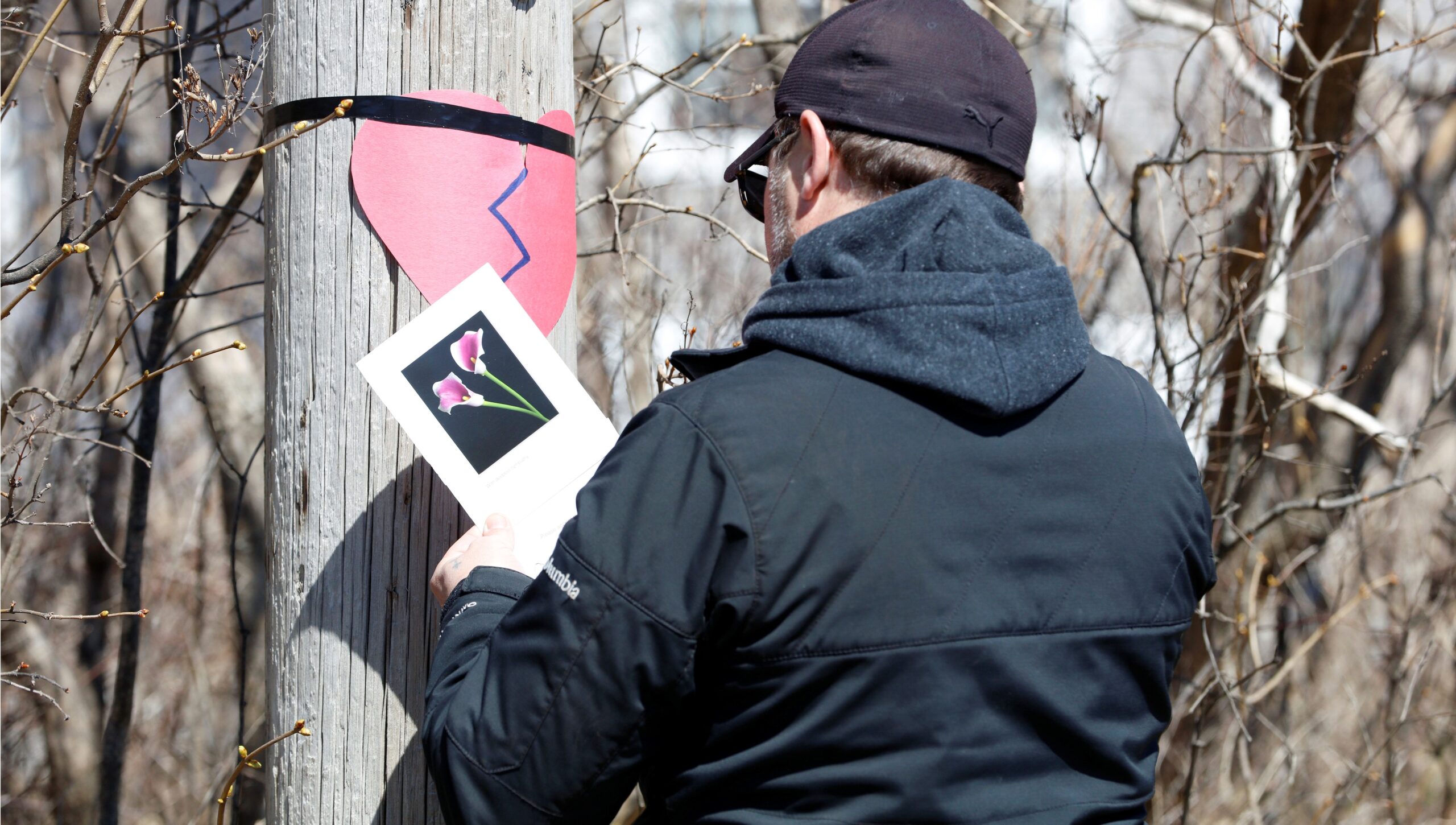
I’m talking about the mass theft of human life that took place in Nova Scotia on April 18 and 19. In a cruel stroke of poetic injustice, it was also Divine Mercy weekend.
I dread delving into Nova Scotia’s experience that weekend of the “heart of darkness” – Joseph Conrad’s description of evil in his existential novel of the same name.
Twenty-three are dead, including the gunman and RCMP Constable Heidi Stevenson, who left a husband and two children.
The killing spree was prolonged in part because the gunman, who was a local denturist, was wearing an RCMP uniform and driving a mock-up police cruiser. After burning down houses and shooting people on their lawns, in their cars, and out for a Sunday walk, he was finally shot and killed by police.
The path of death and destruction began in Portapique, a beachfront community along the shores of Nova Scotia’s Minas Basin, which would rather be known for having the highest tides in the world than as the starting point for the worst mass shooting in Canadian history.
That last clause seems so unlikely – one I never in a million years imagined writing. Nova Scotia is my homeland. I was born in Halifax and lived most of my life in the area. In 2000, I married an Illinois woman who immigrated to Halifax. I returned the favour in 2018, retiring and moving to her childhood home in Illinois.
Nova Scotia is not a small place, but it’s not a large one either, with a population under a million. I don’t personally know any of the people whose lives were stolen, but in such a not-so-small, not-so-large place, six degrees of separation can easily become three.
Before I retired we were living in Dartmouth, across the harbour from Halifax. Each morning, I’d take the bus down to the ferry terminal to catch the boat going over. One of the last bus stops before the harbour was beside an otherwise neat-looking little building, except for its rather hokey set of outsized dentures smiling out garishly from the corner of the structure facing the bus stop.
It turns out I was looking at the Atlantic Denture Clinic – owner: the gunman. In hindsight, my wife thinks her partial dental plate might have been fabricated there, possibly by him, since our long-time dentist’s practice is just down the street.
I certainly wasn’t thinking of escaping gun violence in Nova Scotia when I moved to the U.S. I guess that’s an easy irony. But the lesson of this to me is that it could happen anywhere.
That’s where we are now in 21st-century society: there is no protection in any particular place, no sense in senselessness, no sane rationale for premeditated insanity.
On a practical level, we can make a commitment not to turn a blind eye to corrosive anger in ourselves and others, to seek or suggest counselling – and if we’re aware of something that sets off alarm bells, to alert authorities. Clearly, private pain is a poison that if ignored, can be fatally explosive.
On a spiritual level, Father Paul Morris, Pastor of St. Mary’s Basilica in Halifax, offered this in his online Mass homily following the deadly weekend, “One of the greatest gifts we have … is a kind of assuredness, which is not arrogance, an assuredness that God is with us … in the midst of this.”
“In the midst of this,” Tom Bagley provided an example of God’s love being with us. He was a veteran, a retired firefighter, and a member of the Knights of Columbus. He was shot coming to the aid of neighbours whose home had been set on fire.
In his life of service and his heroic death, Tom epitomized the Knights’ current COVID-19 motto, “Leave No Neighbour Behind.”
Supreme Knight Carl Anderson saluted his brother Knight: “Tom Bagley lived his life according to the admonition of St. Paul, ‘Do not be overcome by evil; but overcome evil with good” (Rom 12:21). Because people are still good.
One of my former workmates in Nova Scotia relates that on April 18, on the same highway where the gunman would later pose as a policeman, pull a car over, and shoot the occupants, she blew a tire. She waited for a stranger to stop and help her. Before too long, someone did.
Here in Metamora, Illinois, far from the madness that temporarily reigned on that terrifying weekend and the sadness that has reigned since, we nonetheless mourn in solidarity. As blessed as my wife Marilou and I are to be building a life together here, it’s one thing to be away from the land of my birth when good things happen, but even harder when awful things happen.
In this time of “the new abnormal,” we appreciate how difficult it must be for our Nova Scotia friends and family to console one another without the comfort and reassurance of physical proximity.
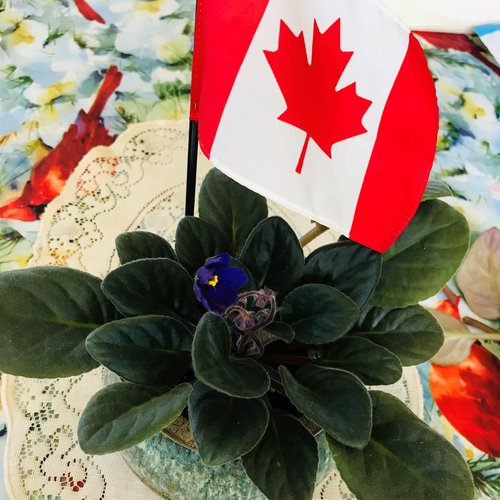
For all we grumble about social media, they are perhaps finally earning their societal keep. Two days after the tragedy, Marilou noticed her African violet had suddenly bloomed for the first time. She posted a photo of the plant on our Facebook page, referencing “a glimmer of hope” in her photo caption.
That’s all it takes to pierce the heart of darkness.
A glimmer of hope today, as we stand in solidarity with our fellow Nova Scotians who are grieving the loss of so many innocent lives.
Paul Thomas Moore writes for the Catholic Post, the diocesan newspaper for Peoria, Ill. He is originally from Halifax. He can be reached at paulthomasmoore@hotmail.com.







