
In these days of COVID-19 and all the consequences that accompany it, people often ask, “Have you ever seen anything like it?” To which I reply, “Yes – though by no means exactly the same.”
I was four years old when the Second World War commenced, and so my childhood was spent in a Britain that was decidedly far from ideal. However, it was certainly not one in which I felt particularly deprived or unhappy – perhaps because I really didn’t remember what life was like before the war and had little idea of what I was missing.
Yes, I was distressed that my father was away in the army, leaving my amazing and self-sacrificing mother to cope with the economic difficulties that arose from his absence. It required her to go to work as a postwoman, leaving a six-year-old and an eight-year-old to get themselves up in the morning and off to school.
Yes, we had shortages and rationing. When my mother sent me on my bike to buy groceries, I soon learned that when I saw a queue I should join it and then find out what it was for: sometimes it was irrelevant, as in the case of razor blades; sometimes it was worthwhile to wait, as when it was for batteries. Yes, we experienced air raids, which for some years not only required my mother, my brother, and me to sleep in an indoor air-raid shelter, but which also meant that we were occasionally confined to the shelter for a couple of days at a time while bombs fell.
Because of food rationing, I only had one, very small, birthday party, but there were always birthday cards, and that seemed to be enough. What ultimately mattered was that we adapted, accepted, and carried on. And at times, even the grim realities of war could be ironically entertaining, as when we watched the Battle of Britain fought out over our homes and gardens. Somehow we survived it all.
I recognize that that childhood experience was vastly different from what we are experiencing today, but I am confident we will manage to get through this trying time. It may actually make us better people. To some extent this is already apparent, as more and more we recognize that we are all in this together. Just as in the war, people are learning to assist each other in time of stress and need, to recognize that our actions affect not only ourselves, but others as well. We can even find humour in the reality facing us, as when a friend recently sent a message on Facebook saying that “Today is the 97th of March!”
I also acknowledge that young people are particularly impacted by the demands of social isolation, learning at home, and shortages of things that till now have been seen as necessities. However, I take comfort from recognizing that the very factors that negatively impacted my life ultimately worked to my advantage.
I never experienced school closure, but I regarded it as a norm that a class size could be as big as 50 students. What astonishes me as I look back is that the amazing women who taught us (the men were all away serving their country) not only coped, but still managed to treat us as individuals – and to improvise. When I had completed my class assignments, they simply sent me across the street to the little public library and turned me loose among the books. So it was that reading not only became an escape from the grey reality of wartime England, but I developed a lifelong love of literature, which ultimately led to my majoring in English literature at Oxford. Enid Blyton (Noddy), The Railway Children, and Treasure Island eventually gave way to Hamlet and Paradise Lost.
Unlike today’s young people, of course, we had no recourse to television or computers. We did have radio, though little of the programming, if memory serves me correctly, was aimed at children, except for the daily Children’s Hour. Much of it was filled with often-discouraging accounts of the progress of the war, much like the news today. But we did have movies.
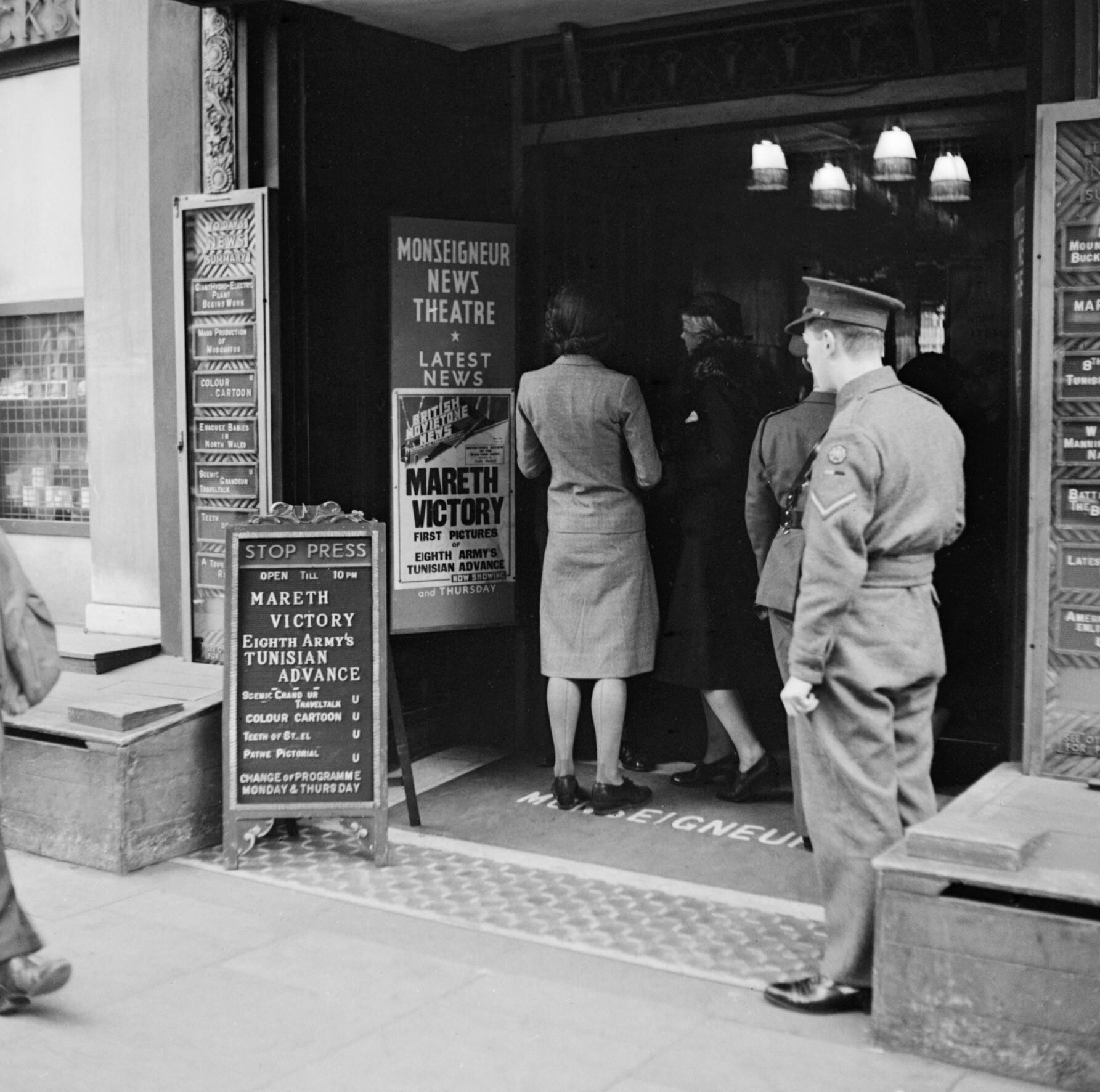
“Going to the pictures” was a source of much happiness. True, it could be a little challenging. If a film was given an “A” certificate, meaning one had to be an adult or accompanied by an adult to get in, as was (surprisingly) the case with Snow White and the Seven Dwarfs, one had to beg some movie-bound adult to “take one in.” This could result in the sort of situation in which my mother suddenly found herself – not a mother of two, but of eight or nine. Fortunately, the commissionaire generally ignored this and all were allowed to enter.
Once in, we not only had the joy of the feature film, but also a “B” movie, usually of half an hour’s length, often featuring Roy Rogers or Bill Boyd. Then came the newsreel, which was often little more than pseudo-documentary designed to bolster the audience’s spirits. After the mandatory cartoon and trailer for the next week’s feature came the main event. The great advantage was that one could stay in the theatre as long as one wished, so I remember the great satisfaction of being able to watch Snow White three times in one sitting.
Of course, one was never allowed to forget there was a war on. Just as children today are reminded by the media of the grim realities outside, so it was during the war. Often a sign would be flashed on the movie screen, warning the audience that the air-raid siren had sounded and we stayed in the theatre at our own risk. I don’t recall ever leaving. It’s amazing how adaptable children can be!
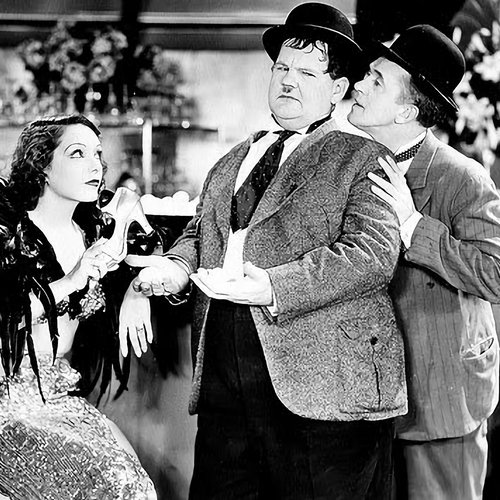
So it was that I delighted in the antics of Abbott and Costello, George Formby, and Laurel and Hardy. Bing Crosby became the ideal priest in Going My Way and The Bells of St. Mary. Above all, the famous Ealing comedies relieved the realities of the times. Again, too, I realize how much I benefited from all this as it certainly laid the groundwork for my lifelong passion for film.
This leads me to wonder whether young people today, as they acquire the ability to learn at home, take advantage of technology for entertainment, and become creative while looking for ways to pass the time, may be inadvertently preparing for futures they might otherwise never have contemplated.
So, as I contemplate the disasters which have formed the bookends of my life, and as I recognize how difficult the current situation is for many, I believe there is room for hope. I know, as in wartime England, the situation today has tragically resulted in enormous loss. However, the vast majority will somehow survive.
So it is that I feel that for many, particularly the young, the COVID-19 experience will indeed be a defining time in their lives. As such, though they may be aware of what is lost, eventually they may realize that much may have been gained, even from this horrible situation. Let us all pray that it is so!