

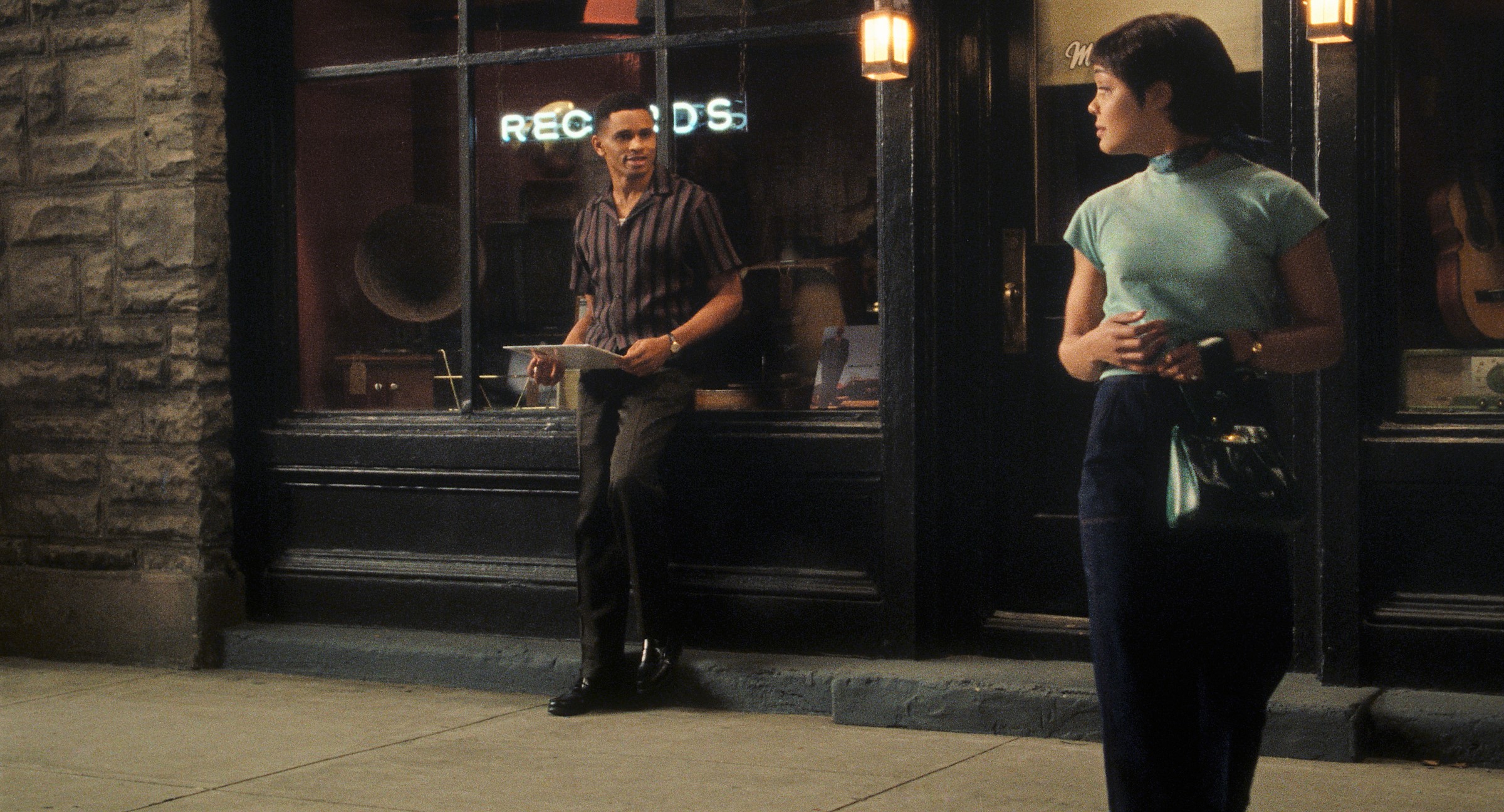

At the surface, Sylvie’s Love (streaming on Prime Video) makes all the gestures of a classic romance torn between the spontaneous attractions of the heart and the calculations of social class. It turns out, though, that it offers a vision of modern woman’s liberation which is too secular and individualistic to really satisfy.
Set in New York City at the brink of the 1960s, the story consciously straddles this transitional period between different eras and their contrasting sensibilities. Opening with a stylish blend of fresh photography and period footage, it immediately draws us into the world of its glamorously dressed heroine.
Sylvie is the child of two worlds. When she is not working the till at her father’s street-level record shop, she models perfect posture at her mother’s elite uptown finishing school.
It is a strong setup, expressing tensions not only between contrasting eras and social circles, but also what one imagines are some of the cross-purposing pulls at the heart of a black woman in a white man’s world.
While these are important sources of conflict in the film, they are not the only ones and perhaps not even central. They each get nods (as does the era’s emerging civil rights struggle), only to recede into the background and give centre stage to a pitched drama between Fifties style domesticity and progressive re-evaluations.
Minor spoiler: when Sylvie falls for Robert, a penniless and talented saxophonist, she must decide what to do about her fiancé Lacy, son of one of the wealthiest families in the city and fighting in the Korean War. Major spoiler: she opts to stick with Lacy, even though she is pregnant with Robert’s child.
She attempts to play the part of a well-groomed housewife, but increasingly feels a pull away from wedded life by her long-standing love of music and television. She recalls Robert’s philosophical response to death, how “life is too short to waste time doing things you don’t absolutely love.”
When the crisis comes, Sylvie tells the man she married she cannot be the woman of his dreams while also trying to be the woman of her own. She reneges on her marital vows to take a more demanding position at a television studio because, she summarizes, she wants to start living her life for herself.
Granted there is an appropriate, even necessary scope for self-care – one cannot love one’s neighbour as oneself, for instance, if one does not also love oneself. At the same time, when this character-defining moment arrives, it appears that the love from which this movie gets its name ultimately reduces to something not only secular and individualistic but (perhaps, because of this, inevitably) self-centred.
Absent is any acknowledgement of the possibility of shared goals. For example, how one spouse’s career might be a joint project and satisfy the professional ambitions of both.
Even deeper, though, there would seem to be a critical deficit in Sophie’s understanding regarding the dual ends (and fundamental dignity) of marriage.
Although she does come to recognize how sacrifice may be required to promote the good of one’s spouse, her understanding of this love remains fundamentally adolescent, we might say. It values romantic love without equally attending to the children it produces.
Final spoiler alert: she deliberately does not tell Robert when she becomes pregnant with his daughter because she is afraid that knowledge of the fact might reorganize his priorities and tempt him from realizing his full professional potential.
While there is a real selflessness on display here, one cannot help but feel that this decision gets things precisely backwards.
Sylvie’s love of career, both hers and Robert’s, is noble yet in this case disordered because it cherishes some thing (in this case, making great art) over the persons such things are meant to benefit.
The unquestioned assumption in this story-world is that one’s work goals are all important, with the big question coming down to whether husband or wife will get to chase the dream.
Lost from view entirely is whether the bond of marriage might absorb or even supersede such ambitions, involving as it does mysteriously shared goods and perhaps seven other, higher goods which transcend the individual desires of both spouses.
It is this deficit and not merely the spectre of impending death which permits Sylvie to drop her marriage so readily. And it is this real yet imbalanced sense of the sacred – the dignity of work and romantic desire minus the full implications of the matrimonial promise – which makes all the drama in the end so disappointing.







