


Baptism of the Lord, Year B
First Reading: Is 55:1-11
Second Reading: 1 Jn 5:1-9
Gospel Reading: Mk 1:7-11
This Sunday we celebrate “the Baptism of the Lord.” Why is this event so important? What is its significance for us?
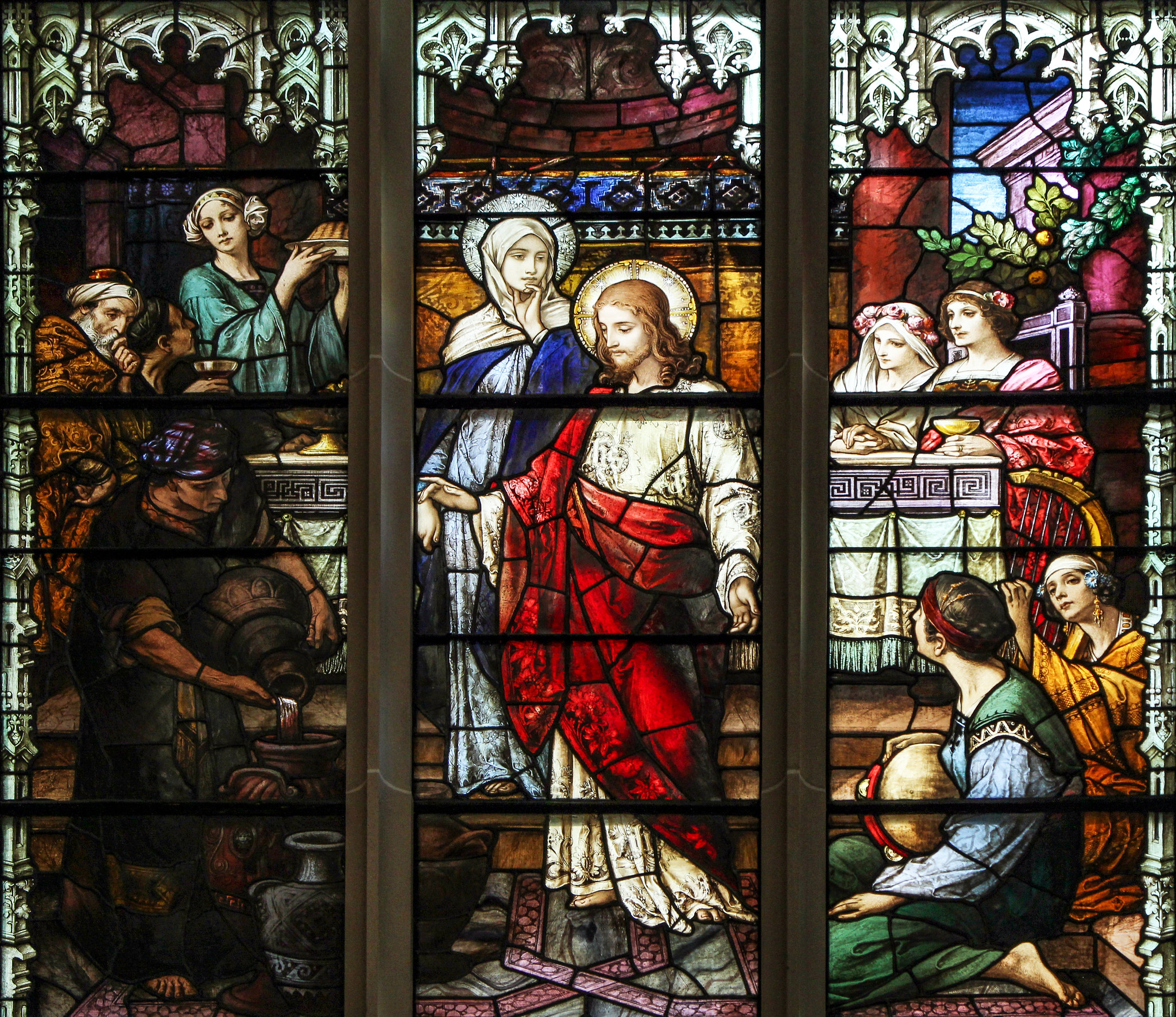
In the Liturgy of the Hours, which priests pray every day, we say on the Feast of the Epiphany (derived from the Greek epiphaneia, which means “manifestation”), “Three mysteries mark this holy day: today the star leads the magi to the Infant Christ; today water is changed into wine for the wedding feast; today Christ wills to be baptized by John in the River Jordan to bring us salvation.”
Clearly, the Church links Christ’s baptism with two other “manifestations”: the visit of the wise men and his first public miracle. When Pope St. John Paul II gave the Church the five new “mysteries of light” to meditate on as we say the Rosary, he included both these events.
Each is a “revelation of the Kingdom now present in the very Person of Christ,” he said. In the first, “as Christ descends into the waters, the innocent one who became sin for our sake, the heavens open wide and the voice of the Father declares him the beloved Son, while the Spirit descends on him to invest him with the mission which he is to carry out.”
In the second, Mary, who has known who Christ is right from his conception in her womb, counsels the Church “of every age: ‘Do whatever he tells you.’”
This Sunday’s liturgy emphasizes Christ’s manifestation.
“See, I made him a witness to the peoples, and leader and commander for the peoples,” Isaiah says to Israel. “See, you shall call nations that you do not know, and nations that do not know you shall run to you, because of the Lord your God, the Holy One of Israel, for he has glorified you.”
“Give thanks to the Lord, call on his name; make know his deeds among the Gentiles; proclaim that his name is exalted,” we pray in the Psalm. “Sing praises to the Lord, for he has done gloriously; let this be known in all the earth. Sing aloud and shout for joy, O royal Zion, for great in your midst is the Holy One of Israel.”
(As Jesus reminded the Samaritan woman at Jacob’s well, “Salvation is from the Jews.”)
St. John echoes Mary’s counsel when he tells us how to manifest our love of God: “Everyone who believes that Jesus is the Christ has been born of God, and everyone who loves the parent loves the child. By this we know that we love the children of God, when we love God and obey his commandments. For the love of God is this, that we obey his commandments.”
If we do not appreciate Christ’s manifestation in his baptism, let us start to learn it from Mary.
“The Rosary, though clearly Marian in character, is at heart a Christocentric prayer,” Pope John Paul said.
“It has all the depth of the Gospel message in its entirety … With the Rosary, the Christian people sits at the school of Mary and is led to contemplate the beauty on the face of Christ and to experience the depths of his love.” To recite the Rosary is “to contemplate with Mary the face of Christ.”
At the close of his earthly life, just before his Ascension, Christ said to his apostles, “All authority in heaven and on earth has been given to me. Go, therefore, and make disciples of all nations, baptizing them in the name of the Father, and of the Son, and of the Holy Spirit, teaching them to observe all that I have commanded you. And behold, I am with you always, until the end of the age.”
In view of this command, we cannot over-emphasize the importance of baptism. Let us learn its significance through the Rosary of our Lady, who directs us, now, as always, to “do whatever he tells you.”
Father Hawkswell is again teaching “The Catholic Faith in Plain English” free of charge. All the materials (video and print) are available online at beholdvancouver.org/catholic-faith-course. Session 17, “Grace and the Sacraments,” will be available Jan. 10.







