

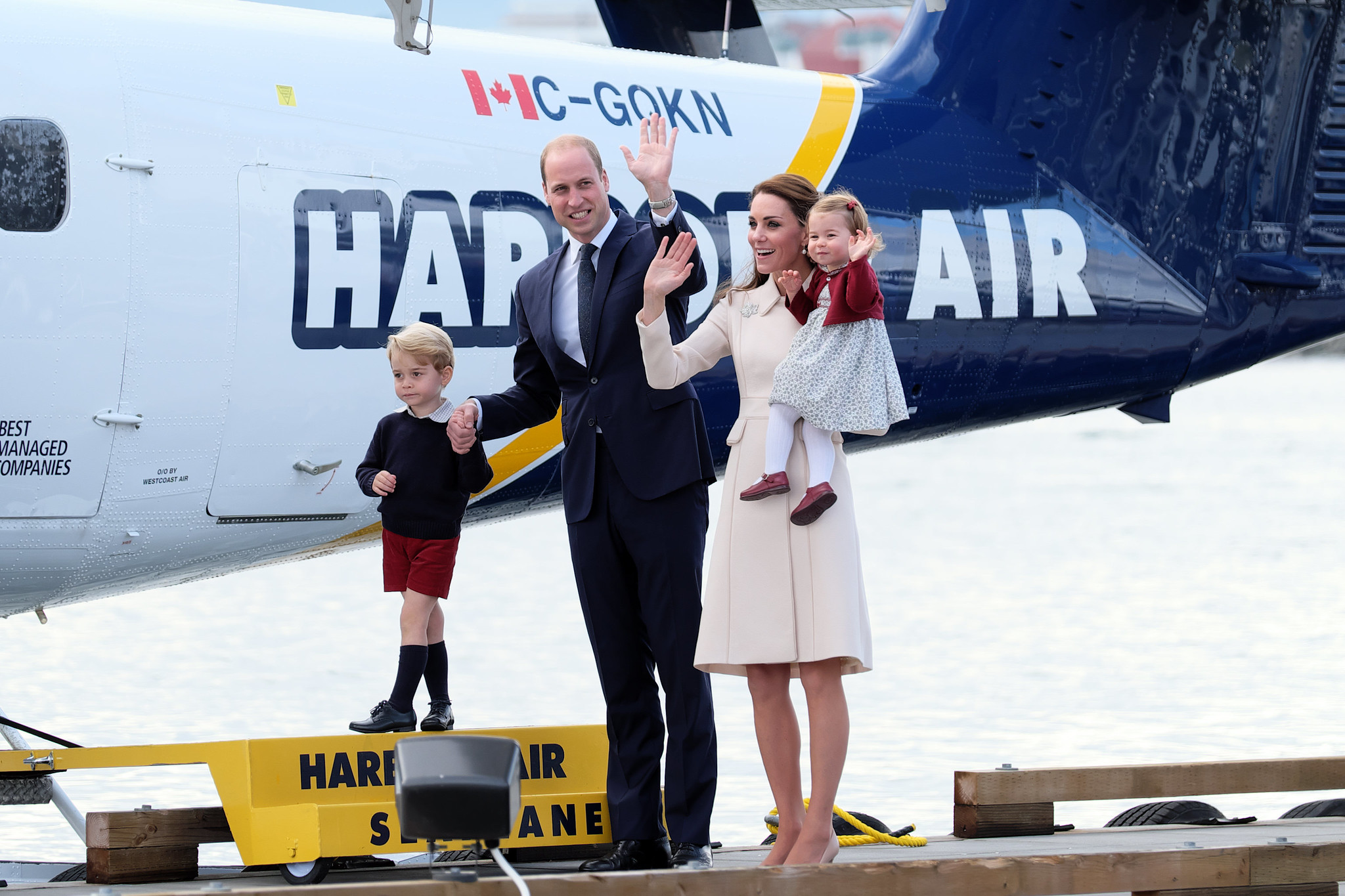

Dust off your royal robes and crowns. It’s almost time for the Church calendar’s grand royal finale: the solemnity of Christ the King.
The feast, on Nov. 22 this year, marks not only the kingship of Jesus Christ, but also the universal royalty of all Catholics.
Through baptism, every Catholic is part of the divine royal family. According to the Catechism of the Catholic Church, we are all baptized priest, prophet, and king. “That is, the faithful, who by Baptism are incorporated into Christ and integrated into the People of God, are made sharers in their particular way in the priestly, prophetic, and kingly office of Christ, and have their own part to play in the mission of the whole Christian people in the Church and in the World” (CCC 897).
Part of our identity as Christians is found in Christ’s kingship, which, through baptism, also becomes part of our mission. If we are called to be royalty, that begs the question, how does royalty behave? If Jesus is our king, then it makes sense to look at his behaviour as the model for royalty.
Jesus’ kingly identity is counterintuitive to what we usually associate with royalty. His message of mercy and authentic love is not the stuff of warrior kings. He had no riches and probably few possessions. He was born in a stable and, in the end, wore a crown made of thorns. He is king of virtue.
The Gospel passage for Christ the King Sunday is taken from Matthew 25:31-46 and recounts Jesus’ telling the disciples he will come “in his glory, and all the angels with him, he will sit upon his glorious throne and all the nations will be assembled before him.”
He goes on to say that the king will separate “the sheep from the goats” according to who served, in his name, the poor, the stranger, the naked, and imprisoned. He says, “Amen, I say to you, what you did not do for one of these least ones, you did not do for me.” He expects us to serve others as if we are serving him.
In his reflection on this Gospel passage, Father John Bartunek says this about our King: “He is a King who identifies himself with each one of his subjects. In fact, he is present in every person. His love is so total, so unabashed, so reckless, that it propels his very self into every human heart” (The Better Part, p. 295).
Father Bartunek’s words point to exactly how we share in Christ’s royalty – because our Lord dwells within us and those around us. It is our job, as we partake in his kingly mission, to reflect his word and presence to the world. As his subjects, we have a duty to tell others that they too are called to be part of his royal family. There can be great solace and purpose in knowing who we are and that our identity lies in the heart and mission of Christ.
Children should know from an early age that they are loved by Christ, that they are heirs to his royal promise of eternal life, and that they have a king on their side who will never let them down. If we celebrate our Lord’s life, death, and resurrection regularly with our children, they will learn that his story is their story. They will find their identity in him – and who doesn’t want to be part of a royal family?
Give Christ the King his due honour this year. If you can, get to Mass and spend some extra time in simple adoration of your king. Cook something special – chicken à la king, perhaps? For dessert, any cake made in a Bundt or tube pan can serve as a “crown” cake, decorated with gem-like candies, such as gumdrops or wine gums. Make some paper crowns (or grab some Christmas crackers from the local dollar store) and make sure everyone at the table, young and old, gets a crown to remind them that they are part of Christ’s royal family. For more ideas, search the November feasts at catholiccuisine.blogspot.com.
We all have days when we need to be reminded that we are royalty – the most important royalty. This is why the Church gives us this great solemnity to round off the liturgical year – to keep us focused on the destination of the kingdom of heaven, and our role in getting ourselves and others there. Our humble king sacrificed his life for us so that we could share in his eternal kingdom. Let’s make sure we give our king and his royal family a proper celebration.
Lazzuri writes from her home in Nova Scotia, where she lives with her husband, six children, and her mom. She can be reached at clarelazzuri@gmail.com
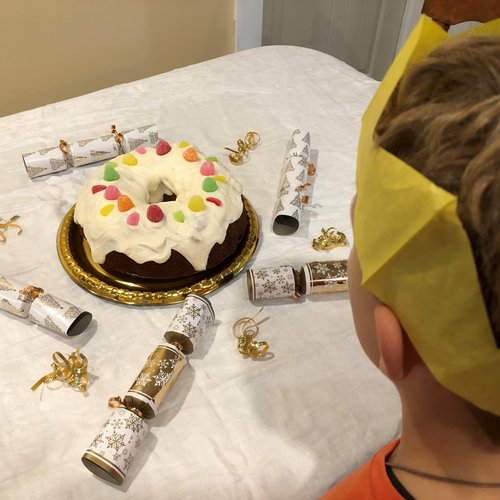
Royal Gumdrop Cake
- 1¾ cup all-purpose flour
- 1 tsp salt
- 1½ tsp baking powder
- 1 cup butter, softened
- 8 oz (1 package) of cream cheese, softened
- 1½ cups of white sugar
- 1 tsp vanilla
- 2 tsp lemon rind
- 4 eggs, slightly beaten
- 2½ cups of gumdrops, sliced in half if large, and dusted with a tbsp of flour, plus 10–12 for decorating the top of the cake
Grease and dust with flour a bundt or tube pan. This recipe can also be baked in two loaf pans. Preheat oven to 325 C. Combine the first three ingredients in a small bowl, set aside. In a large bowl of a stand mixer or with handheld beaters, beat together the butter and cream cheese until well combined and creamy. Gradually add the sugar and mix thoroughly. Add vanilla, lemon rind, and eggs and beat until smooth. Add dry ingredients until fully incorporated. Add gumdrops and stir by hand until evenly distributed throughout the batter. Bake for 60–75 minutes or until a wooden skewer inserted near middle comes out clean. Let cake cool for 10 minutes, then turn onto cooling rack. When completely cool, top with vanilla buttercream icing, vanilla glaze, or a dusting of powdered sugar and place gumdrops, representing jewels, on top.







