


Rules. We can’t leave home these days without thinking about them – which ones we have to follow, which ones we don’t, and which ones may have changed since we last walked out the door. Are masks mandatory where I’m going? Can I take reusable grocery bags? Are restaurants open?
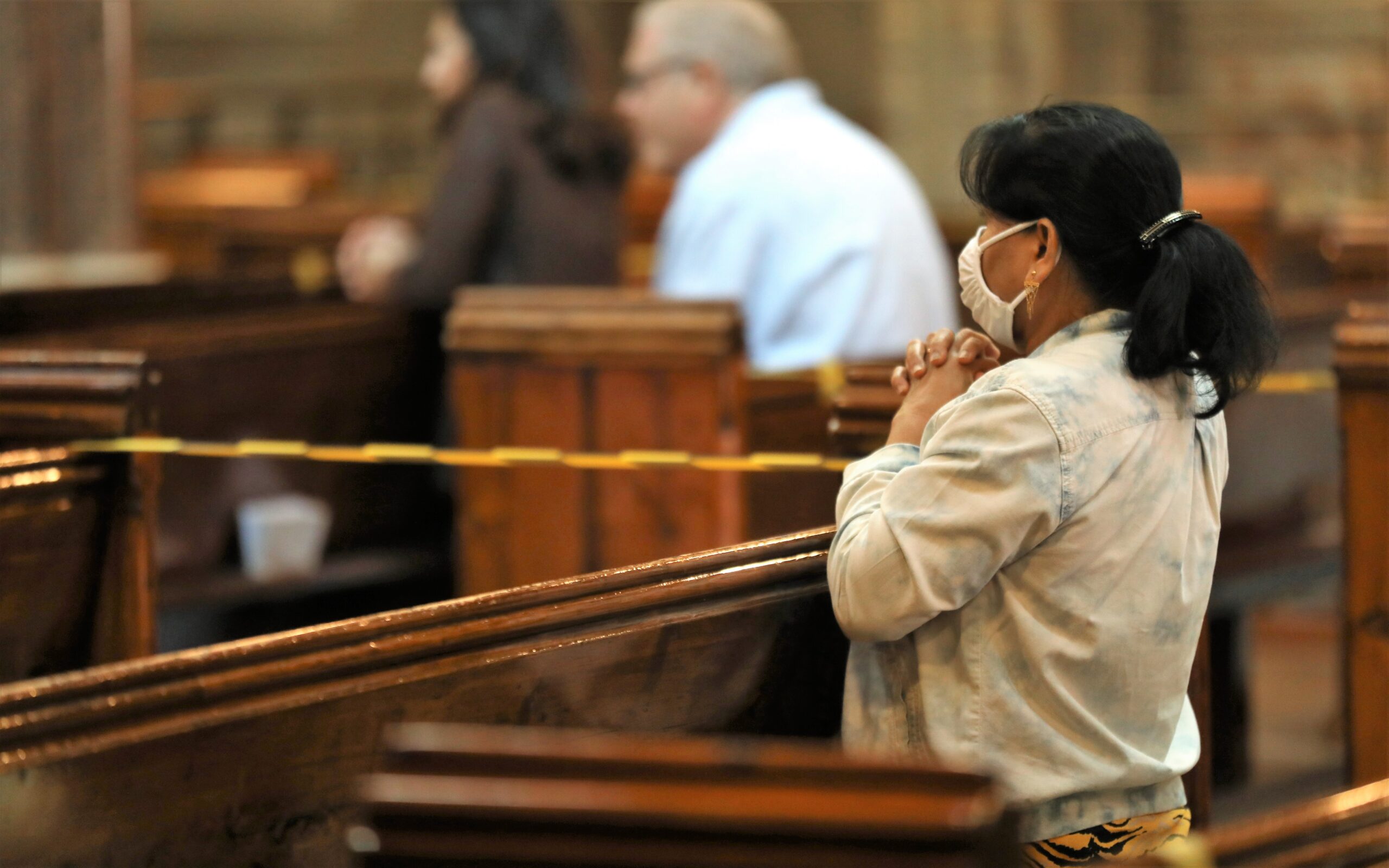
Our churches are full of rules during the pandemic, too. Don’t sit here. Don’t walk there. If you insist on receiving Communion on the tongue, stand at the back of the line.
Whether we’ve meant to or not, we’ve allowed our fears of viral spread to infect everything we do. And this fear-driven rule-making is going to make the Church sick.
I keep hearing and reading concerns that “after all of this is over” – whenever that is – fewer people will participate in Mass regularly. After nearly a year of not being able to go to church every Sunday, some worry a significant number of Catholics will fall out of the habit, get too comfortable with watching it online, or miss the point of going at all.
It’s a concern we should take seriously, all the more so if our “do not enter” signs and yellow caution tape are partly to blame.
A dear friend of mine was recently inspired to invite someone who had never been to Mass before to a local church. She knew about the 50-person limit and was unable to register her friend (who obviously isn’t a parishioner) to save her a space, but hoped to wait by the church doors on standby. If all 50 seats were not filled by the start of Mass, she thought, volunteers would let them in. Right?
They were nearly kicked out.
No registration? Not listed in the parish database? How dare they think about entering.
It’s not an isolated case. In recent days, several people have told me about their experiences of a church that has become in some ways more “functional” and “process-oriented” than welcoming and evangelistic. They have been turned away from Mass for such transgressions as not being members of the parish or not having registered for that particular time slot – even on days when the number of people in the church has been far below 50.
Have we become so caught up in policing lineups and the use of hand sanitizer that we forget about the souls walking through our doors?
Cardinal Robert Sarah, prefect of the Congregation for Divine Worship, was clearly concerned about rules getting in the way of the celebration of Mass when he wrote a letter to bishops around the world Aug. 15.
“Due attention to hygiene and safety regulations cannot lead to the sterilization of gestures and rites, to the instilling, even unconsciously, of fear and insecurity in the faithful,” he wrote.
While virtual liturgies have “performed a great service,” nothing can replace “a personal and intimate encounter with the incarnate God,” he continued.
“This physical contact with the Lord is vital, indispensable, irreplaceable. Once the concrete measures that can be taken to reduce the spread of the virus to a minimum have been identified and adopted, it is necessary that all resume their place in the assembly of brothers and sisters, rediscover the irreplaceable preciousness and beauty of the celebration of the liturgy, and invite and encourage again those brothers and sisters who have been discouraged, frightened, absent or uninvolved for too long.”
Barriers can keep a virus at bay, but they can also lock out the lonely, the despairing, and the truth-seeking. It is good practice to have a sign-up system in place, but if we can’t allow people in dire need of prayer at least a warm welcome and a “please sign up here and come back soon,” we’ve forgotten who we are.
If we’re not offering our empty seats to those who seek them, have we stopped evangelizing?
In 2016, Vancouver’s Archbishop J. Michael Miller released his Priorities and Goals for the archdiocese for the foreseeable future. His first goal was “Make Every Sunday Matter,” and in addition to improving preaching and music at Mass, it urged parishes to become more welcoming spaces – to Welcome Like We Mean It.
I believe welcoming people to our churches is even more important now than it was in 2016.
In a masked world, few of us see smiling faces anymore. Many of us spend our days standing in lines, counting friends, backing two metres away from our neighbours, and wondering where we belong.
Let’s open our church doors in a way that truly invites people into encounter with God and community, even if it has to be at arm’s length. Let’s be a safe place, maybe the only place where in the midst of sanitary procedures and one-way aisles, we can offer hope, clarity, and a sense of belonging.
Let’s welcome like we mean it. And “after all this is over,” let’s see if they keep coming back.
Agnieszka Ruck is assistant editor of The B.C. Catholic.







