
22nd Sunday of Ordinary Time, Year A
First Reading: Jer 20:7-9
Second Reading: Rom 12:1-2
Gospel Reading: Mt 16:21-27
This Sunday’s Readings stress the difference between God’s ways and the ways of “the world.”
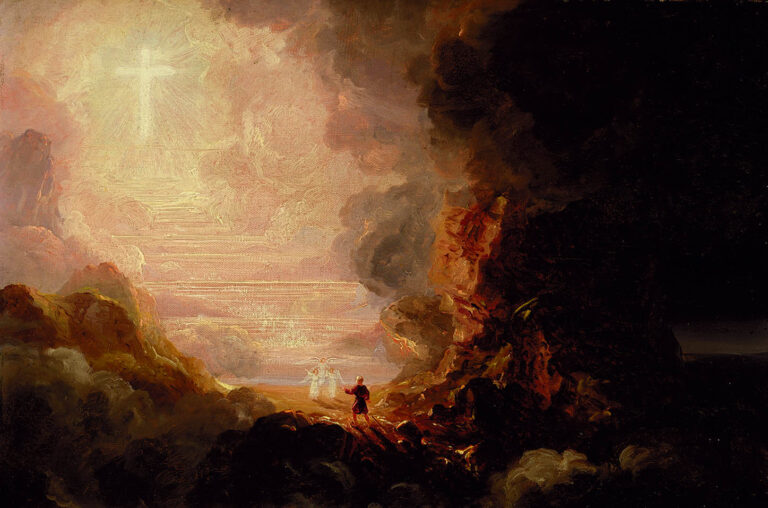
“If any want to become my followers, let them deny themselves and take up their cross and follow me,” Jesus said in the Gospel Reading, making it clear that he was about to “go to Jerusalem, and undergo great suffering … and be killed.”
To “the world,” this was nonsense. Even Peter demurred. “This must never happen to you!” he said. But Jesus replied, “Get behind me, Satan! You are a stumbling block to me; for you are setting your mind not on divine things but on human things.”
“Do not be conformed to this world, but be transformed by the renewing of your minds, so that you may discern what is the will of God,” St. Paul urges in the Second Reading.
If we do, we can expect to be scorned and derided. “I have become a laughingstock all day long,” Jeremiah complains to God in the First Reading. “The word of the Lord has become for me a reproach and a derision all day long.”
The world offers us beauty, riches, power, friendship, sex, etc. Why renounce these for a future happiness which, we admit, we cannot even imagine, much less describe?
The answer is that the things the world offers us do not bring deep happiness or lasting happiness, as many who have tried them have testified.
From a very early age, C.S. Lewis had an experience of overwhelming, overpowering happiness that he called “joy.” It came to him through sex, the occult, poetry, the Norse legends, Wagner’s music, and other things. He went a long way down each of these avenues, searching for joy, often thinking he had found it. However, he says in his autobiographical Surprised By Joy, he always felt that he had “wandered from the real point.”
“Joy is not a substitute for sex, but sex is very often a substitute for joy,” he warns. “I sometimes wonder whether all pleasures are not a substitute for joy.”
The soldier St. Ignatius Loyola was passionately fond of worldly fiction and tales of knight-errantry. While he was recovering from a wound, he asked for some such books. When none could be found, he settled for the lives of Christ and the saints.
The difference he noticed is described by his biographer. When he reflected on worldly thoughts, he felt intense pleasure; but when he gave them up out of weariness, he felt dry and depressed. Yet when he thought of living the rigorous lives of the saints, he experienced pleasure not only while thinking about it, but also even afterward. “Thoughts of one kind left him sad, the others full of joy.”
God has made “worldly” things for our delight. However, when we set our hearts on them instead of on their maker, they cease to delight us.
Nevertheless, even then, God can turn us and point us in the right direction. St. Augustine, who spent many years searching for happiness, said to God, “You were within me, but I was outside, and it was there that I searched for you. In my unloveliness I plunged into the lovely things which you created … Created things kept me from you; yet if they had not been in you they would not have been at all.
“You called, you shouted, and you broke through my deafness. You flashed, you shone, and you dispelled My blindness. You breathed your fragrance on me; I drew in breath and now I pant for you. I have tasted you; now I hunger and thirst for more.”
Whether we know it or not, this Sunday’s Psalm describes each of us: “You are my God, for you I long; for you my soul is thirsting. My body pines for you like a dry, weary land without water.”
Does it matter, then, what the world thinks of us?
Father Hawkswell will again be teaching “The Catholic Faith in Plain English” free of charge starting in September. All the materials (video and print) will be available online at beholdvancouver.org/catholic-faith-course. Session 1, “Introduction,” will be available Sept. 6. Read more below.