


Addictions and related drug deaths have made major headlines in the news, especially connected with mental health and COVID-19. Clearly this is an important issue, with the articles frequently talking about the importance of access to “safe” or “clean” drugs. But it can leave you wondering if the answer is not so much in providing more drugs (clean or not) but rather in healing the root of the problem with counselling, a supportive and healthy environment, and most importantly, a deeper relationship with God.
The first option, access to safe drugs, is a bandage. The second is a solution that with God’s grace and a supportive community can last a lifetime.
Luke 15 House is this solution, and the Archbishop Carney high school community had an initial experience with it that needs to be shared.
You know a field trip is successful when during the entire bus ride back to school your classmates talk about the people you met and the stories shared. This is one of those experiences we will remember our whole lives.
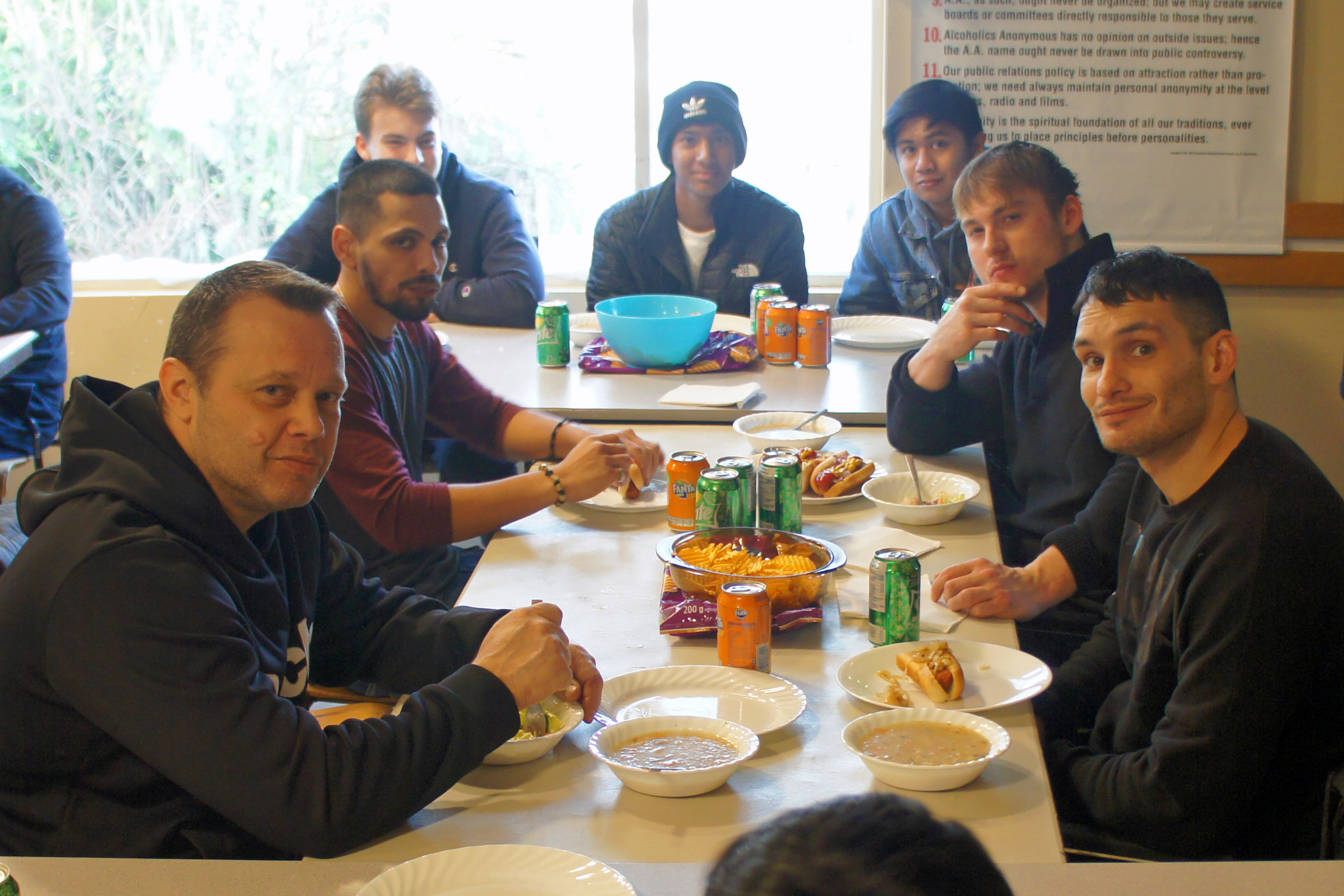
Thirteen members of the Social Justice 12 class from Archbishop Carney drove from Port Coquitlam to the Luke 15 house, a residence in Surrey for men dealing with addiction. Although the home is supported by the Archdiocese of Vancouver we knew little much about it. In fact, we were nervous about what we might encounter and what the people might be like, since many of us have grown up with the idea that drug addicts, homeless persons, prisoners, and people of the streets were all scary and dangerous.
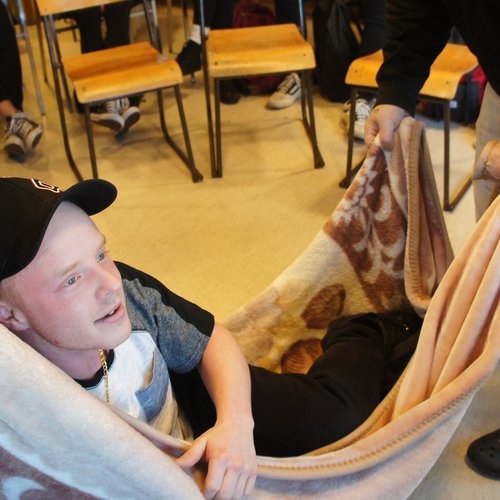
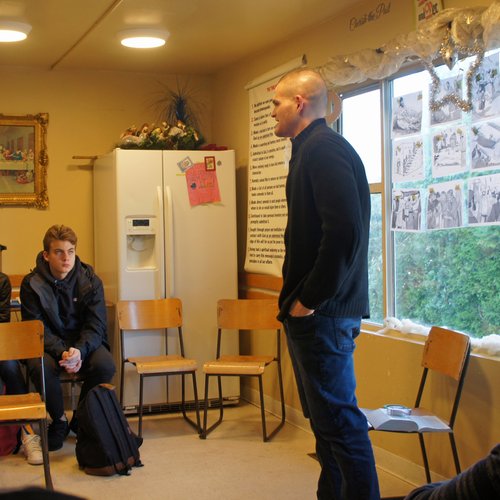
When we arrived at the house, which is in a suburban area, the men (or “guys” as they called themselves) greeted us. We participated in a group session reading the Gospel story of the man lowered down from the roof by friends to be healed by Jesus. Then the men started to tell their personal stories and our jaws dropped.
They talked about the families they came from, the mistakes they had made, and the hopes that they had for the future. They weren’t glorified stories but stories of real pain, regret, humble admissions, and realistic hopes for growth and better futures. They were open in a way that we had never experienced but deeply desired. It was intense.
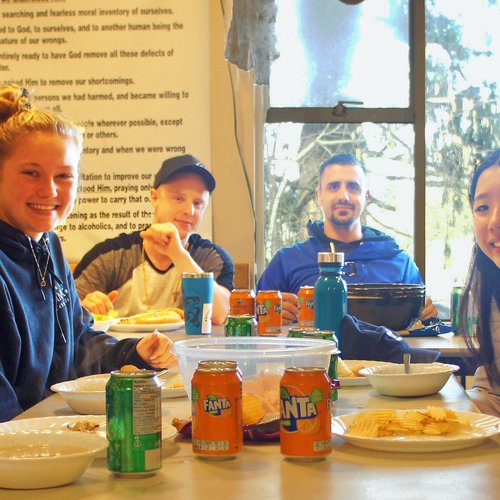
After lunch, we sat down to debrief, and the guys from Luke 15 spontaneously joined us. It was an exchange of questions such as their asking, “Are you scared of us?” “What do you want for the future?” and our wondering “If you could give us any advice, what would it be?” “What would you do differently in your life?”
Through this visit we experienced all the principles of Catholic social teaching put into action. It was a profound conversation talking about the dignity of each human person and God’s mercy for everyone.
When we first arrived, we could tell the people who worked at Luke 15 created and maintained both a physical and spiritual home for these men, giving them the support, faith, and creating an environment they needed to better themselves as people.
It was evident that the Luke 15 house was essentially a safe space and a place to fix mistakes. Coming to the home from prison, the men were all at different places of recovery but they could choose to accept the support and love that they may have lacked.
We noticed that those in charge of Luke 15 treated each person as a human being, not like a mistake. As a society, it is easy to forget that the people committing crimes are human like the rest of us. They may have done things we thought we would never do, but we also realized we can’t know that for certain unless we’ve been in their situations. We learned that many of the people who end up in prison had very unstable childhoods, abusive relationships, and/or life-threatening and traumatizing experiences. Luke 15 helps each man re-establish a new, solid foundation for himself.
The aspect that inspired us most about the dignity of the human person was the realization that the best thing we can do for another person is to show them love and give them hope. We can overlook (not ignore) someone’s mistakes because mistakes do not define a person. Our mistakes do not make us any less of a person and it should not change the amount of respect we give each person. It is also true that although we do make mistakes, God does not make mistakes.
One of the men at Luke 15 talked a little bit about this. He reminded us that even though he has made many terrible mistakes in his life, it did not mean we were any better than him or that he was any less of a person. It seemed an echo of what St. John Paul II said in Canada 18 years ago at World Youth Day 2002: “We are not the sum of our weaknesses and failures, we are the sum of the Father’s love for us and our real capacity to become the image of his Son Jesus.”
The men clearly felt that capacity to grow more and more into that image of Jesus. We saw that in the structure and schedule of Luke 15, which is not set up like a prison but where the men are free to leave if they want.
The people who oversee Luke 15 feel the only way to really help the men is to teach them to respect each other, trust them to share the workload, and hold them accountable for various chores. The men can freely choose to grow and better themselves with assistance.
One of the men explained he was a really big family guy. Unfortunately, he made some bad decisions that caused him to be separated from his daughter. But he was at Luke 15 trying to fix himself up and work toward his goal of becoming a part of his daughter’s life again.
It was just one example of the principle of subsidiarity, the idea of solving problems at the lowest possible level. The system at Luke 15 promotes initiative and self-improvement, even when things get really hard. These men had hope for the future because they were actively taking a part in it themselves.
We also saw that no one in the home had a cell phone and the guys shared rooms. Wwe learned that because of the communal living and the lack of “distractions,” the quality of communication improved and deepened. The structure also provided the guys with a sense of stability and security.
One man told us he had been in prison almost his whole life. In fact, he was more comfortable in prison because the outside world was so unpredictable. He explained that he suffered from severe anxiety; talking in front of people was so paralyzing to him that he felt it was miraculous that he was able to even talk with us that afternoon. But he did talk and it gave him confidence to be a better person. The environment provided him the space and time to allow him to grow and improve.
The home structure is important but the role of community solidarity is even more so. The men in the house came together every morning, talked about what was bothering them, and received support for facing the day. Through the struggle of growing together, they learned to trust one another. They apologized for interrupting each other and actively listened to others. They even saw our visit as a way of giving back to the community.
They were emphatic about telling us not to do drugs, saying they’re not a way to more inclusion with friends but a gateway to problems.
Kipp, one of the older guys there, stressed that we should not start drugs or excessive alcohol because they had been a slippery slope that ruined his life. Kipp’s story really affected us, and you could almost feel the pain and regret in his voice from his past choices.
But he was really grateful for the strong community and relationships he had developed at Luke 15. These men needed to have good, strong friends who could support each other because if they didn’t, they would be tempted to reconnect with acquaintances who had gotten them into trouble in the first place. The community building and solidarity that Luke 15 consciously fostered was essential to the men’s healing and rehabilitation.
Luke 15 House is experiencing some challenges in light of the COVID-19 situation. With the pandemic restrictions in place early on, the recovery house found it difficult to buy enough food and household supplies to support the men. Nine dozen eggs per week is a lot of eggs!
Alcoholics Anonymous and Narcotics Anonymous sessions, church services, and opportunities to volunteer were all suspended and family visits as well as outings were sharply limited. Online sessions substitute for in-person group sessions, without the healthy in-person relationships and the independence from electronic devices that the program supports. And because of physical distancing, the men can no longer share rooms, leaving them with less space and increased need.
In spite of this, those in the Luke 15 House have shown great resilience. The guys have planted a garden, learned to make their own hand sanitizer, and play games and music. They’ve been able to take a few small group outings to an isolated beach or to a nearby park.
It is ironic that with COVID restrictions in place, we’re even more in solidarity with these men from Luke 15. We’ve learned what it is like to be isolated from family and friends, to be limited in what we can do, but most importantly, to have the opportunity to reflect upon what is most important in our lives, what God’s plan is for us, and how we can cooperate in living it out fully.
This has been a time of dealing with our personal addictions, wounds, and sinful tendencies. Luke 15 is a participation and reflection of this: getting to the root of personal problems, which helps to heal the roots of our society. If, as Pope Francis likes to say, the Church is a field hospital for the sick, then Luke 15 House is one of its tents.
On our field trip, we learned that we have so much to be grateful for. Many of us have been born into loving, stable homes and sheltered from the harsh realities of circumstances of the world.
We haven’t experienced the same situations as these men at Luke 15, but we have a new appreciation that every individual is worth loving and every life worth living. When you have nothing left to lose, like these men, you are open to everything that the Lord has to offer and can love freely. The love we experienced there made us feel a happiness that nothing else had ever brought us, strengthening our faith and love for God.
We have tried to describe a life-changing experience, which is difficult, but we couldn’t not talk about it. We hope that as school continues this fall with COVID restrictions in place, field trips like this will not be out of the question.
Thank you, Archbishop J. Michael Miller and the Archdiocese of Vancouver, for supporting Luke 15 House and these men.
Reflection submitted by Archbishop Carney students Matias, Trinity, Jillian, Jessica, Will, KC, Etienne, Nathaniel, Ethan, Marcus, and Gavin, with the help of Sister Mary Martha, OP.







