


Once Bishop Jean Pierre Camus asked St. Francis de Sales what was the best frame of mind in which to meet death, and the saint answered quietly: “Charity.”
St. Francis said, “A happy deathbed must have charity as its mattress, but it is good to rest the head on those two pillows, humility and confidence.”
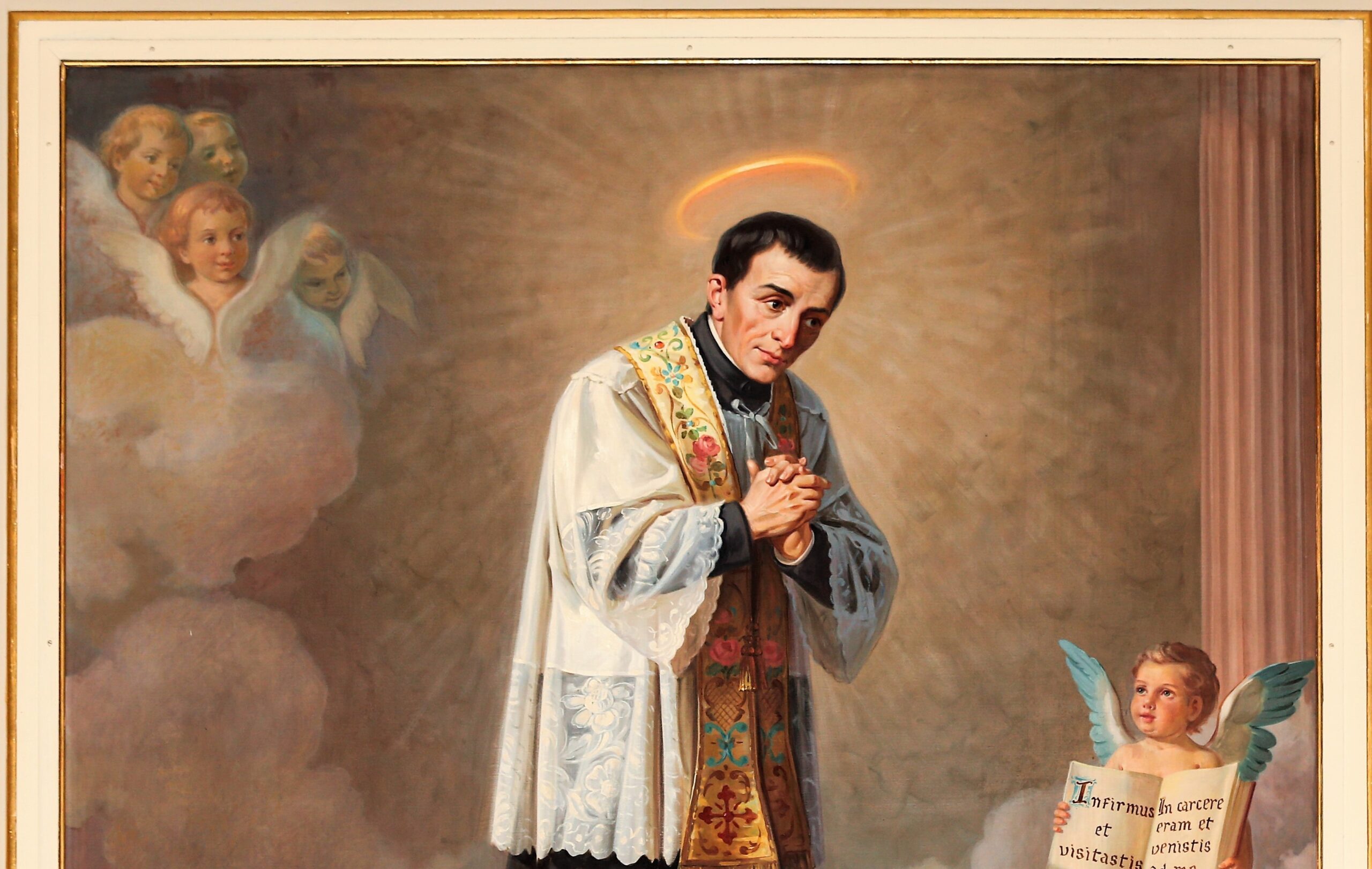
Catholics who were besieged by fear of death would experience confidence after speaking about it with St. Joseph Cafasso (1811-1860). They would even exclaim: “I no longer fear death; I even desire that it come soon, provided that I have Don Cafasso somewhere near at that moment.”
St. Joseph Cafasso accompanied 68 criminals to execution and none of them died impenitent. Ann Ball, author of Modern Saints: Their Lives and Faces, described how the saint accompanied the condemned men.
“When Don Cafasso learned of a sentence of execution, he visited the condemned man often and as far as possible spent his last night with him. He would spend the remainder of the night before the execution prostrate on the floor in adoration before the Blessed Sacrament, and he scourged himself to blood in order to secure the eternal salvation of the condemned. On the day of the execution, after saying Mass for the prisoner and giving him Holy Communion, Don Cafasso would make his thanksgiving along with him and then entertain him. He laughed and grieved with the prisoners, and he would willingly have died with them in order to secure their eternal salvation. Then Don Cafasso would ride in the cart with the criminal to the place of execution. Seated beside the condemned man, with crucifix in hand he would wipe away the tears, encourage the prisoner and console him with the hope of an eternal reward. Showing the prisoner the crucifix, he would say, ‘This is a Friend who will not terrify you, who will not abandon you. Hope in Him and Heaven is yours!’ Don Cafasso would even promise the condemned an immediate entrance into Heaven, bypassing Purgatory, if they would offer up their execution as an act of penance. As a little service in return, he would give the prisoner messages to deliver for him in Heaven.”
St. Francis de Sales always maintained hope, even for those who had to all outward appearances made a bad end, on the basis that we cannot judge from the exterior side of things. St. Faustina wrote, “God’s mercy sometimes touches the sinner at the last moment in a wondrous and mysterious way. Outwardly, it seems as if everything were lost, but it is not so. The soul, illumined by a ray of God’s powerful final grace, turns to God in the last moment with such a power of love that, in an instant, it receives from God forgiveness of sin and punishment, while outwardly it shows no sign either of repentance or of contrition, because souls [at that stage] no longer react to external things.”
A 19-century woman was devastated because her husband had committed suicide by drowning himself. She travelled to the village of Ars and was near the church. Suddenly, St. John Vianney appeared and stopped in front of the lady. He bent over her and whispered into her ear: “He is saved!”
The woman was startled and the saint repeated: “He is saved!”
A gesture of incredulity was the only reply of the woman.
Saint inspired confidence to the dying Whereupon the saint, stressing each word, repeated, “I tell you he is saved. He is in Purgatory, and you must pray for him. Between the parapet of the bridge and the water he had time to make an act of contrition. Our Blessed Lady obtained that grace for him. Remember the shrine that you put up in your room during the month of May? Though your husband professed to have no religion, he sometimes joined in your prayers; this merited for him the grace of repentance and pardon at the last moment.”
聖人啟發對死亡的自信
有一次Jean Pierre Camus主教問聖方濟、沙雷氏,在面向死亡的時刻最好的心態是什麼,聖人寧靜地回答:『慈愛。』他說:『一個快樂的病榻最關重要的是要能有慈愛,但如果能夠枕在謙遜和自信的兩個枕頭中,這會是多麼的美好。』
那些因恐懼死亡困擾的教徒,跟聖若瑟卡法(St. Joseph Cafasso1811-1860)談話後能夠體驗信心。他們更聲稱:『我不再害怕死亡,如果那時能夠有卡法神父的在某處相鄰的話,我甚至渴望它快一點到來。』
聖若瑟卡法陪伴了六十八位罪犯接受死刑,沒有一位是死不悔過的。Ann Ball描述了這位聖人怎樣去陪伴判了刑的罪犯:『當卡法神父知道了一死判,他會屢屢探望這罪犯,在他的最後一夜,盡可能陪伴他。他會在行刑前的一晚所餘的時間,匍伏在地在聖體前作朝拜,他鞭打自己直到血流,好能可靠地為這罪犯尋求永恆的救恩。在行刑的那一天,為這罪人奉獻彌撒和送聖體後,卡法神父會跟他一起作謝恩,然後款待他。他與犯人一起笑,一起悲傷,更願能跟他一起死亡去確保使他的永恆救恩。然後卡法神父會與犯人同坐囚車一起到刑場。他手執十字架,坐在犯人身旁,他會為他擦乾眼淚,鼓勵他,以永生賞報的希望安慰他。把十字架給他看的同時,他會說:「這是一位朋友,他不會恐嚇你,不會放棄你。在祂內,在天堂中是你希望所在!」卡法神父甚至會承諾,如果他們能夠將他們的死刑奉獻作補贖,他們會立即進入天堂,不用到煉獄裡去。作為一個回報的工作,他會給犯人一些口訊,請犯人在天堂代為傳送。』
聖方濟、沙雷氏時常保持希望,甚至那些似乎不得善終的人,基於我們凡事都不能僅從外在作判斷。聖傅天娜寫道:『有時,天主的慈悲以奇妙而神秘的方式,在最後那一刻感動臨終的罪人。雖然從表面上看來,這個靈魂似乎完全絕望了,其實並非如此。在天主強而有力的最後恩寵的光照下,這個靈魂在臨終那一刻,懷著如此強烈真摯的愛,回頭皈依天主,使他在瞬間便獲得天主的寬恕,赦免了他所有的罪過及罪罰;儘管他外表並沒有顯露悔改或痛悔之意,因為靈魂在這臨終階段,對外界事物已無法做出任何反應。』
一位19世紀的婦人因為她的丈夫淹死自殺而痛心。她走到阿爾斯鄉村,來近聖堂。突然聖若翰·維雅納出任現並停步在她面前。他俯身向她耳語:『他得救了!』婦人在驚訝中,聖人繼續說:『他得救了!』這婦人惟一的回應就是只一個不可致信的表情。於是這聖人,強調每一個字,重複說:『我告訴你,他得救了。他身在煉獄,你要為他祈禱。在橋下矮牆和水之間,他有時間作懺悔。我們聖母為他取得這恩寵。記得在聖母月的時候,你在房中設立了一個小龕嗎?雖然你丈夫宣稱他沒有宗教,他有時也跟你一起祈禱,這讓他在最後的時刻得到寬恕和悔悟的聖寵。』







