

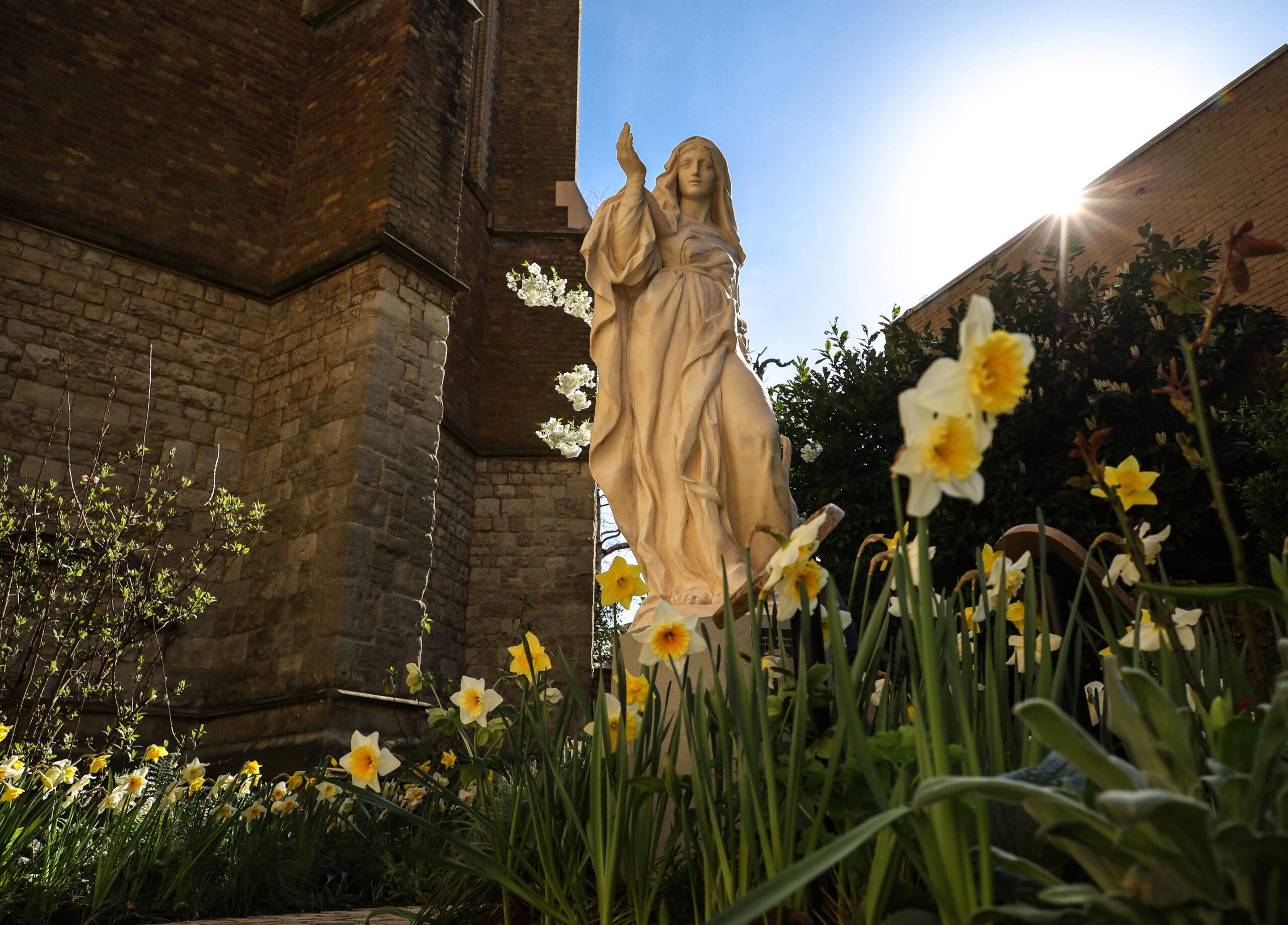

St. Francis de Sales (1567-1622) is a practical guide to holiness. He said, “Just as the soul is the life of the body, so charity is the life of the soul.”
Regarding the practice of charity, the saint gives this advice: “The only method of acquiring that love is by loving. You learn to speak by speaking, to study by studying, to run by running, to work by working. Just so you learn to love God and man by loving.”
True love of God consists in desiring all that is good to God for His own sake. St. Francis de Sales teaches that we can desire good for God in two ways: “First, we can desire that good which He already possesses by rejoicing in that He is and that no increase can be made to the greatness of His perfection. Secondly, we can also desire that good which He does not possess–practically, if it is within our power to offer it, or by the affections and will, if it is not within our power.”
Puzzled by this teaching, Bishop Jean Pierre Camus asked, “But what possible good is there which God does not possess?”
The saint replied, “What I mean by this is that which is called external and which yields to Him through the worship and honor rendered by His creatures, especially man whom He has blessed with the gift of reason.”
In the book, The Spirit of St. Francis De Sales, Bishop Camus wrote: “We must distinguish in God two sorts of good, the one interior, the other exterior. The first is Himself; for His goodness, like His other attributes, is one and the same thing with His essence or being. Now this good, being infinite, can neither be augmented by our serving God and by our honouring Him, nor can it be diminished by our rebelling against Him and by our working against Him.”
He continued: “But there is another kind of good which is exterior; and this, though it belongs to God, is not in Him, but in His creatures, just as the moneys of the king are, indeed, his, but they are in the coffers of his treasurers and officials. This exterior good consists in the honours, obedience, service, and homage which His creatures owe and render to Him: creatures of whom each one has of necessity His glory as the final end and aim of its creation. And this good it is which we can, with the grace of God, desire for Him, and ourselves give to Him, and which we can either by our good works increase or by our sins take from.”
A holy soul said, “True lovers of God are like the sun, which, though it is sometimes covered with clouds, yet always possesses in itself the same light and the same warmth.”
St. Francis de Sales said, “The most certain sign that we love God only in all things is when we love Him equally in all things. He is ever the same, and the inequalities of our love are the result of an earthly attachment to something that is not of Him.”
St. Jane Frances de Chantal, a close friend of St. Francis de Sales, was equally contented in consolations and in desolations. For in both she only desired and sought the fulfillment of the Divine Will.
St. Catherine of Genoa, after being struck by the arrow of Divine love, often cried out: “No more world! No more pleasures!”
St. Philip Neri, burning with flames of love, often cried: “How is it possible that anyone who believes in God can love anything but Him!”
The motto of St. Francis de Sales was “Death or Love.” He explained: “Die to all other love, in order to live to Christ’s love, and so not to die eternally, but live in His everlasting love.”
He said, “I would either love God or die. Death or love. Life without that love is infinitely more terrible than death.”
我們藉著愛學習愛天主
方濟各、沙雷氏(1567-1622)是個落實的成聖嚮導。他說:『一如靈魂是肉體的生命,同樣愛德是靈魂的生命。』
有愛德的實踐,這位聖人給忠告我們:『要能得獲愛的僅有的方法是去愛。你以說話去學習說話,閱讀去學習閱讀,跑步去學習跑步,工作去學習工作。就是如此,你以愛去學習愛天主和人。』
對天主的真愛在於因天主的緣故渴望一切為祂是美善的。聖方濟各、沙雷氏教導我們渴望對天主是美善的,有兩個途徑:『首先,我們能夠渴望天主所具備的善以歡欣喜悅天主是天主,並且祂完美的偉大再沒有可以增添的了。其次,我們可以渴望一些祂並沒具備的美善—-實際上它是在我們能力內所能奉獻的,如果不是在們能力之內,也以熱忱和意願來渴望。』
困惑於這教誨Jean Pierre Camus主教問:『但什麼可能會有美善是天主沒有的?』聖方濟各回答:『這個,我意思是說外部的,由祂的受造物,特別是祂賦予理智恩典的人類的朝拜和致敬而來的。』
在『聖方濟各、沙雷氏的精神(The Spirit of St. Francis De Sales)』書中,Camus主教寫道:『我們應分辨天主的兩種美好,內在的和外在的。前者是祂本身;是祂自身的美好如祂的一切屬性,跟祂的本質或本性是一個,同樣的一個。這美好是無限的,不會因為我們對祂的服務和致敬而增強或因為我們的反叛或我們的對抗而減弱…但還有另一種的美好,外在的;這美好雖然屬於天主的但不在祂內,卻在祂的受造物內,一如君王的金錢是真屬他的,但卻在他司庫和官員的庫房內。外在的美好包括光榮,服從,服務和祂受造物對祂應有的崇敬:最後每一受造物都有需要祂的光榮和有被造的目的。這個美好是我們能夠以天主的恩寵,為祂而渴望,並給予祂,這些,我們可以以我們好的工作增強或以我們的罪過抹殺。』
一位聖善的人說:『天主的真愛者就如太陽,它雖然不時為雲層阻隔,但仍本身擁有一樣的光和一樣的熱。』聖方濟各、沙雷氏說:『我們在所有的事物中只愛天主的確實跡象,就是我們在所有的事物中相等地愛祂。祂是永遠一樣的,我們愛的不平等是由依戀世界不是祂的事物所致。』聖方濟各、沙雷氏的一位摯友聖方濟加、尚達爾,在受安慰時和受苦痛時也同樣滿足。在兩者中她的唯一渴望並尋求滿全天主的聖意。
熱那亞的加大肋納,在為聖愛的箭刺中後,時常喊叫說:『不再要世俗!不再要快感!』愛火焚燒的聖斐理經常喊叫:『這是怎樣可能的,一個相信天主的人能夠愛天主以外的其他事物。』聖方濟各、沙雷氏的座右銘:『死亡或愛』。這位聖人解釋道:『死於其他的愛,好能活於基督的愛內,因此不會永遠的死,卻活於祂永恆的愛內。』他說:『我或是愛天主或是死亡。死亡或愛。生命沒有這份愛永遠是遠較死亡恐怖。』







