

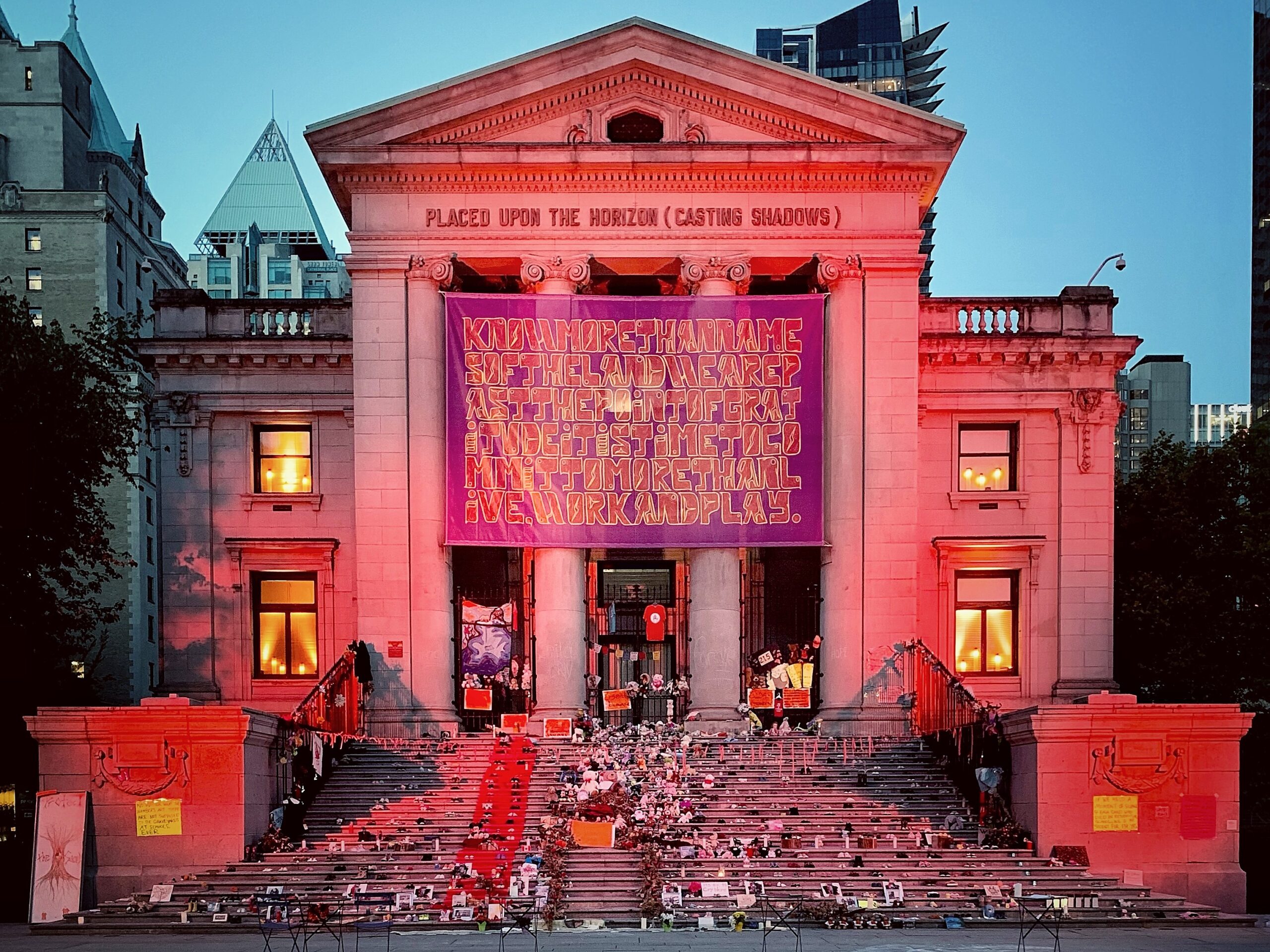

If you needed permission to feel angry, here it is. We are all coming off an emotionally intense year. We are all spiritually a bit anemic and vulnerable. Now, just as we return to our churches, we do so with complicated emotions about the history of the Catholic Church in Canada.
So many of us Canadians have been deeply disturbed and shaken by the discovery of the residential school grave sites several weeks ago.
Many of us have been shocked by the vast amount of Canadian history we weren’t taught in school. It is uncomfortable – but necessary – to sit with the reality of what just happened to our country’s collective memory and our national consciousness.
It is important that we “look upon the one whom we have pierced.” If we are to have any meaningful relationships, we must acknowledge even those horrific things we do not understand. To fail to do so leads to dysfunction and, if left unchecked, the disintegration of the person.
Yet there is danger with looking into the pit too much and too often. Emotions can become addictive, and they can also be distractions from dealing with our own weakness and resentment.
When we are activists wearing our “spreading awareness” hats, a discerning approach is needed. We usually begin with “holy outrage”; but if we can’t move forward with the realization that we are not saviours, we will always end up pinning our identity on self-created virtue and getting lost in matters that are too cumbersome and complicated for us to carry daily.
So then, how exactly does one move forward from this scale of evil? Somehow, humanity does, every day.
When we walk with Jesus, what does moving forward look like?
How can we fail to notice and mention that the resurrected Christ, after having been brutally murdered and having his dignity annihilated, appeared to his followers with the gaping holes still in his hands and side? In fact, his identity was only confirmed by Thomas when Thomas experienced his wounds. There is something profound here. Jesus still wore the signs of trauma and abuse.
God has an eternity of time for abuse victims. He makes space for our trauma and our wounds because he shares them through his son.
Those who abused children at residential schools were not godly people. They did not follow after the heart of the Father. They did not reflect the Father’s love to those who had been essentially legally abducted by the government. This is our collective shame. Not because we personally condoned it somehow or allowed it, but because we have all sinned.
St. John Paul II famously said at World Youth Day Toronto in 2002, “we are not the sum of our weaknesses and our failings,” but that we are “the sum of the Father’s love for us.”
Christ, like those children, knew no sin. And yet, he experienced the ultimate betrayal and was abandoned by most of those who loved him in his hour of need. Today, we can commit to not leaving Christ in his hour of need.
We only have one little day at a time, dispensed piecemeal and spanning for we know not how long. We only have those whose lives happen to intersect with ours. We don’t have to log onto social media to fight with one another about who said or didn’t say what apology (although rereading apologies can be good for the soul and for healing).
We can breathe. We can console those who need consolation when we meet them. We can pray to have the words to say when it is clear that we need to say them. We can live our lives in such a way that is sincere and authentic.
St. Teresa of Calcutta said, “never let anyone come to you without leaving better and happier.” Obviously, confronting people is necessary, but, even when speaking out the truth, we can do it in a straightforward and loving way, from the heart. The truth pierces to the soul and causes all victims to rejoice. Only wrongdoers do not rejoice at the truth.
Because all truth invariably sets us free. Even unpalatable truths. Living in the truth is the only way to love our neighbour.







