

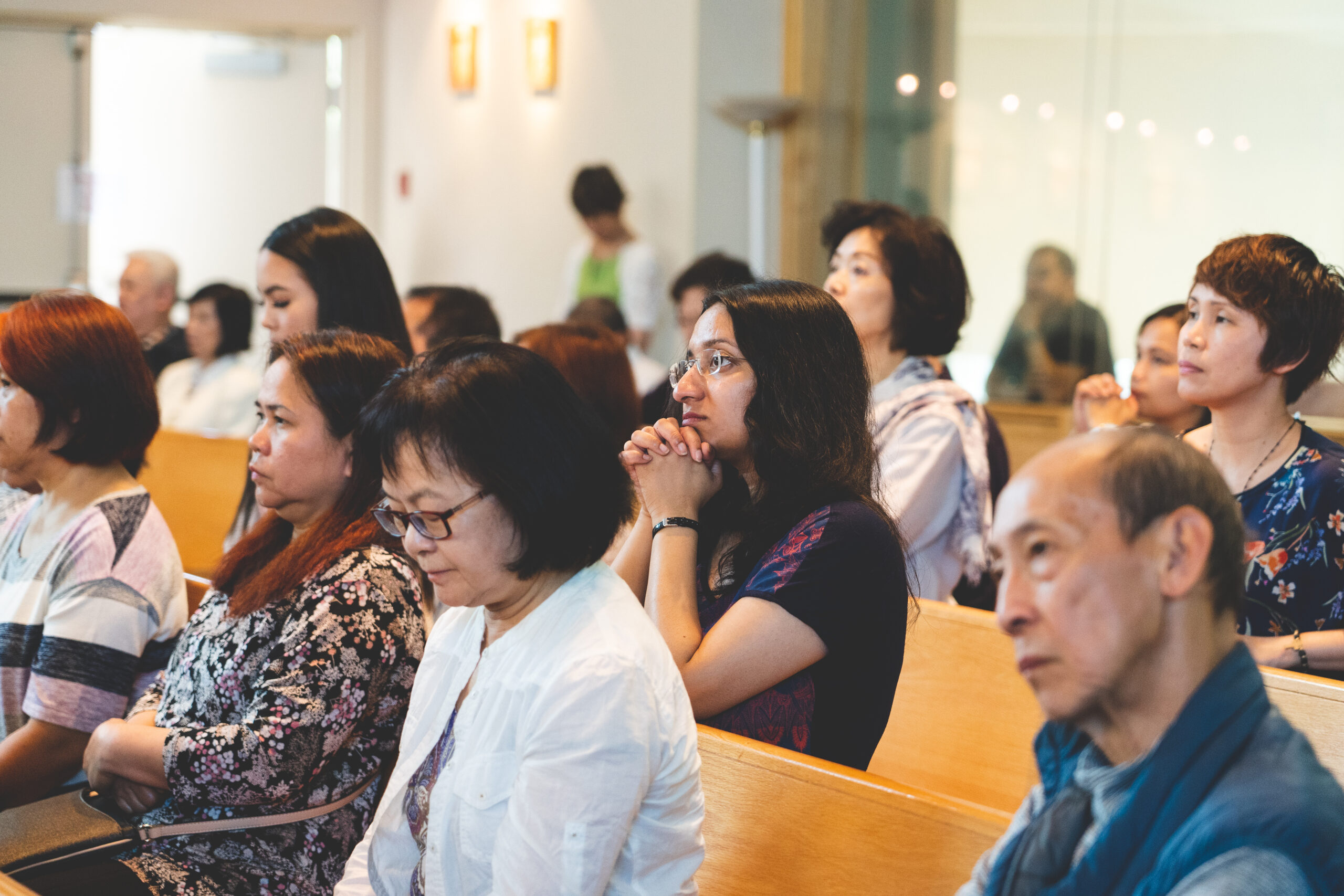

Now that the archbishop expects all of us to be back to regular Sunday Mass attendance (with some exceptions of course) I’m sure many of us will be looking around the pews to check the damage done over the last 16 months.
Since pandemic restrictions were lifted, how many of us are coming back to church?
Before churches re-opened for public services, there was no shortage of theories that a substantial portion of Catholics won’t be returning to Mass or that it will take significant effort to convince them to. A colleague whose opinions I greatly respect has suggested that we have moved out of Christendom and must return to an Apostolic age, where we accept that Christians are a minority, our values are not always respected in society, and we must work hard to gain the trust of those around us.
Another take by a religious sister in a new book called A Post-Pandemic Church: Prophetic Possibilities calls this moment of returning to church a time for renewal and transformation. It’s time to “convert” the systemic issues (like clericalism) that have plagued us, she argues.
Without pretending to have their depth of wisdom or years of experience in working for the Church, I’d like to offer another suggestion that’s partially inspired by an opinion piece I read recently in the National Post.
The writer was making the case that because Canadians are so divided these days, and the rifts between us rapidly growing with the help of social media and cancel culture, we need something that unites us. He said Canada’s problem isn’t that it’s so diverse, it’s that in the midst of its diversity, its people don’t have a common purpose, goal, or values to stand on.
I’d like to suggest that the Church, its leaders and lay people, can also apply this suggestion.
Catholics are diverse. The ways the pandemic, vaccines, restrictions, sexual abuse and its cover up, residential school graves, and other current events have affected us are vast and distinct. Each one of us shoulder-checking at Mass to see who is left in the pews has a different experience of these news bites filtered through our families, friends, ethnicities, personal stories, jobs, preferred news sites, and even the stages of life we are in.
This diversity is a good thing. We need to approach current events with compassion, understanding, and from a variety of perspectives because the world is as complex as we are.
But to stand strong in it all requires us to recognize that we have a common ground. We have something and Someone who unites us more powerfully than our diversity might threaten to divide us.
We believe that all human beings are made in the image and likeness of God. We believe when Jesus said, “love those who persecute you,” he meant it, and when he went out of his way for people that the rest of society ignored, maligned, or targeted, he was in part teaching his followers how to live.
And in the hours before his torture and death, Jesus prayed for his disciples, asking: “that they may be one, as we are one.”
These men were not 12 identical puppets with similar worldviews. They were former tax collectors, fishermen, and others with a wide variety of life experiences and emotional baggage. They likely lived the joke I’ve heard many times: “where two or three are gathered in God’s name, there’s an argument.”
But they had a common goal and purpose, and most of us would not be going to church this weekend without them.







