
One of my favourite teaching stories centres around a school Easter Mass. During a popular resurrection hymn, the children all sang enthusiastically of the empty tomb; however, one primary student stood out from the rest. While everyone else joined in the refrain, “The Lord is risen,” her sweet voice simultaneously proclaimed, “The Lord is missin’!”
Although her misunderstanding of the lyrics was incredibly endearing to the adults, it was a very honest mistake. In fact, in Luke’s gospel, we do not receive many details about this pivotal moment in our Christian faith, hearing that the tomb was empty when the women came to anoint Jesus’ body and that two men informed those women, “He is not here, but he has been raised” (Lk 24:6). It stands to reason that, for most people, an empty tomb and used burial cloths would point to the assumption that Jesus, the Lord, was indeed “missing.”
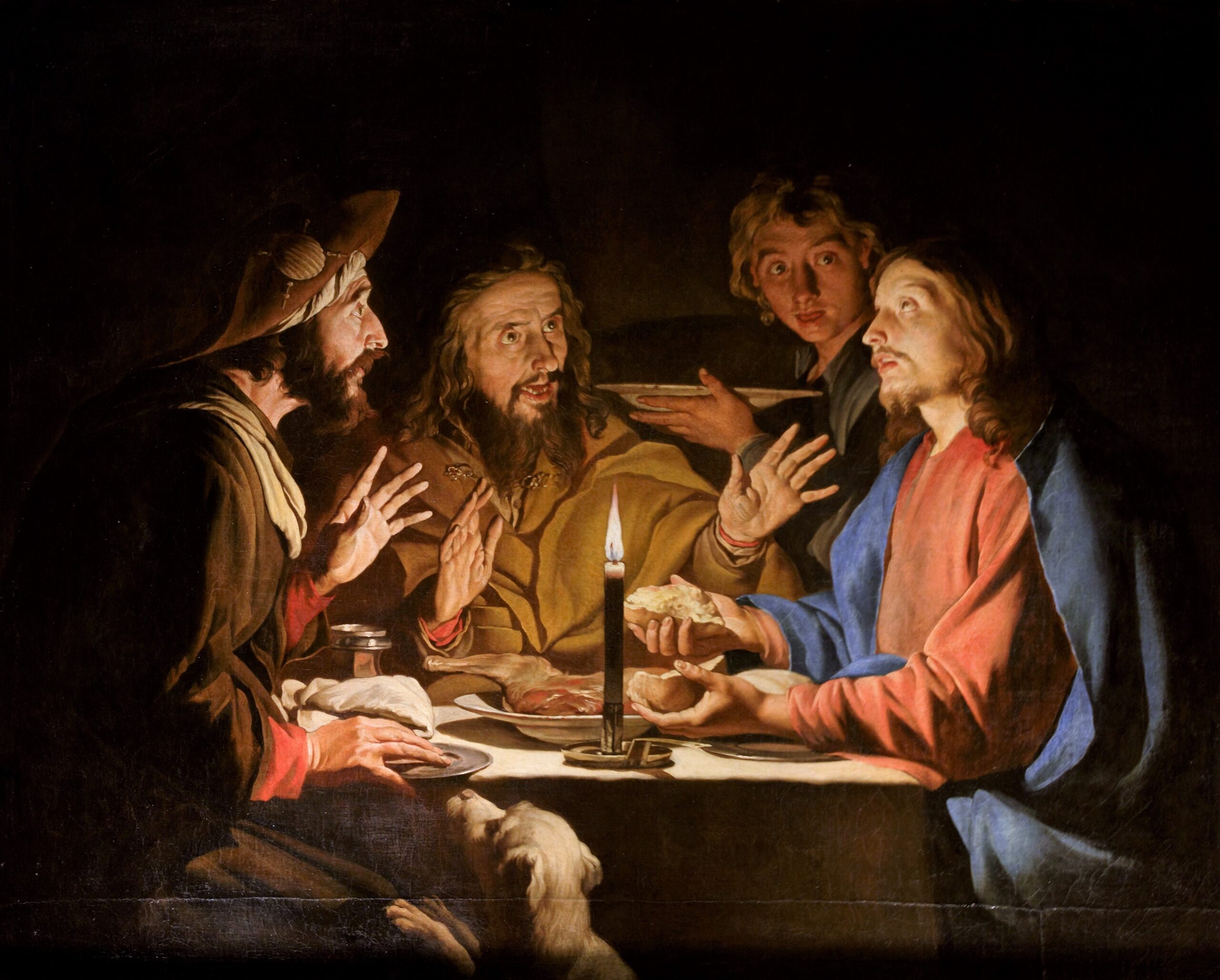
The next part of Luke’s gospel is one of my favourite readings: the road to Emmaus. Walking to Emmaus and discussing the recent events in Jerusalem, two disciples also feel that Jesus is gone. Consumed by grief and their own opinions, they are approached by Jesus, “but their eyes [are] prevented from recognizing him.” When Jesus asks the men to explain their conversation, they accuse him of being the only one who does not know what transpired, while – as we know – he was, in truth, the only one who did know what had occurred.
The men went on to explain to Jesus how the women “did not find his body” but reported that they had “seen a vision of angels who announced that he was alive.” Jesus, still unrecognized, proceeded to recount how the events of Good Friday and Easter Sunday had fulfilled the words of the prophets. Stuck in their own mindsets, the men seem unaffected by the words of this man they did not appear to know.
After journeying with the disciples and accepting the invitation to stay with them, Jesus “took bread, said the blessing, broke it, and gave it to them” making his identity obvious to them. Then, upon leaving them with this gift of the Eucharist, he “vanished from their sight.” Immediately, Jesus’ revelation opened not only the disciples’ eyes to His identity, but also their ears to His previous words of scripture. Most importantly, their hearts, still “burning [within them]” were converted and they eagerly rushed to share the news that Jesus was alive.
On the third Sunday of Easter, we heard the continuation of Luke’s gospel, realizing that it continued to take great faith for Jesus’ followers to overcome their human misunderstanding of the resurrection. The disciples, even though they had anticipated Christ’s saving power – even though they had heard just the story of his revelation on the road to Emmaus – still found the events difficult to believe. Jesus encouraged them to touch him and he ate before them, assuring them that “a ghost does not have flesh and bones.”
What do the many events in Luke’s gospel continue to reveal to us today? To start with, how many times do we meet Jesus along the road of life and fail to recognize him? Caught up in our own agendas, perspectives, and views of how things are “supposed to be,” our venting and prattle often prevent us from hearing God’s voice. Just as the disciples grew frustrated with Jesus for “not knowing” what they knew, we too can lose patience with those who differ from or misunderstand us, allowing our personal biases and imperfections to render us blind to Jesus, who lives in everyone.
Like the disciples, we also meet Jesus in the Eucharist. After finally recognizing him in the breaking of the bread, Jesus disappeared from the disciples’ physical sight, permanently changing their hearts. Each time we receive his body, we too are changed whether we recognize this or not.
Although we cannot see him with our eyes, as Easter people, we are called to share that which is burning in our hearts. In word and in action, we must spread the news – and the presence – of the risen Jesus so that no one mistakenly thinks that “the Lord is missin.’”