

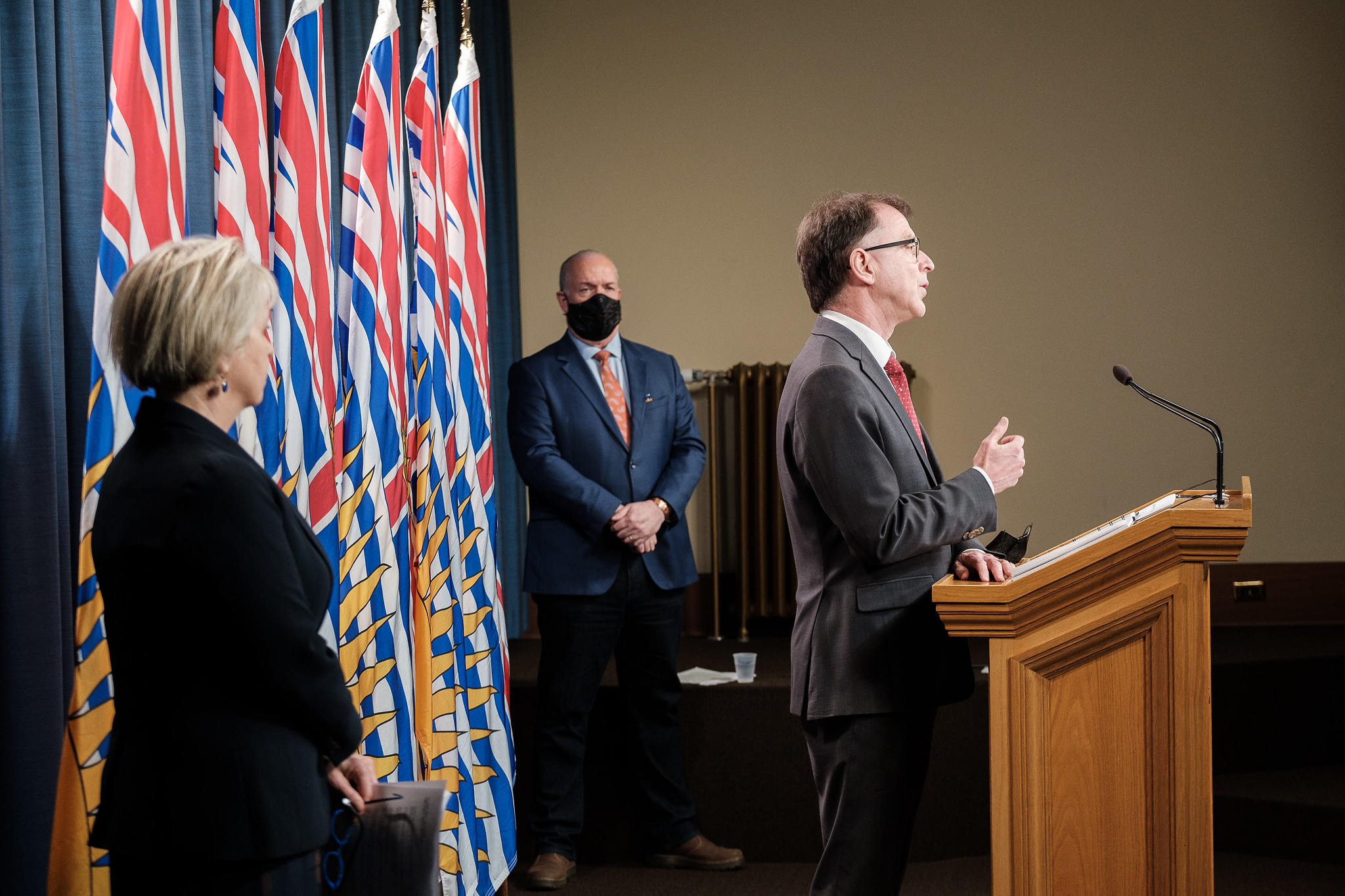

In the two days since Premier John Horgan tore a strip off young adults for contributing to rising COVID numbers, there’s been more news coverage about the perceived unfairness of his chastisement than about the previous six months of church closings.
Talk shows featured wall-to-wall debate on whether the premier’s remarks were too harsh or overdue. Lengthy newspaper articles analyzed the rationale for his comments.
Meanwhile, churches, which have been closed to public worship since fall and received a few days’ grace for holy days before being closed again without warning or reason, received not a fraction of the debate.
But such is the haphazardness of the government’s strategy, and the public’s response, to managing this virus for the past year. At times arbitrary and other times irrational, government orders have been supported unquestioningly by a large segment of the population and media without judgment.
Health officer Bonnie Henry’s latest volley of restrictions are a case in point. On March 24, when she announced a variance on her health order to increase the number of people who could attend outdoor worship, the latest B.C. COVID-19 weekly report showed the number of hospital admissions had “remained relatively stable” for the previous eight weeks, averaging 162 hospitalizations a week.
Likewise the number of deaths were described as “stable,” averaging 23 deaths a week. There were 55 people in intensive care in B.C.
All in all, those would not seem to be numbers that justified a more heavy-handed approach with restrictions.
The next day, March 25, when Henry announced limited indoor religious services would be permitted for four holy days, she knew the provincial case numbers were rising, as they had been for weeks. She also knew the incidence of infection was highest among young adults and was increasing. It had been all along. But for all their numbers, young people represented only 15 per cent of hospitalizations and just nine per cent of intensive care admissions.
Yet three days after signalling a start to a return to in-person worship, Henry backtracked and banned publish worship again, this time closing restaurants as well. (Perhaps she realized Charter religious rights didn’t support the government’s singling out of places of worship any longer.)
At her March 29 press conference, Henry said it was “with a heavy heart” that she was reversing her decision on worship. But her words rang hollow. From the start, this government has taken an aggressive stance toward religious practice, imposing some of the toughest restrictions in North America with scant justification.
The frustration of believers compounded the exasperation felt by average British Columbians who have listened to government platitudes about staying the course for “a few more weeks.” Each news development – from vaccines to variants to vacations – leads to a new government strategy. Now we apparently need a “circuit breaker” – the latest catchphrase.
Just a few weeks ago Henry predicted we’d be in a “post-pandemic world” by summer. Even if by some miracle she’s right, the lessons of the past year have been illuminating. Experts say we can expect more pandemics in future, and if we’re not careful, the response to this pandemic will be a template for them. We can expect restrictions to be more easily enacted next time, and a growing tendency for people and media to rally behind each government order.
In Alberta, a group of medical and emergency management representatives has challenged Premier Jason Kenney and his health officials to a public debate over the province’s COVID-19 restrictions. They say Albertans deserve “a transparent discussion of complete data to date and various strategies used over the last year, today, and in the future.”
It’s a bold and rational proposal. British Columbians are entitled to nothing less than a full explanation for the arbitrary and haphazard way the government has responded to this virus, particularly its restrictions on religious and other liberties.







