


Praise be to God, Easter is upon us! I pray that Easter day was a joyful one for you and your families, and that the joy continues to grow throughout the full 50-day season.
I’m sitting near a window while I type, and I feel a sense of hope and thanksgiving as I look out at all of the new things coming to life.
We moved into this house last May, so I missed the early spring flowers. There are bits of colour sending out little rays of beauty from the otherwise barren ground. Even the new pillow of electric-green moss at the feet of Our Lady’s statue has me smiling. A little goldfish that I haven’t seen since we placed him in our pond late last summer has appeared for me, alive and having grown under the ice of winter.
It’s no small thing that Easter comes to us in the spring. Everything I see and feel happening in the darkness of the earth is a symbol of the Resurrection.
In Grade 2, my kids study the seasons and do a section on plants. They do the usual planting of beans, watching to see what is required to bring them to fruition: water, and sunlight. They collect different kinds of seeds that we find in our travels, and they place them lovingly in an old egg carton that gets plunked on a high shelf and forgotten.
One experiment has the kids place some kind of plant, an ivy maybe, inside a glass jar with soil and a splash of water. The jar is then sealed and never reopened. The plant breathes out excess water, which condenses on the glass and rolls back into the dirt. The plant continues, indefinitely, to feed itself. Nature is amazing.
One activity that I find to be very theological is the dissection of soil. We collect a few scoops and place the soil in a jar of water. The jar gets a good shake and then is left to settle. When we return, we find the contents of soil, conveniently separated into nice little layers. Rocks and pebbles rest on the bottom, then sand and clay. But floating on the top of the water is a black layer of rotted plants and the broken-down remains of dead animals. We call this “slime of the earth” humus, and it is traditionally what the form of Adam was raised out of.
Without the dead remains mixed in with our soil, we are left with very poor gardening conditions. The necessary minerals, the life of the soil, come out of the remains of the dead. And that death is what brings forth the new life I see reaching for the sun outside my window.
Lent has passed us by, but perhaps it is good to remember its purpose, so as to celebrate Easter with fuller joy. The dead body of Christ is placed within the dark coldness of the tomb. And when we unite ourselves with him, when we hide ourselves in his wounds as little seeds in the wet earth, we are given the gift of new life. Christ lays himself down in death to feed us so that we might become who we were created to be. His precious body is the humus that gives light and life to our humanus, “man out of the earth.”
Before a seed can grow in health to become a sign of spring and new hope, it must itself die. It must shed the shell that confines it and soak itself in what the earth offers. Without water and sunlight, the soil can no longer feed the hard, shrivelled seed. It dies, in cold darkness and isolation.
So Lent is the time when we, the hardened seeds, prepare to transform. We are meant to have spent time in prayer, sacrifices, the sacraments, the Scriptures, the living waters that soften the shell around our hearts. When we are ready, or able, to shed the shell of selfishness and pride, we join Christ and unite with him in the coldness of the earth. And then Easter begins! With him, a new life will well up within us, and we will grow into the thing of beauty we were created to be.
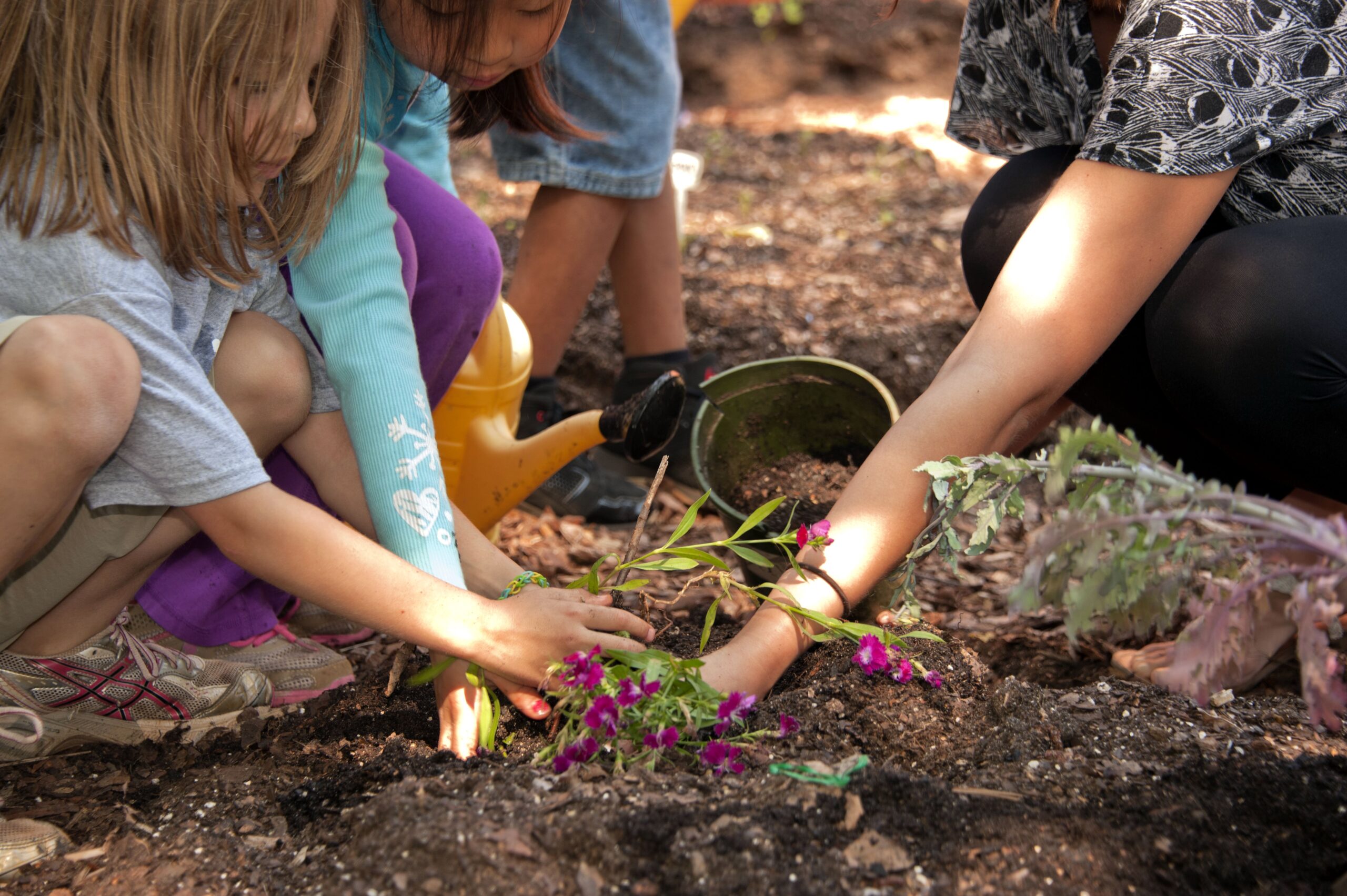
I believe that every Christian should be one that brings about new life, something of beauty to give glory to God. If you are a gardener, then you already know the mystery of the beauty of the earth. If you are not, it is time to get dirt under your nails and plant something lovely in a pot.
Easter is our time to meditate on the truth that life began in a garden and, united with the risen Christ of Gethsemane, new life will grow in the garden of our hearts.







