

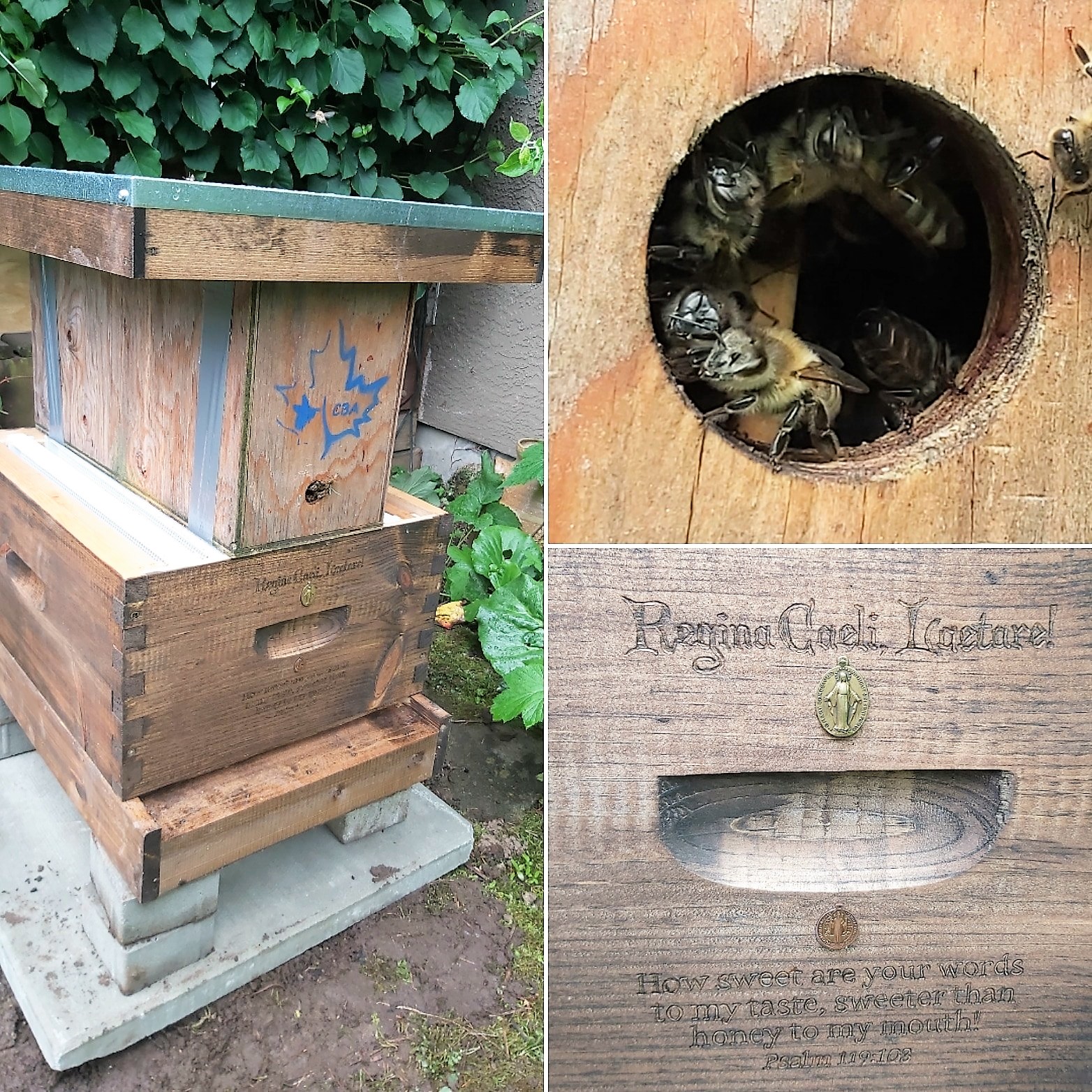

Spring is nearly at our door, and the bees are back to work. Their lengthy Sabbath has come to an end, and there are flowers to be pollinated. All the work they are now beginning – cleaning the hive, gathering nectar, creating honey, capping honey, capping, and caring for brood – begins anew every year and is done with the goal of making it to, and through, the next winter. Their unfailing devotion to their queen is their motivation to simply not stop.
You may remember that last year I became an official apiarist. My bees were a wonder to me. Their dangerous potential to attack me became less and less of a fear, but I was wise enough to always respect that potential. I would squat by their hive and simply watch them as they flew about me, carrying little saddlebags of pollen into their queen.
Somehow they survived until winter. Multiple beekeepers who have given me mentorship told me that 2020 was simply the worst year for bees. One told me that in 30 years of beekeeping he has never had a worse year. It seems that 2020 was just lousy in general.
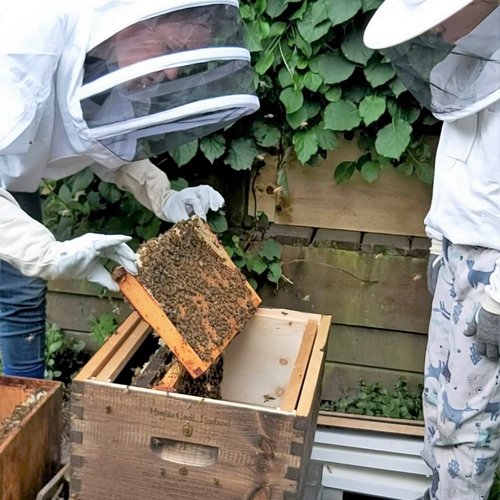
My bees survived against the odds and went into winter with plentiful honey. But only weeks before spring I took a peek into the hive and was devastated to discover that the colony had died in the few days beforehand.
I found the queen, surrounded by the last remains of the cluster protecting and serving her until their literal end. It seems there isn’t a clear reason why they died, and most of the beekeepers I know had a similar experience. My new colony, and all of us, will hopefully have a better year ahead.
But before they died, my bees provided our family with 20 pounds of honey and enough wax for a dozen lip balms, a pillar candle, and two pathetically misshaped and undersized taper candles.
I intentionally made the tapers small so they would fit inside the standing crucifix base we have in our living room. But inside of me I dreamt of those pathetic little things glowing on a church altar. So, they sat in the base, unburned but not forgotten.
Before I continue, I wonder if you understand just how bees make wax. I certainly had not, and I nearly fell sideways when I saw a picture.
As a bee is converting nectar into honey in its gut, they convert some of the sugars into the wax. It is made inside of them. Then the wax escapes, in little bread-like pieces, out of little vents on their stomachs. The bee literally becomes a little beeswax toaster. They then chew their toast until it is mouldable, and it becomes another contribution to the hive, and, in my case, to God.
So, the candles sat there, until one day I found a priest willing to place them on his altar for a private Mass. Those sad little things stood, alit, before the Son of God transubstantiated. They gave light to the priest’s sacred hands and gave glory to Him in the Holy of Holies. I cannot think of any animal who actually contributes something to the sacrifice of the Mass other than the honeybee. (I suppose it’s possible that altar cloths are made of wool. If they are, I’ll accede that it’s appropriate that a lamb be the one other truly Catholic animal.)
As I thought about the glory of my Catholic honeybees, that the work of their … guts … is placed before God’s throne as an actual symbol of Christ, and to give him praise, I felt a small amount of envy at their privilege. Of course I then came to the conclusion that I too am invited to place my very self at the foot of the throne to give praise to God in the works of my heart and of my hand. I am asked to symbolize Christ to those I meet. My sometimes-pathetic offerings done in love are still an offering accepted by God for his own glory.
And I think now that whenever I watch the altar candle (and assume as I should that it is truly the work of bees), I will reflect on what I am bringing, or perhaps not bringing, to the altar as a gift of love for the great creator of me and of the lowly bees.







