


St. James wrote, “The prayer of a righteous person has great power as it is working. Elijah was a man with a nature like ours, and he prayed fervently that it might not rain, and for three years and six months it did not rain on the earth. Then he prayed again, and heaven gave rain, and the earth bore its fruit.” (Jas 5:16-18)
We learn about the prophet Elijah from the Books of Kings in the Old Testament. Elijah declared to the idolatrous king Ahab: “As the Lord, the God of Israel, lives, before whom I stand, there shall be neither dew nor rain these years, except by my word.” (1 Kgs 17:1) The long drought was a miracle both of divine justice and of divine mercy. It was a just punishment for the idolatrous king and people and a means of inducing them to return to the true faith.
Obeying the commands of God, Elijah went and concealed himself near the brook Cherith, which is east of the Jordan. The ravens brought him bread or flesh every morning and every evening for many days and he drank of the brook. St. Basil said, “The most ravenous of birds were compelled to supply the prophet with food; and they, whose nature it was to seize the food of others, waited on the man of God. Completely forgetful of their nature, they obeyed the divine behest.”
After a while, the brook dried up, because there was no rain in the land. The Lord sent Elijah to a poor widow of Zarephath, a city of Sidon. The Lord increased the meal and oil by a miracle for the sustenance of Elijah and the widow.
Eventually, the Lord commanded Elijah to present himself to King Ahab. On Mount Carmel Elijah defended God’s law in the solemn contest against the prophets of the false god Baal. Elijah’s sacrifice was consumed by fire from heaven which proved to the people that the Lord was the true God. Elijah then went to the top of Mount Carmel and prayed for rain.
Bishop Frederick Justus Knecht, author of A Practical Commentary on Holy Scripture, wrote, wrote, “The land of Israel, suffering from the long drought, was a figure of the great spiritual drought from which the whole world suffered before the coming of Christ. Elijah bidding the heavens to rain was a figure of Christ opening the fountains of grace to a perishing world. The rain itself, which gave a new life to the earth, is a type of the grace of God, which renews the soul of the converted sinner.”
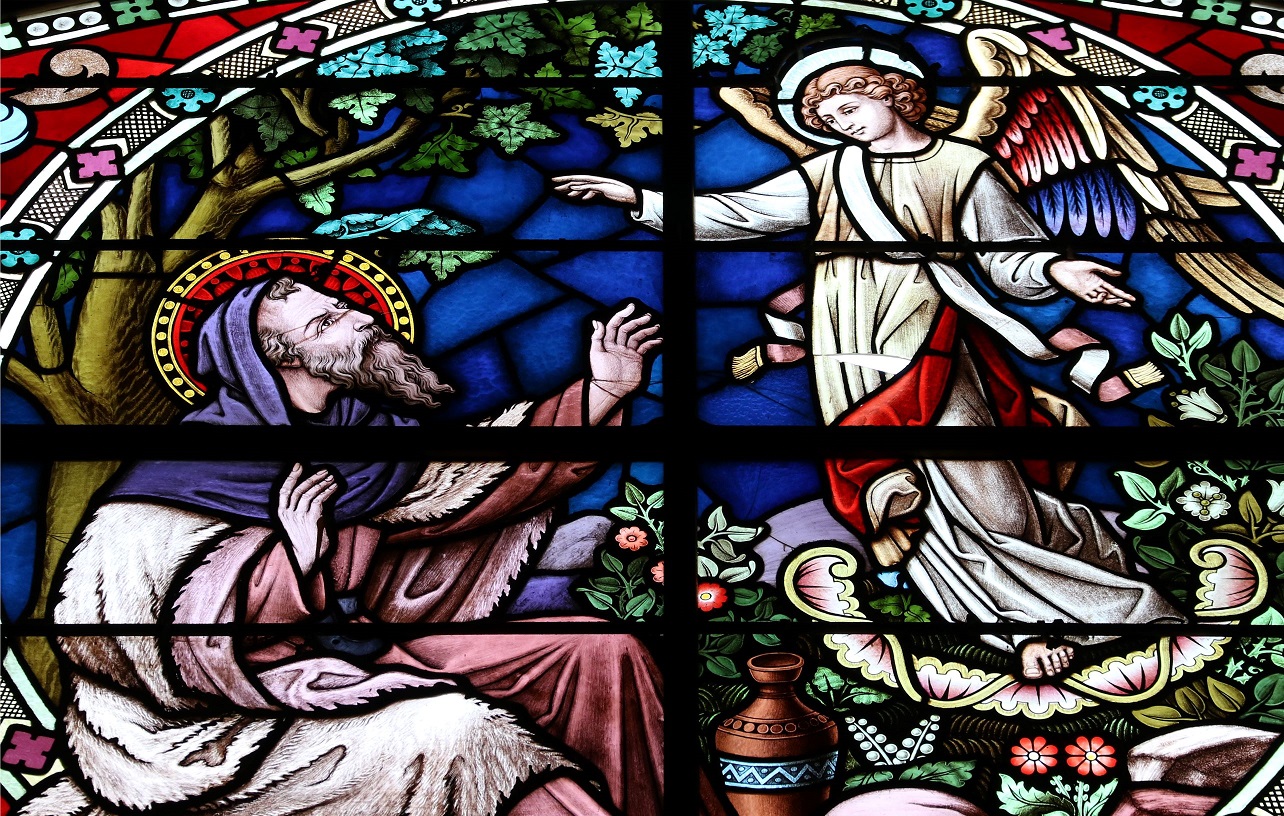
Being persecuted by Jezebel, the wife of King Ahab, Elijah fled into the desert. He was very sad and desired to die, but an angel of the Lord touched him and said: “Arise and eat, for the journey is too great for you.” Elijah looked and saw at his head a cake baked on hot stones and a jar of water. He arose, ate, and drank, and walked in the strength of that food forty days and forty nights, until he came to mount Horeb. God came not with the signs usual in the Old Testament of fire, earthquake, and mighty wind but in the sound of a gentle breeze. Elijah was sent back to his people to carry out God’s will.
The wonderful food brought to Elijah by an angel was a type of Holy Communion. We have before us a long and dangerous journey through the desert of this life before we can reach heaven. During this pilgrimage God strengthens us with Holy Communion, the bread of angels. The gentle breeze indicated the goodness, mercy, and patience of God. Elijah must work with patience and long-suffering.
Bishop Knecht wrote, “Elijah was in several respects a type of our Lord. He was sent by God, was a prophet and a worker of miracles. He raised to life the son of the widow of Zarephath: our Lord raised to life the son of the widow of Nain. He multiplied the meal and oil: our Lord multiplied the loaves and fishes. Moreover, Elijah fasted forty days in the wilderness, was hated and persecuted by the ungodly, was sorrowful even unto death, was strengthened by an angel, was translated to heaven in the sight of his disciples, and will come again at the end of the world.”
Each year on July 20, the Carmelites honour the prophet Elijah with this prayer: “Almighty, ever-living God, your prophet Elijah, our Father, lived always in your presence and was zealous for the honour due to your name. May we, your servants, always seek your face and bear witness to your love.”
Share your thoughts about this article. Click here to send a letter to the editor.
厄里亞熱切祈禱
聖雅各伯寫道:「義人懇切的祈禱,大有功效。厄里亞與我們是有同樣性情的人,他懇切祈求不要下雨,雨就三年零六個月沒有下在地上;他又祈求,天便降下雨來,地上也生出了果實。(雅各伯書 5:16-18)
我們從舊約的列王書中了解到先知厄里亞。厄里亞對拜偶像的阿哈布說:「我指著我所服侍的永生上主、以色列 的天主起誓:這幾年如果沒有我的命令,天決不降露或落雨!
」 (列王紀上 17:1)長期乾旱是一個奇蹟,既體現了天主的正義,也體現了天主的慈悲。這是對崇拜偶像的國王和人民的公正懲罰,也是誘使他們回歸真正信仰的一種方法。
厄里亞遵從天主的吩咐,躲在約旦河東邊的革黎特小河附近。烏鴉每天早晚都給他帶來麵包或肉,連續好幾天,他喝小河的水。聖巴西略說:「最貪婪的鳥兒要為先知提供食物;他們的本性就是搶奪別人的食物,他們伺候天主和人。他們完全忘記了自己的本性,服從了天主的旨意」。
過了一會兒,小河乾涸了,因為地上沒有下雨。天主差遣厄里亞到漆冬匝爾法特的一個貧窮寡婦那裡。主用神蹟使厄里亞和寡婦的食物增加了面和油。
最終,主命令厄里亞到阿哈布王面前。在加爾默羅山上,厄里亞在與假神巴耳的先知的莊嚴較量中捍衛了天主的律法。厄里亞的犧牲被天上的火焚燒,這向人們證明了上主是真天主。厄里亞隨後來到加爾默羅山山頂祈求下雨。
《聖經實用評論》的作者弗雷德里克·賈斯圖斯·克內希特主教寫道:「以色列土地長期遭受干旱,是基督降臨之前整個世界遭受的巨大精神乾旱的象徵。厄里亞吩咐諸天下雨,是基督為即將滅亡的世界開啟恩典之泉的形象。雨水本身給大地帶來了新的生命,是天主恩典的預表,它更新了悔改的罪人的靈魂。」
厄里亞被阿哈布王的妻子依則貝耳逼迫,逃到沙漠中。他非常難過,想死,但主的天使拍醒撫摸他,說:「起來,吃罷!因為你還有一段很遠的路。」厄里亞一看,在他的頭上看到一個用熱石烤的餅和一罐水。他起來吃喝,四十天四十夜,靠著食物的力量行走,直到他來到曷勒布山。天主不是帶著舊約中常見的火、地震和強風的跡象,而是帶著微風的聲音來的。厄里亞被送回他的子民去執行天主的旨意。
天使帶給厄里亞的美妙食物是聖體的一種預象。在我們到達天堂之前,我們要經歷一段漫長而危險的旅程,穿越今生的沙漠。在這次朝聖期間,天主用聖體,天使的食糧來加強我們。微風表明天主的良善、憐憫和忍耐。厄里亞必須以耐心和長期的忍耐工作。
克內希特主教寫道:「厄里亞在某些方面是我們主的象徵。他是天主派來的,是一位先知和創造奇蹟的人。他使撒勒法寡婦的兒子復活:我們的主使拿因寡婦的兒子復活。他使粗糧和油倍增:我們的主使餅和魚倍增。此外,厄里亞在曠野禁食四十天,被惡人憎恨迫害,憂傷至死,被天使加持,在門徒眼前被升天,並在世界末日再來。」
每年的 7 月 20 日,加爾默羅會都會用這樣的祈禱來紀念先知厄里亞:「全能、永生的天主,你的先知厄里亞,我們的父,一直生活在你的面前,並熱心因你的名而獲得榮耀。願我們,你的僕人,永遠尋求你的面,見證你的愛。」
Share your thoughts about this article. Click here to send a letter to the editor.







