


One of the strangest things about being a journalist is the way important people will just start talking to you.
It always happens the same way: they see you, make eye contact, and then they wander over and say something like, “you’re the journalist, aren’t you?”
I’ve come to understand that this is universal code for “do you want an interview or what?”
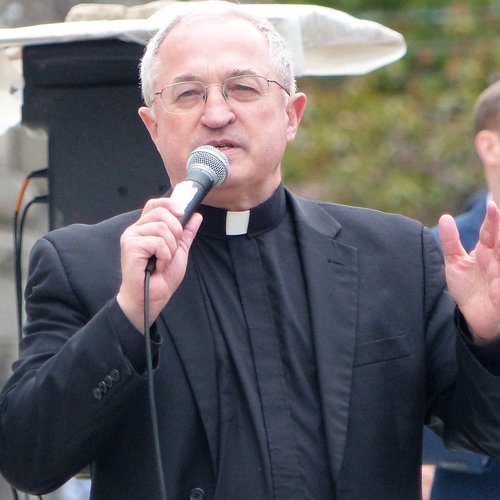
And this is how I got to talk to Father Thomas Lynch, the president of Priests for Life Canada. It had been a long day at the March for Life in Victoria, and it took longer than I want to admit discombobulating my sense of professional identity and confirming that, “yes, I am the journalist,” but what resulted was a conversation that I will cherish.
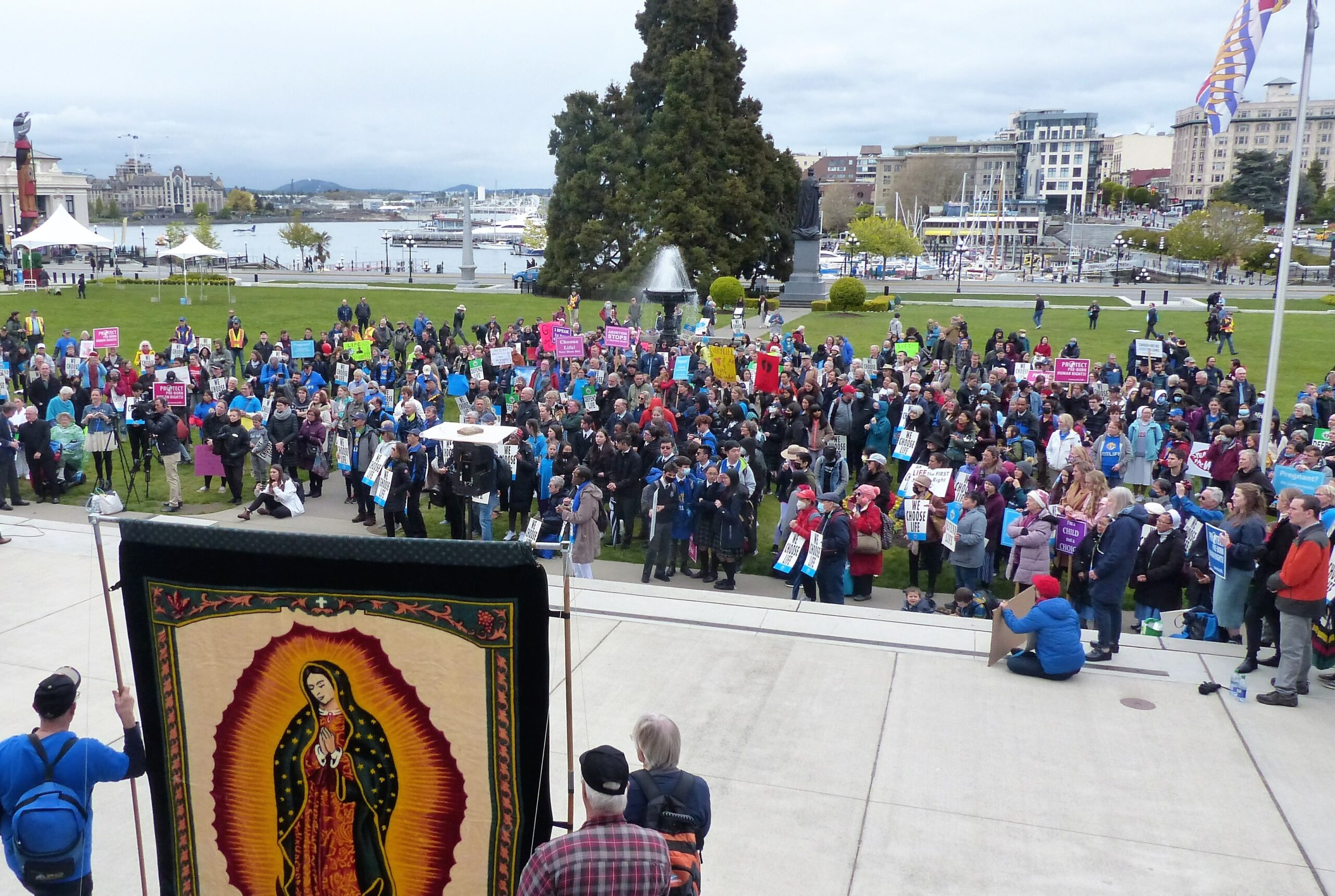
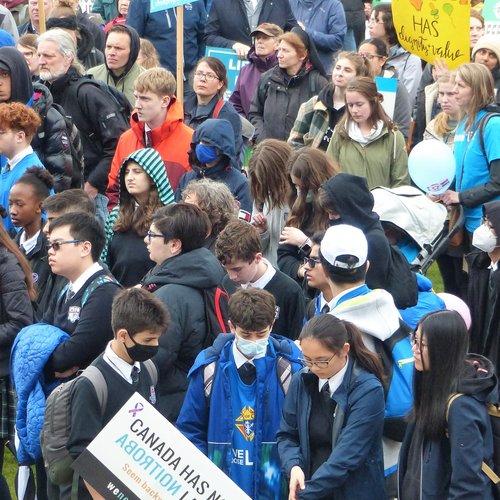
Like a lot of people, I found the march disappointing. It wasn’t bad. Just less than I had hoped for.
I had idealistic images in my head of national rallies and thousands of people and drums and songs, and whatever else people bring to political demonstrations. None of that happened. By some estimates, the turnout was only about fifty per cent of previous years’ attendance.
Speaking with Father Lynch (and Father Stanley Galvon, but he joins us later), helped me understand why, even when things seem bleak, you need to show up. Those two priests put things in perspective – and this, more than “life issues,” is what I want to talk about.
At first, Father Lynch and I just talked shop. I had been confused by the name of his organization. Priests for Life seemed redundant: “shouldn’t all priests be for life? Why do you need an organization for something that should just be the way things are?” Upon reflection, the question isn’t half as clever as I thought, but it had been bugging me all day.
He told me their work was to help prepare priests to engage their congregations on life issues and to help them understand the pastoral problems related to abortion and euthanasia.
This is something I suspect we sometimes miss as laypeople. We see the collar, and sometimes we see the man, and we know how they can help us, but we don’t always see how they relate to other people.
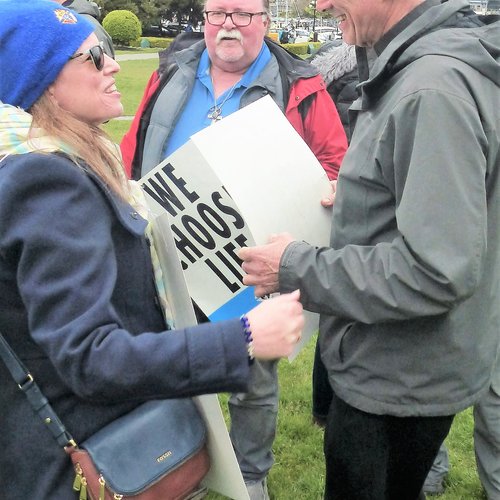
At this point, we were boarding the ferry. Father Lynch is a pretty amiable guy. He seems to know everyone, and we picked up Father Galvon, the rector of Holy Rosary Cathedral, as we made our way to our seats. Thankfully, the trinitarian “three” is the perfect number for a group, and the conversation only got better.
We talked about a lot.
We discussed politics; and how “left” and “right” don’t seem to describe much of anything anymore; and about the aggressive incremental approach that Father Lynch believes the pro-life movement needs to adapt if it wants to effect serious political change.
We talked about Catholics and how they’ve changed. About how we used to be the most static group on the planet, but how now, politically at least, we’re all over the place. This can make it hard for priests to do their jobs, hence the need for Priests for Life.
As we got closer to Vancouver, we drifted away from specific conversations about life issues.
We talked about weddings and marriages – both of my companions had a bevy of amusing anecdotes about wedding disasters involving crashed horse-drawn carriages, and funny language mishaps.
We talked about children – Father Lynch comes from a large family that was made larger still by the addition of more than 20 foster children.
They both told me about being priests and about how hearing confessions reminds them of the humility and goodness that people can have.
And then we came full circle and talked about the thing that sits at the centre of all life issues. We talked about death.
I don’t remember why, but I asked them what it was like to be with people when they die. Father Lynch told of visiting a dying woman who started to say goodbye to her family. They asked her how she was, and she look up at the ceiling and said with surprise, “Oh, hello Jesus,” and died. He said it was impossible to recreate the way she said it.
Sitting next to Father Lynch and Father Galvon on the ferry, I felt like I was a side character in a movie about priestly vocations. It turns out this is a paradox because I now understand that when a priest lives his vocation, he makes other better protagonists in their own stories.
Before this experience, I hadn’t fully appreciated what it meant for ordination to the priesthood to be a sacrament. I had always assumed priests were either on or off the clock, but that isn’t right. The sacraments change us, and a good priest, just like a good husband, never really stops being what he is. Just like a husband and a wife, a priest manifests God’s grace in unique and meaningful ways.
This doesn’t mean he shouldn’t have a vacation from time to time, but rather that even in a normal conversation with a tired journalist he is a gift from God. Just by being there, he is what he needs to be.
I had been stressing about the low turnout of the march and the way people responded to us, but talking to the priests helped me realize that neither of those concerns was right. By watching them live their vocation I realized that it’s not that complicated. Just show up and God will take care of the rest.







