

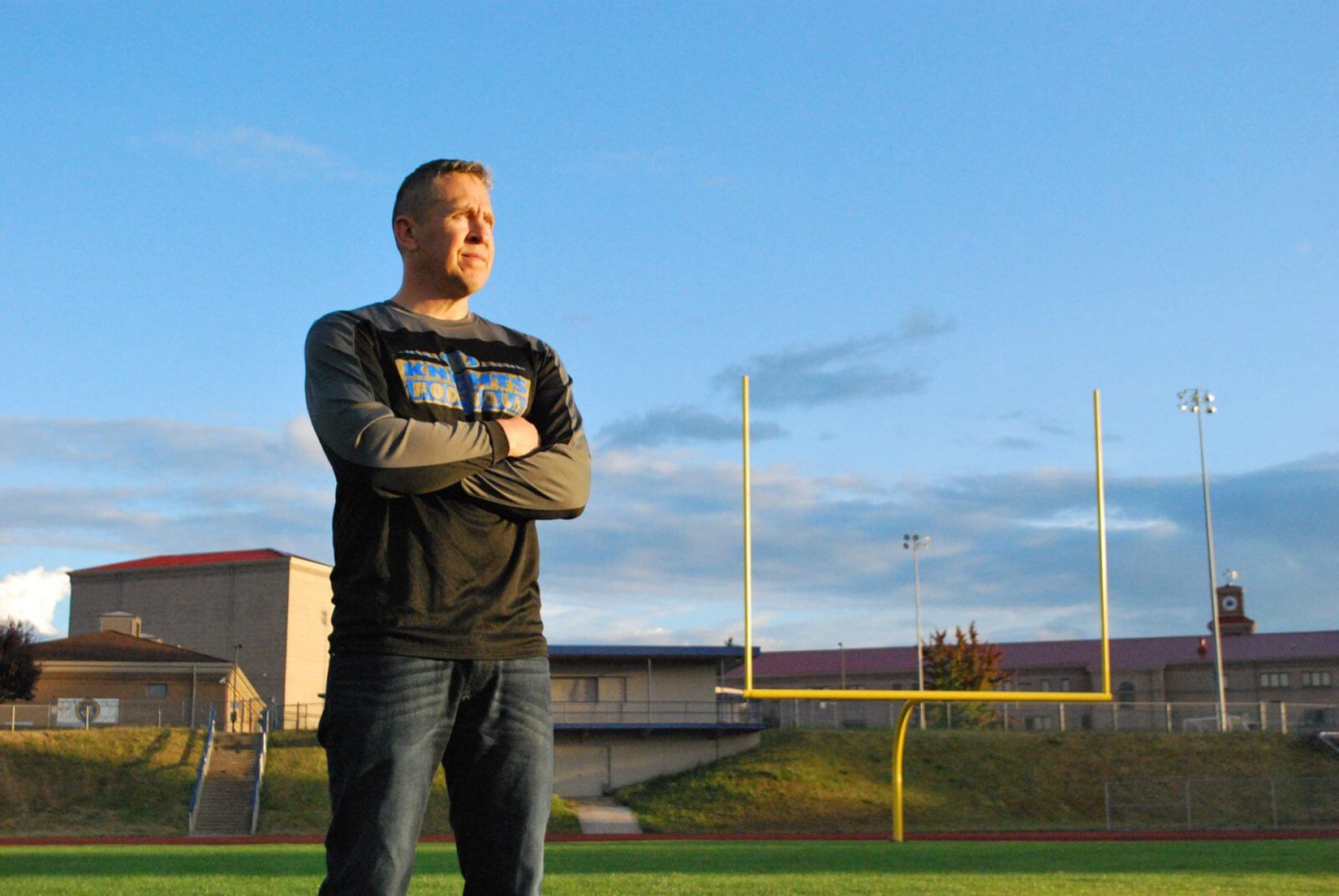

Currently there is a case in front of the Supreme Court of the United States involving a Washington State football coach who was ultimately fired for praying on the field after the game. This was a personal action that some players voluntarily joined him in doing. I have a great deal of respect and admiration for coach Joseph A. Kennedy and pray that his case will be resolved in a way that encourages prayer by athletes and coaches. As Catholics, we have many ways in which we can grow in our love of God, including regular reception of the sacraments and prayer. We are always encouraged by our priests to pray, as we know that God is always listening.
Those who object to seeing prayer in sports are often demonstrating anti-Christian views (sometimes referred to as Christianophobia) and tremendous hypocrisy. They usually don’t have a problem with athletes taking a knee during the national anthem. These fans, many of them atheistic themselves, would also be okay with athletes who support any number of other potentially controversial causes on their jerseys, in the advertisements they participate in, or on their social media sites.
The National Football League, for its part, will not show post-game prayer at midfield, but it will show protests. Frankly, the league appears afraid of Catholic Christian faith and belief, as it is seen as the biggest threat to the hedonistic and materialistic values of the people who run it. Fortunately, there are still many athletes who will allow the world to witness their faith.
Most athletes who pray will usually state that the most important things that they pray for are that they perform well and that everyone involved in the game will stay healthy, free of injuries. Other intentions are that they be good ambassadors for Christ by acting in a sportsmanlike and respectful manner. There may also be prayers of gratitude for the opportunity to participate in the event and for the gifts that they have been given by God.
Despite what cynics say, these athletes generally do not pray for victory. Famous American college football coach and devout Catholic Lou Holtz stated that his Notre Dame teams always prayed before games. “Usually you pray for togetherness, for overcoming problems and for each other but we never, ever prayed for victory.” He then jokingly said, “God does not care if Notre Dame wins … but his Mother sure does” [Father Raymond de Souza, The Catholic Register].
When and how athletes pray can vary. Some athletes may pray before coming to the arena; some I interviewed mentioned that they will say at least a decade of the rosary in pre-game. In certain sports there are prayer meetings for players and coaches of both teams.
I like to make short aspirations between points in my tennis. These could be simple phrases like “My Lord and my God” or “Stay beside me, Jesus” or “Come, Holy Spirit.”
Some players will make the Sign of the Cross right before the opening whistle. Many players point to heaven after scoring a goal or they will do like coach Kennedy and pray, often together, at midfield.
Usain Bolt, who wears a Miraculous Medal and is arguably the fastest man ever to live, always made a Sign of the Cross before the start of a 100-metre race during his phenomenal career. He speaks publicly about his love for God and his pre-race prayer routine. “He held the sports world in his hands and with those hands he always pointed upward to God” [Nick Ripatrazone, America: The Jesuit Review].
American swimming sensation Katie Ledecky has often said in interviews that she will always say a Hail Mary before each race. “It is such a beautiful prayer, and it calms me” [Aleteia].
Former Vancouver Canuck star goaltender Roberto Luongo could always be seen making a Sign of the Cross right after the national anthem. Novak Djokovic, who is ranked first in the world by the Association of Tennis Professionals and belongs to the Serbian Orthodox Church, will do some of the most frequent crossing of himself during matches. Lionel Messi can always be seen crossing himself at the beginning of games, as can numerous other European soccer stars.
To some, the significance of this gesture is not lost. A Muslim cleric from Saudi Arabia, Mohammed Alarefe, had asked the world governing body for soccer (FIFA) to ban players from making the Sign of the Cross during games.
As Catholics, we must never underestimate the impact of simply making the Sign of the Cross. Encourage your children and grandchildren to praise God and show gratitude by crossing themselves and by praying quietly during competition.







