


This was supposed to be a feel-good column, with aspects of cross-border travel and a visit to a wonderful hands-on museum in our Emerald City neighbour to the south, Seattle.
Instead, it may read as a requiem of sorts, although the outcome is not yet completely certain, nor is anything set in stone, so to speak.
I’m writing here about Living Computers: Museum + Labs, a quirky facility, aside from its name. It opened not long before the worldwide declaration of a pandemic and closed not long after. At the time, it was expected that the closure, like that of many institutions and businesses, would be temporary, but the pandemic, and considerations of the founder’s family, seem to indicate it may be permanent.
Just before our borders were closed, I was fortunate to visit this outstanding museum. I could have spent a day or even days there, but as it was, the couple of hours I was able to immerse myself in the computer technology of my formative years made me determined to go back once border crossings returned to a semblance of what they had been.
It now appears that, should the museum reopen, it may be elsewhere in Seattle. That would be a good move. Although located in a transformed industrial area near the Seattle docklands, the museum facility itself was already far too small, with more than 50 per cent of the available building space allocated to storage of equipment not yet ready for display.
There was hardly any on-site parking, although there was plenty next door at the worldwide HQ for Starbucks, worthy of a visit in its own right.
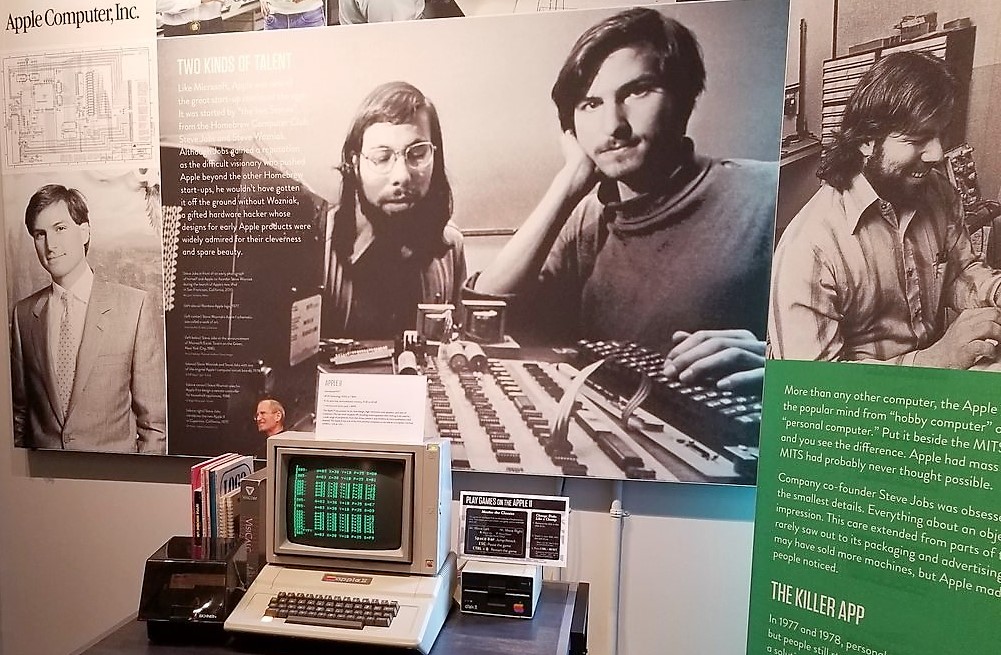
What set the Living Computers museum apart is that most of the exhibits were in a running, hands-on state. Whether it was a room full of Apple II computers, set up as an early ’80s classroom, a late ’70s basement decor featuring video game consoles of that era, or a complete IBM 360 mainframe on a raised air-conditioned floor, everything was running and ready to be touched and experienced.
Anyone with even a remote interest in technology would welcome the opportunity to touch and play with the computers of yesteryear. All sorts of Apple gear, TRS-80 machines with the long-gone Radio Shack name, the first portable or, more aptly, luggable computer, the Osborne 1. You name it, you would find it here, and in most cases, in a running state.
Where else would you find a Cray Supercomputer cheek by jowl with a Commodore VIC-20, both in working order? Or an Apple Lisa alongside a Digital DecSystem 2020? If you ever worked on an IBM keypunch system, here was your chance to relive that unmistakable sound as a card moved from the feed hopper, through the punch array, and on to the output hopper.
Some of the exhibits are extremely rare. In particular, the museum holds an example of what many consider the world’s first personal computer, from Micro Instrumentation Telemetry Systems (MITS), the MITS Altair 8080. This is the computer that drew Bill Gates and Paul Allen to Albuquerque to work with MITS and to eventually found their own company, Micro-soft, initially named in that hyphenated form.
Allen went on to plow much of his Microsoft wealth into various business and philanthropic ventures, the Living Computers museum being one of the last before his death in 2018. Some of these ventures were epic in scope and ultimately foundered. A case in point is Stratolaunch, a business that proposed launching rockets and satellites from a massive aircraft cobbled together from two Boeing 747 planes. Others were more mundane: the Seattle Seahawks of the National Football League and the Portland Trailblazers of the National Basketball Association are among the sports teams that were owned by Allen.
Following Allen’s death, his sister began the process of reassessing and ultimately shuttering some of these businesses. Here’s the notice posted by the computer museum when it closed.
“Living Computers: Museum + Labs is closing for now.
“The COVID-19 crisis has had a devastating effect on many cultural organizations, especially those that rely on public gatherings and special events to achieve their mission. Given so much uncertainty, we have made the very difficult decision to suspend all operations of Living Computers: Museum + Labs for now.”
Fortunately, as of this writing, the museum’s website remains in operation. Here’s part of its mission statement.
“LCM+L honors the history of computing with the world’s largest collection of fully restored – and usable – supercomputers, mainframes, minicomputers and microcomputers.
We breathe life back into our machines so the public can experience what it was like to see them, hear them, and interact with them. Whether connecting online or in person – we invite you to explore our world of working computers!”
Hopefully, the museum reopens in some fashion and readers of this column get to experience that “world of working (vintage) computers.”
Follow me on Facebook (facebook.com/PeterVogelCA), on Twitter (@PeterVogel).







