

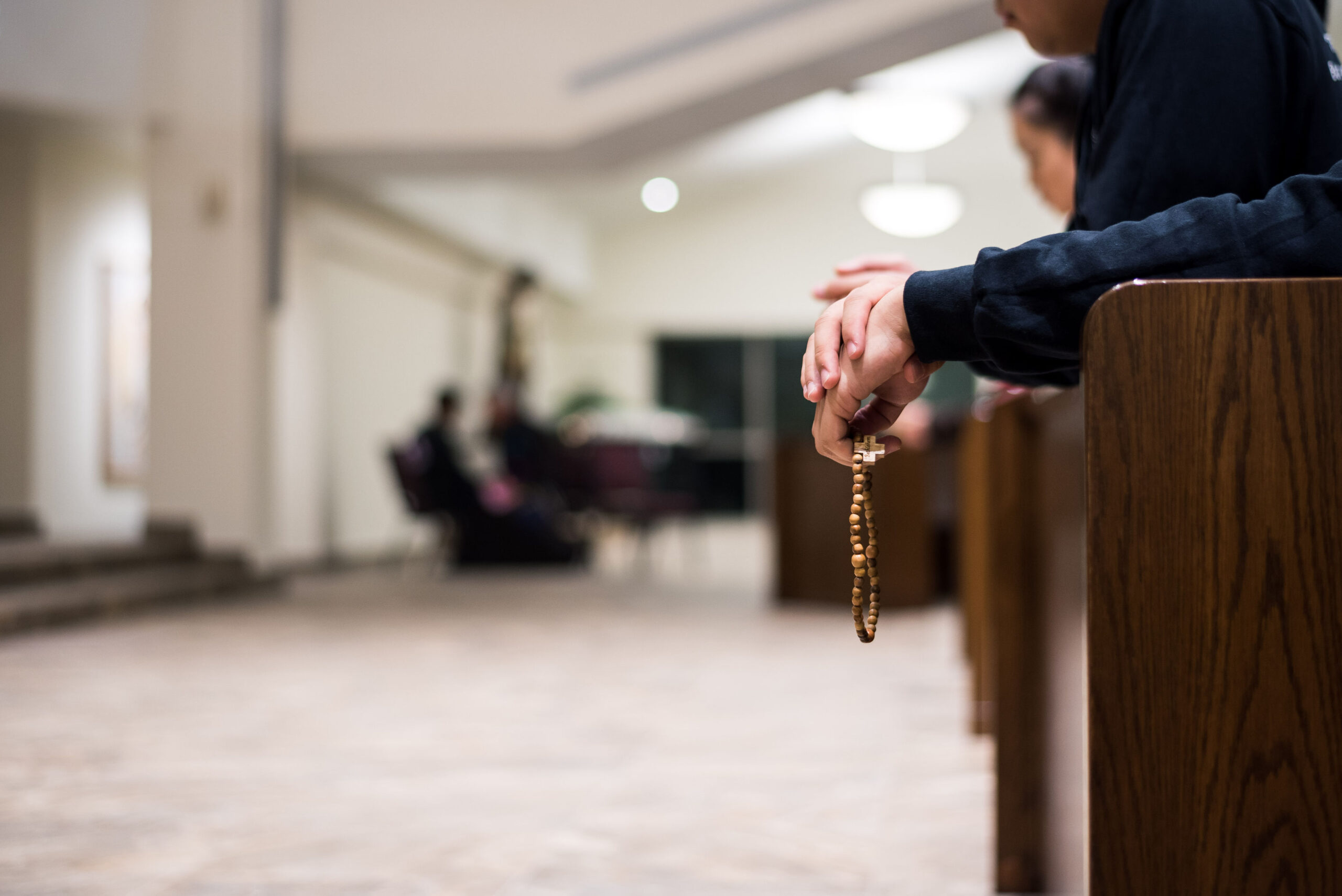

In his book The Soul of the Apostolate, Dom Jean-Baptiste Chautard wrote about the priority of the interior life over the active life in the eyes of God. Of his 33 years of earthly life, Our Lord spent 30 of them in recollection and solitude. He made a 40-day retreat to begin his brief evangelical career. Dom Chautard wrote, “How often, too, during is apostolic journeys, we see Him retiring to the mountains or the desert to pray: ‘He retired into the desert and prayed,’ or passing the night in prayer: ‘He passed the whole night in the prayer of God.’
“After the Master, the Apostles, faithful to His example, take upon themselves, first of all the duty of prayer; and then, after that, in order to devote themselves to their preaching ministry, they leave to the deacons all other, more external, duties. ‘We will give ourselves continually to prayer and to the ministry of the word.’”
Describing the excellence of the interior life, St. Bonaventure states: “A life that is more sublime, more secure, richer, pleasanter, and more stable.”
The interior life is more sublime: Dom Chautard wrote, “The active life is concerned with men, the contemplative introduces us into the realm of the highest truth, and never turns aside its gaze from the very principle of all life.”
The interior life is more secure: Dom Chautard wrote, “In a life that is almost exclusively active, the soul is excited, worked up, scatters its energies and, by that very fact, weakens itself … But for the interior life one thing alone is necessary: union with God. All the rest can only be secondary, something accomplished solely by virtue of this union and in order to strengthen it more and more.”
The interior life is richer: Dom Chautard wrote, “Contemplation overflows with much greater merits. Why? Because at the same time it increases the zest of the will and the degree of sanctifying grace in the soul, and makes the soul act with love as its motive power.”
The interior life is pleasanter: Dom Chautard wrote, “The truly interior soul abandons itself to the good pleasure of God, and accepts with the same patience and evenness of heart both what is pleasing and what bring pain: indeed, it goes so far as to be joyful under affliction, and happy to carry the Cross.”
The interior life is more stable: Dom Chautard wrote, “No matter how intense it may be, the active life has its limit here below. Preaching, teaching, works of every sort all come to an end at the threshold of eternity. But the interior life will never cease: ‘Which shall not be taken away from her.’”
Dom Chautard summed up these five points by applying the words of St. Bernard to the interior life: “In this life man lives more purely, falls more rarely, recovers more promptly, advances more surely, receives more graces, dies more calmly, is more quickly cleansed, and gains a greater recompense.”
Our good works should be an overflow from the interior life. St. Augustine said, “Before allowing his tongue to speak, the apostle should lift up his thirsting soul to God, in order to give forth what he has drunk in, and pour forth that with which he is filled.”
St. Bernard said, “If you are wise, you will be reservoirs and not channels.”
The saint added sadly, “We have many channels in the Church today, but very few reservoirs.”
Dom Chautard explained: “The channels let the water flow away, and do not retain a drop. But the reservoir is first filled, and then, without emptying itself, pours out its overflow, which is ever renewed, over the fields which it waters. How many there are devoted to works, who are never anything but channels, and retain nothing for themselves, but remain dry while trying to pass on lifegiving grace to souls!”
***
『寧為水庫不作水渠』
在『使徒靈魂』的書中,若翰肖塔爾院牧寫及在天主眼中,内修生活遠較活躍生活為優先。在祂三十三年的在世生命中,我主花了三十年去靜修和隱居。祂作了四十天的避靜,然後開始祂簡短的真福傳事業。肖塔爾院牧寫道:『不時在祂的傳道旅程中,我們看見祂退到山中或曠野中祈禱:「祂花了一整夜在天主的祈禱中。」』
『在我主之後,宗徒們忠於祂的榜樣,自己背負起來,首先是祈禱的責任;其次,在此之後,要能為福傳的宗徒事業去奉獻自己,他們把其他的,多是外在的責任都交托於執事們。「至於我們,我們要專務祈禱,並為真道服役。」』
聖文德形容內修生命的優越時聲稱:『一個生命更崇高的,更具保障的,更豐盛的,更愉快的,更穩固的』
內修生活是更崇高的。肖塔爾院牧寫道:『活躍的生活與人性相連,默觀引導我們到至高真實的境界,它凝視著所有生命的原則,不會從這目光中轉向。』
內修生活更具保障的。肖塔爾院牧寫道:『在一個專有的活躍生活中,靈魂是興奮的,在工作中,散發著它的能量,以此真的事實,削弱了它自己…但內在生活中只有一件事是需要的:與天主結合。其他一切都是次要,只有以此結合的德行可完成一事並越加堅強它。』
內修生活更為豐盛。肖塔爾院牧寫道:『 默想滿瀉著更多的價值。為什麼?因為同時它加強了意願的熱切和靈魂內寵愛,它使靈魂的工作,以愛為力量的動機。』
內修生活是更愉快的。肖塔爾院牧寫道:『真正的靈魂內部是為悅樂天主而棄絕自己,並以一定的忍耐和平穩的心去接納兩者—–喜悅的和帶來痛苦的:真的,甚至在折騰時能喜悅,和開心地背負十字架。』
內修生活是更穩固的。肖塔爾院牧寫道:『無論它是怎樣的強烈,活躍的生活有它的極限如下。宣道,教學,一切所有的工作在永恆之前都會有所終結。但內在生命永不停止:「這不會在她手中被褫奪。」』
肖塔爾院牧總結這五點,他將聖伯爾納鐸對的字句套用在內修生活:『在這生活中,人活得更純,少一點的跌倒,快一點康服,肯定也多一些的進步,得獲更多的聖寵,去世也平靜一點,更快地得到淨化,贏來更多的酬報。』
我們的善行應由內修生活的滿瀉所促成。聖奧斯定說:『在讓他們的舌頭說話之前,門徒向天主高舉他乾渴的靈魂,以能得到他所要喝的,並傾出所注滿的。』
聖伯爾納鐸說:『如果你是聰明的,你將成為水庫不為水渠。』這聖人憂愁地補充說:『今天我們教會有著很多的水渠,但水庫卻少。』肖塔爾院牧解釋說:『水渠讓水流走,並不保持一滴。但水庫卻首先注滿,然後,沒有流空,流出滿瀉的,不過斷更生並以水灌溉田地。有多少奉獻工作的,它不是什麼,只是水渠,沒有為自己留下什麼,把賜與生命的聖寵傳遞後卻僅餘乾涸。』







