

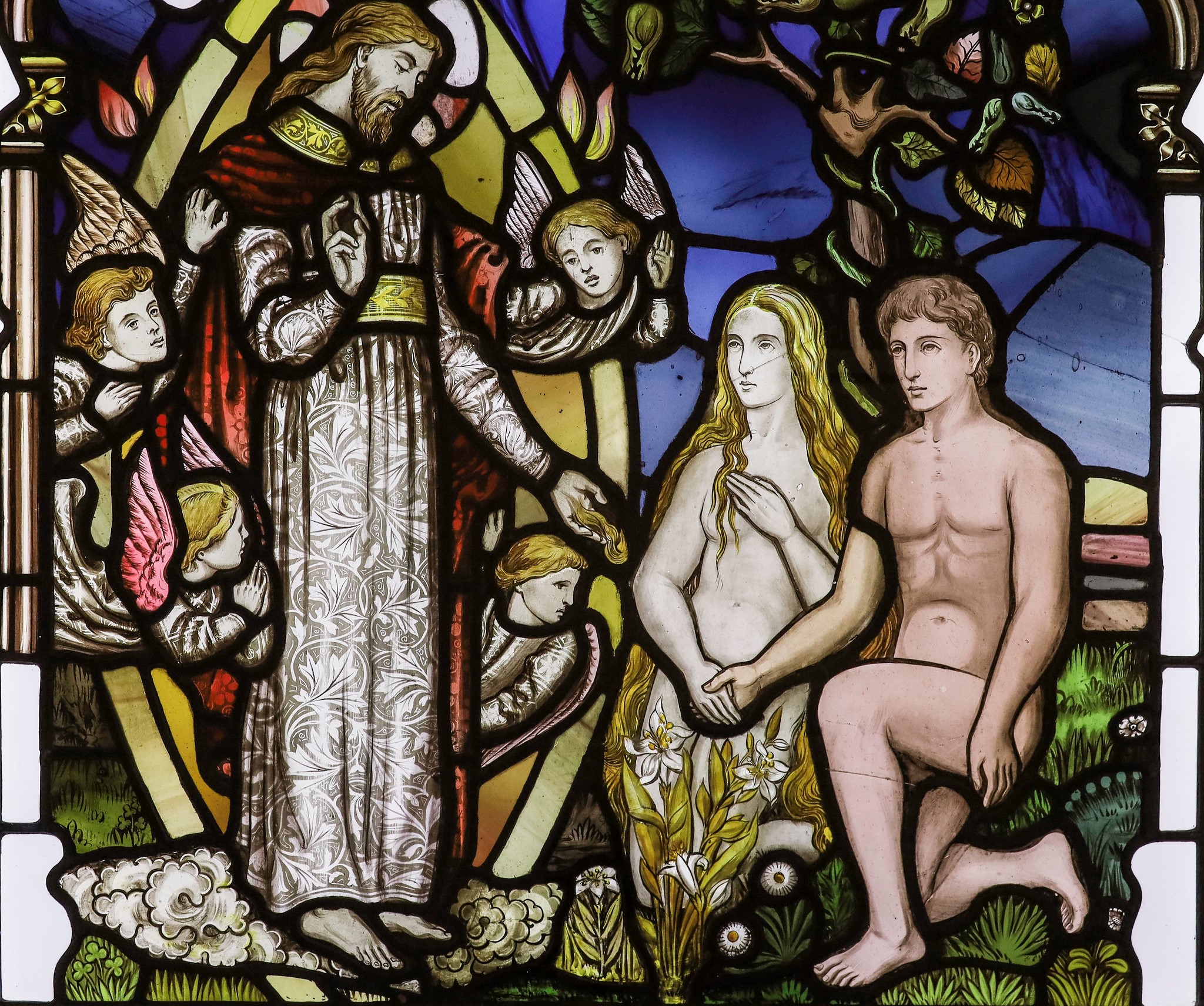

“Who told you that you were naked?”
These were God’s words when the Fall in the Garden of Eden was still fresh.
Adam and Eve had knit together fig leaves to cover their nakedness. Nakedness. A word that, before the tempting of the wily serpent, had not been a concept. It’s true that Adam and Eve had always been naked. Only now they felt it acutely and the vulnerability was unacceptable.
Our downfall was and continues to be the thinking that God doesn’t want our fulfillment or our happiness; that there must be something wrong with the initial design and that WE can fix it.
The great turning away from God’s plan meant that we were relegated to a life of grasping at “fig leaves” – grasping at created things, instead of grasping for the Creator. When there is a problem, we humans will fix it. Never mind that the earth was spinning and spewing lava and changing its climates long before us. We will fix it. We will fix it all.
Sin invents ways to offend the Creator. Sin invents words and distortions that in the beginning were not so. We do not need to look very far for the distortions that sin has invented. Distortions of relationship, family, human biology, fatherhood, and motherhood. Distortions that cut right to the core of who we are and who God is. Distortions that speak loud and clear: “we don’t want to trust you.”
The truth of our condition is too great and too exhilarating to be left alone by enemies and accusers. The truth elevates human nature and infuses it with the divine. The truth makes work a delight, and obedience to God’s commands a joy. Because of sin, we no longer know how to work in a way that serves play and rest. We are prone to overwork to the detriment of our health and our family’s well-being, or on the opposite end of things to shy away from anything that places demands on us and requires our taking responsibility.
We have been given an intellect to serve our families and our communities. Our intellect is to be used to conquer problems and to render our lives happier and afford us all peace. But in so many areas we have made an idol out of knowing. It is more important to know everything – to know all the risks – than to enjoy the lives that God has given us.
“The madman is not the man who has lost his reason. The madman is the man who has lost everything except his reason,” writes G.K Chesterton in his book Orthodoxy. Indeed, no one is to be feared as much as the person who says, “Trust me, I have your best interest at heart. Here is the data” – all the while confounding you, gaslighting you, and making you doubt what you know to be right.
What does the spirit of God do? He allows us freedom for wholesome play and community. He sows seeds of trust and lightheartedness. He encourages child-like trust but at the same time empowers us to make healthy decisions for ourselves and our unique situations. God inspires and restores our confidence in our experiences and gives us hope for the future.
The Lord speaks right to us when he says, “who told you that you were naked?” Where along the way did we start to believe that he wasn’t trustworthy? Who told you that you had to take matters into your own hands? Why do we think we can cure this and that problem by cutting God out and figuring it out alone?
Created things – fig leaves, science, or technology – cannot replace the Creator. The only way to peace is through him, with him and in him.







