
In the Holy Family at Christmas we’re offered a vision of what an ordered family looks like, and there is much to consider: the faith of Mary and Joseph; their acceptance of parenthood, each in their own way; the relationship between the world and Christ, even as a child; and most importantly – at least for our time – a constant, uncompromising narrative that emphasizes over and over, through pregnancy and beyond, the humanity of the child Jesus.
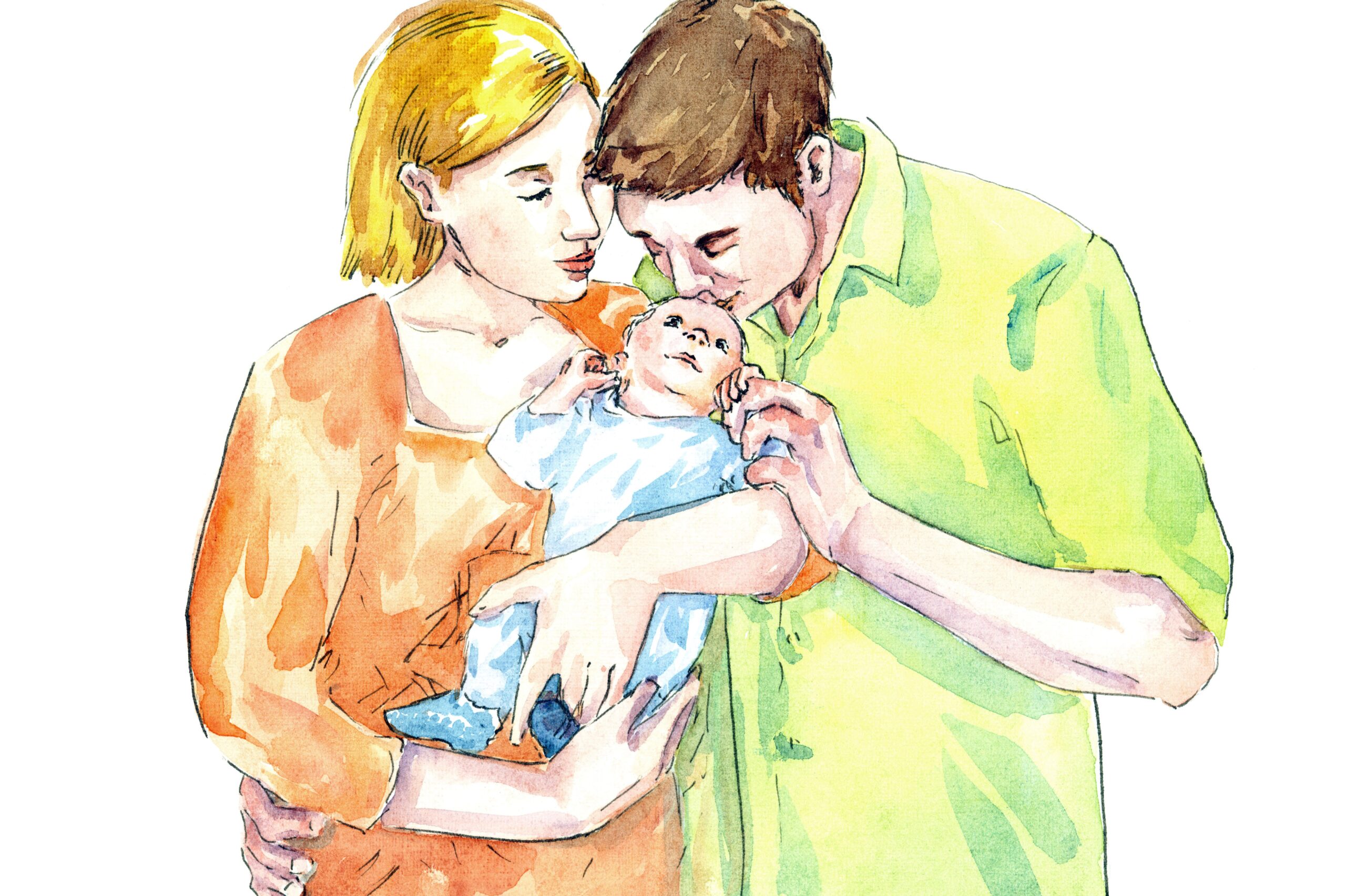
When my wife and I found out we were expecting our first son, we publicly announced it at eight weeks. Conventional wisdom suggests this is early, given the risk of miscarriage in the first trimester. But we felt that if we kept the news to ourselves we would deprive our son of the dignity he is owed as a child of God and diminish the connection we had to our community. Christ tells us not to fear, and we were trying to better follow that command.
Almost immediately after making the announcement, my wife started getting private messages, all saying something to the effect of, “Congratulations! But maybe next time you should wait in case something goes wrong … because things can go wrong. You know?”
We weren’t surprised that the bulk of the messages came almost exclusively from secular friends, many of whom who were avowedly pro-choice. We had recognized the child’s existence as a “child,’ so according to their own rules they had to respect his humanity, but it was clear we had made them uncomfortable.
In their reality the child shouldn’t – perhaps can’t – “be.” Mother and child are so connected that their relationship defies all notions of liberal individualism. Their sacred “I” cannot tolerate the child who turns the mother into a “them” rather than a “she.”
Living in a world constructed around this self-centred focus, we were tempted to acquiesce to the spirit of the times and hide our son behind false prudence. But truthfully, that felt like a betrayal of God’s gift. We didn’t want fear to impede the charity of sharing our joy with other people.
Moreover, because Christ calls us to a radical form of community that privileges charity above all else, suffering, as much as joy, should be shared with others.
Love requires two people. Sometimes you are the lover, but sometimes charity demands that you be the beloved. To receive charity charitably is as important as offering charity to others.
Like many couples, my wife and I have experienced that miscarriages are horrible, often lonely events. But that experience taught us that when the worst happens, we should view it as an opportunity to come together as the body of Christ and be present in each other’s pain.
St. Therese of Lisieux said that “everything is grace:” all suffering, and all joy, and all love, and all pain are part of God’s providence. We come closer to him when we open our lives unconditionally to his plan.
Christmas gives us perhaps the best examples of this in the Holy Family: when Mary said “yes” to God; when she accepted all that God offered her, including sorrow and pain. When she raise the boy with full knowledge she would one day watch him die.
Ultimately the messages we received, with their subtle suggestions that we should allow fear to dictate our choices, convinced us that we should announce our next pregnancy as soon as possible. We wanted to accept God’s gifts without reservation or clarification by sharing the dignity and joy of our child’s existence with those around us.
As such, we are due in June.
Merry Christmas and praise God!