

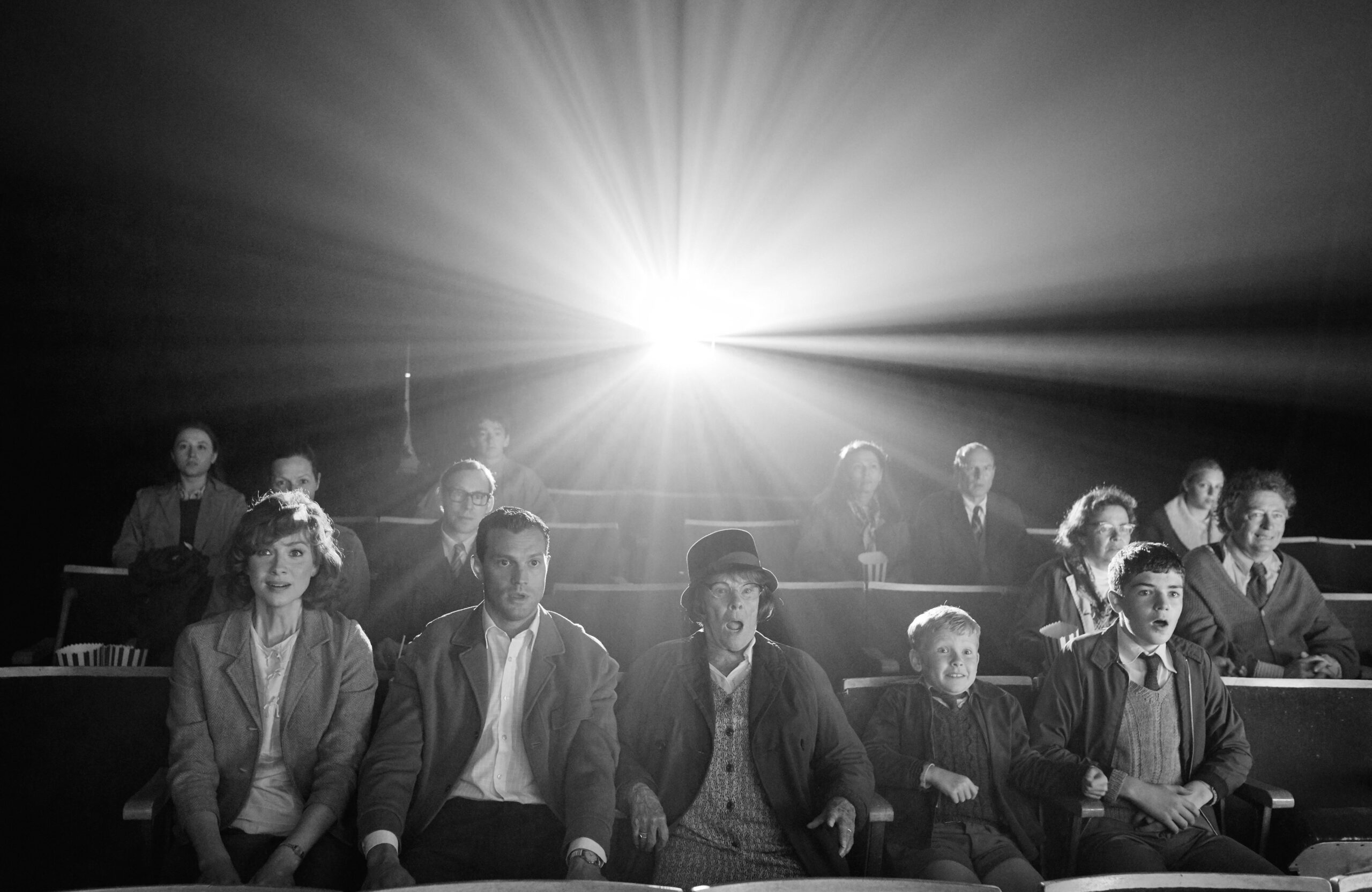

Many people tend to cloak their childhoods in a fondly recalled haze of endless summer or spectacular snowstorms. Unsurprisingly then, Kenneth Branagh’s film Belfast, based on his own childhood experience, is largely joyous and positive.
This seems counterintuitive, in that this portrait of family life in Belfast opens with a brilliantly effective portrait of the first round of violence in 1969, when, senselessly, people claiming to be Protestant launch an assault on Catholics. Tragically, those whom the terrorists attack are often neighbours with whom they have lived peacefully for years.
Against this background, the film follows the day-to-day experiences of young Buddy (Jude Hill). Its appeal is universal because those experiences are, for the most part, similar to those of millions of others. Buddy attempts to win the heart of the girl, a classmate, on whom he has a crush. He plays soccer and has “sword fights” in the street. He falls prey to an older girl who persuades him to attempt shoplifting candy. He revels in the delights of films such as Chitty Chitty Bang Bang and The Man Who Shot Liberty Valance.
Above all, Belfast heartwarmingly and often humorously shows Buddy’s family. Ma (Catriona Balfe) desperately tries to keep the family together despite the frequent absences of Pa (Jamie Dorman) for work in England, and a seemingly impossible burden of back taxes. Grandparents (Ciaran Hinds and Judi Dench) are as devoted to each other as they are to their grandchildren. The family unit offers young Buddy a security, a warmth, and a grace that enable him, despite the horrors of the Troubles unfolding around him, to remain cheerful and optimistic.
Beautifully and appropriately filmed in black and white, superbly scripted and directed by Branagh himself, Belfast underscores the common humanity that should make it possible to continue to live in harmony with people of different affiliations. It vividly shows too that it takes a village (or a small city block) to raise a child. Sadly relevant far beyond Northern Ireland’s own tragic history is its theme of family and community under siege from violence and economic hardship. Its protagonists must choose whether to stay in the homeland they love or attempt to find a new life elsewhere.
Belfast does have some minor problems. A fire-and-brimstone sermon by the parish minister undercuts any possibility of people finding strength through faith. An over-obvious imposition of the climactic scene from High Noon, although the narrative is seen through the eyes of a child, comes across as comical rather than dramatic.
But everyone will be able to relate to Belfast’s message and atmosphere. Clearly in contention for many awards, this film is not to be missed!







