


“In the halls of power, a leader stands tall, with a heart full of hope, and a vision for all, a man of conviction, with compassion and grace, whose words and actions uplift the human race.”
A few weeks ago, Peter Vogel wrote a column about the pros and cons of new artificial intelligence programs. When he asked people to share their thoughts I was surprised to discover how many I actually had.
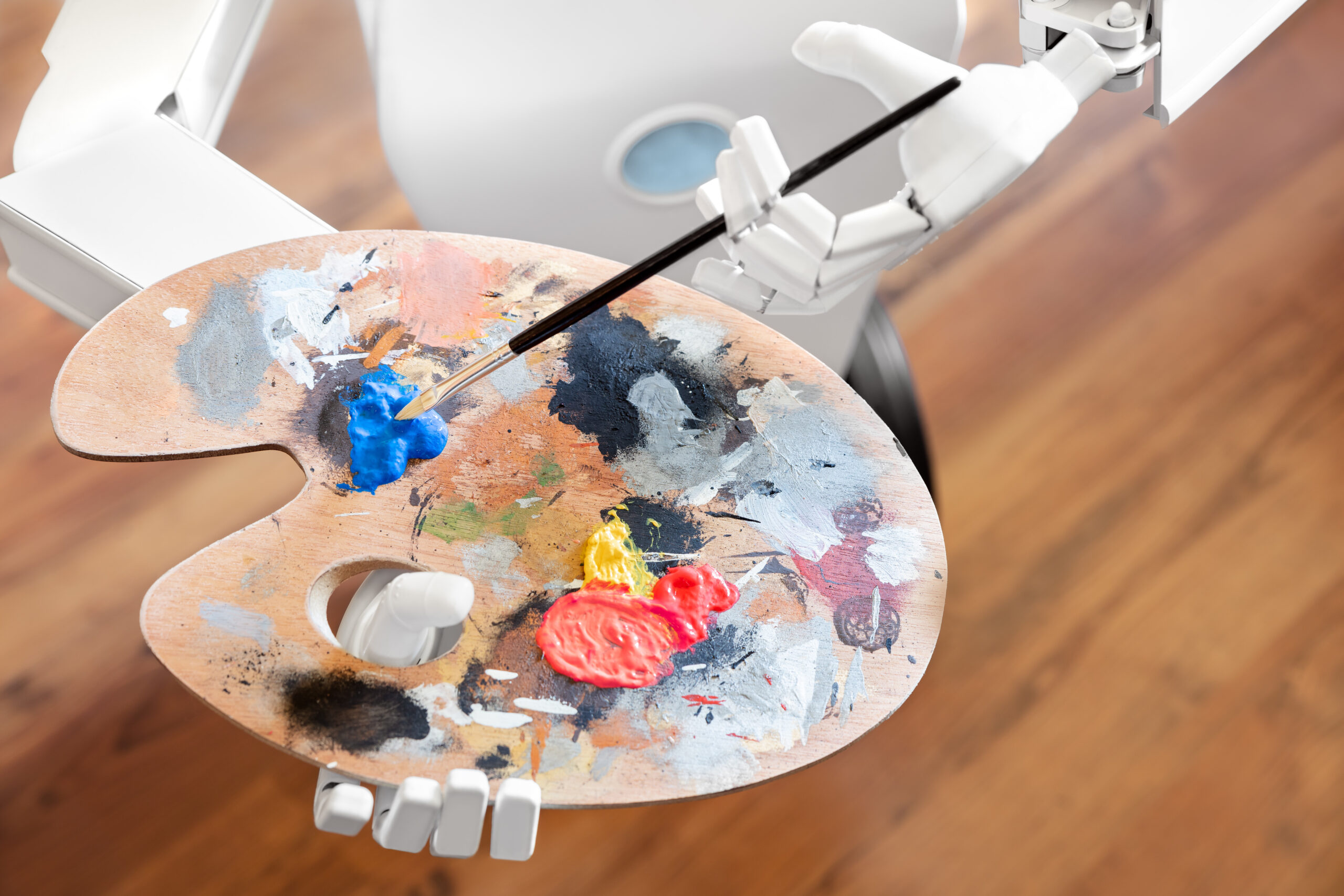
Only a month before Peter’s column I had read a post by an artist I follow. Her post showed a recently completed commission, and with much excitement, she shared the story of how the image came to be. She had struggled to find inspiration, and in her curiosity over the new AI programs, she asked it to create a picture for her, entering a few key descriptive words.
Eventually the program provided her with an image that she essentially copied into the piece shown in her post. The painting was esthetically pleasing, of course, and she had tweaked the AI image a bit to soften some edges. The artist excitedly shared that her commissions usually take weeks or months to complete, but this painting had only taken a few days.
While I can understand the fun of the project, I couldn’t understand the sense of pride in the work. It wasn’t actually the artist’s creation. The reason her other commissions took weeks were because they were the work of her own heart, mind, and soul. The person asking for the painting was asking for a piece of that heart, mind and soul, not a computer-generated image. Why didn’t she feel a sense of risk in giving up her creative gifts for the convenience and novelty of computer programs? Didn’t it make her humanity seem redundant?
Fast forward a few weeks and my son Nicolas comes home and wants to show us a neat little trick. He asks the AI program to write him a rap song in praise of Joe Biden. Immediately the computer belched out a few verses. (The first is written at the beginning of my column.)
When he wrote, using the exact same wording, “Write me a rap song in praise of Donald Trump,” it responded, “I’m sorry, as an AI language model I am programmed to provide impartial and unbiased responses.”
In calling itself unbiased after having just deified Biden, of all people, it exposed its absolute bias and deliberate intent to direct the feelings and opinions of human beings. (More recently people everywhere are sharing similar findings.)
There is something interesting, quirky, and perhaps exciting (not to me, but to some) about it all. But I am surprised to see how readily people believe that these machines are truly unbiased, and truly creative, when in fact they are designed by someone: a human looking to remove the need for humanity.
An AI itself cannot create beauty because an AI cannot suffer, feel joy, or know God. It can re-order, repeat, and reconstruct what it has been given but it cannot know love or sorrow.
When I think about Lent, I see it as a time to reflect on what it means to be human. What greater question is there? Wrapped up in that word human is the purpose of all creation: the honour in our purpose, the horror of our sinfulness, the fatherhood of our God, the blood of Christ, and the coming kingdom.
Our humanity is the greatest of glories and the most sorrowful of tragedies. Human beings create beautiful things from their knowledge of sin and redemption. Lent is a time to think of sin and redemption. In those weeks, like the work of the artist, God asks us to give him our hearts, minds, and souls.
I feel that we are easily enticed into making tearful (and pathetically virtue-signalling) mea culpas for the assumed sins of complete strangers hundreds of years ago, without ever actually acknowledging our own personal sin. We are so easily led to the people we are supposed to hate, week by week. We condemn, cancel, and criticize all of the supposed sins of people long dead, while never once stepping foot into a confessional to admit how very much in need of salvation we are ourselves.
The season of Lent is followed by Easter, but in reality, in eternity, Easter can only follow a Lent lived well. With every Act of Contrition we pray we are expressing a hope and a trust that God will draw us into himself. Christ became man, the perfect man, the perfect human, to show us that our humanity, while in great need of perfecting, should be a source of our greatest hope.
As humans we can share in the creative, life-giving gifts of our Father. We are meant to become more human, not less. It is in our sorrows and joys that we become more beautiful, if we have the humility to first acknowledge our weakness. And in that beauty we are most made in God’s image and likeness.







