

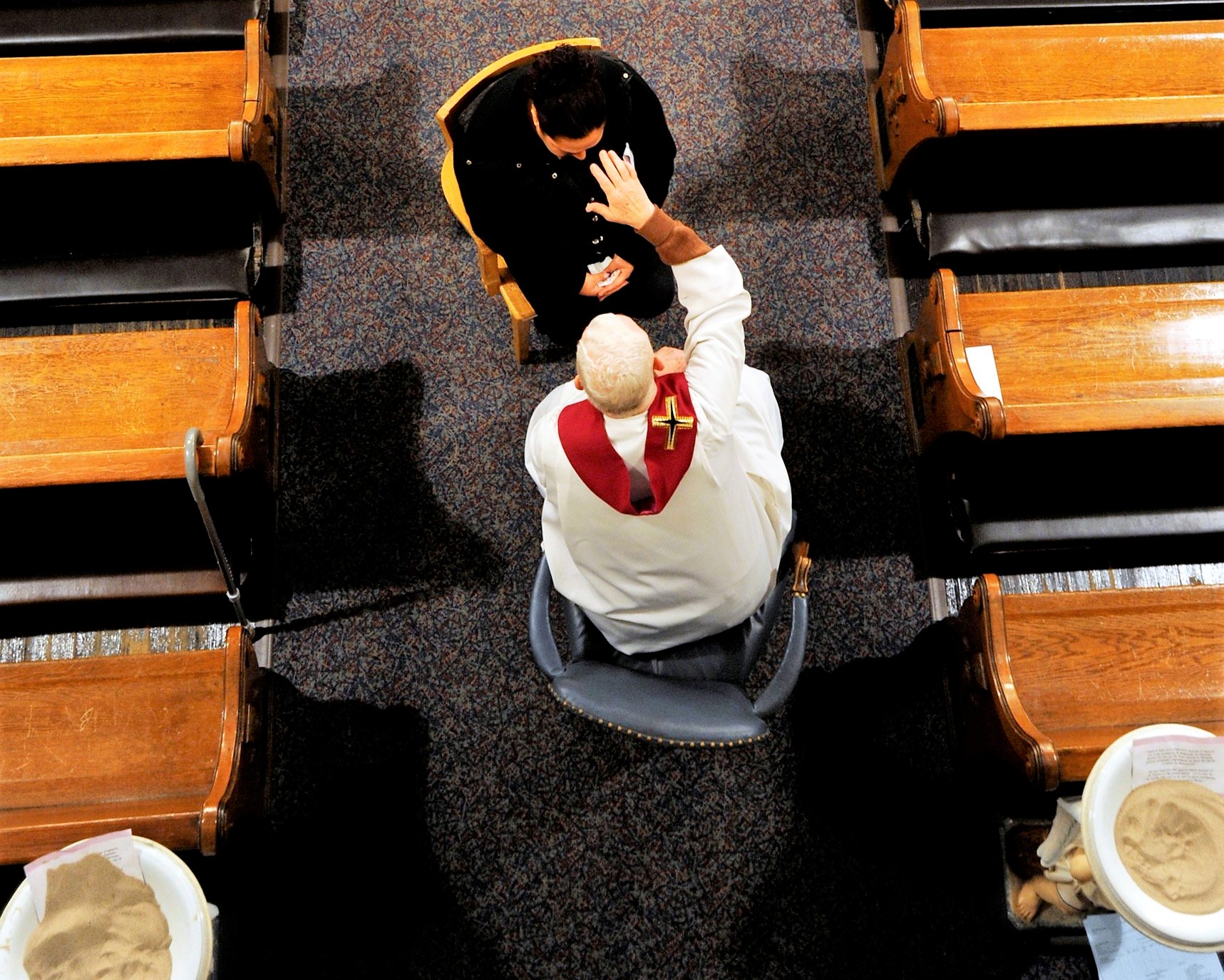

During the season of Lent we focus on repentance. From the moment the crosses are traced on our foreheads, reminding us that we are “dust and to dust we shall return,” we are exposed to reflections, readings, and reminders to atone for our sins, make changes in our hearts and prepare, not only for the joy of Easter but for our eternal redemption. As we endeavour to prepare well, the sacraments – particularly the sacrament of Reconciliation – play prominent roles in our journeys.
In the introduction to his book Be Transformed, Bob Schuchts admits that he has “not always appreciated the sacraments or comprehended how inherently powerful they are.” He reminds us that the Bible and the Catechism teach us of the faith, and that they also “point to the condition of our hearts as the key factor in our yielding to the power of the Spirit in our lives.”
Schuchts explains that if our hearts are hardened, we impede the Spirit’s work within us. “Conversely,” he writes, “when we humble ourselves and trustingly bring our brokenness to Jesus, his grace becomes most powerful in the midst of our weaknesses.”
Jesus, God Incarnate, instituted the sacraments to reach our brokenness. To unite with us, he took human form. Appealing to our human bodies and senses, Jesus touched, he cleansed, he accompanied, he fed, he spoke, he listened, he forgave. In each of these ways, Jesus shared his love, set an example, and then gave his apostles and future priests the ability to carry out his work for all generations to come.
The sacraments are meant to allow us to receive God’s grace through human contact and actions. Or, as stated by Pope John Paul II, in The Theology of the Body, “the sacraments infuse holiness into the terrain of man’s humanity.”
Jesus gifted us with the signs and symbols of the sacraments so that we might accept God’s loving invitation to unite with him. However, these “symbols” are not merely symbols; they are truly God uniting with us. As Emily Stimpson (Chapman) stated in her book These Beautiful Bones, “By God’s grace, they’re ‘efficacious signs.’ They’re symbols and signs that make what they symbolize and signify a reality.” The sacraments are understood on one level by our human minds and bodies. Yet, the deeper – and true – meaning of sacramental symbols and signs is known, through God’s grace, within our hearts.
I have heard many people say that they no longer need the sacrament of reconciliation because they prefer to speak directly to God. While it is recommended that we share our faults and failings with God regularly (even though he already knows the depths of our hearts), and while it is likewise strongly suggested that we apologize directly to those we have hurt, each of these actions lacks the grace inherent in the sacraments.
Furthermore, after his resurrection, Jesus said to his apostles, “’Receive the Holy Spirit. Whose sins you forgive are forgiven them, and whose sins you retain are retained’” (Jn 20: 22-23). As stated above, these men, and their successors, were commissioned to act on Jesus’ behalf. They are expected to forgive our sins, but how can they do so, if we keep them to ourselves? We must vocally confess our transgressions to a priest who, as Christ’s living, breathing representative, offers a listening ear and shares the words of absolution in the sacrament of reconciliation. Sure, it can be very difficult to share our faults with another person, sitting inches away from us; it can also be painful to hear our failings spoken aloud; it is likewise cleansing and exhilarating to hear an actual voice say the words, “your sins are forgiven.”
If you have not been to confession in a while, take the opportunity to do so this Lent. If you typically partake only during Advent and Lent as I do, I invite you to join me in aiming to receive the grace of this sacrament more often this year.
As you examine your conscience and soften the condition of your heart to “[yield] to the power of the Spirit,” I leave you these words of Bob Schuchts: “Can you imagine the impact in all of our lives if we allowed the Holy Spirit to transform us … through the sacraments?”







