
2nd Sunday of Lent, Year A
First Reading: Gen 12:1-4
Second Reading: 2 Tim 1:8b-10
Gospel Reading: Mt 17:1-9
After their sin of distrust and disobedience toward God, Adam and Eve transmitted human nature to their descendants in a fallen state. “Disfigured by sin and death,” we remained “in the image of God,” but were deprived of the “likeness” and the “glory of God,” says the Catechism of the Catholic Church.
However, God did not abandon us to the power of death, but helped us all to seek and find him. He inaugurated our salvation when he promised Abraham that in one of his descendants, “all the families of the earth” would be blessed.
The “culmination” of that salvation, the Catechism says, occurred when God the Son assumed our human nature and restored it to the Father’s “likeness,” giving it back its “glory.”
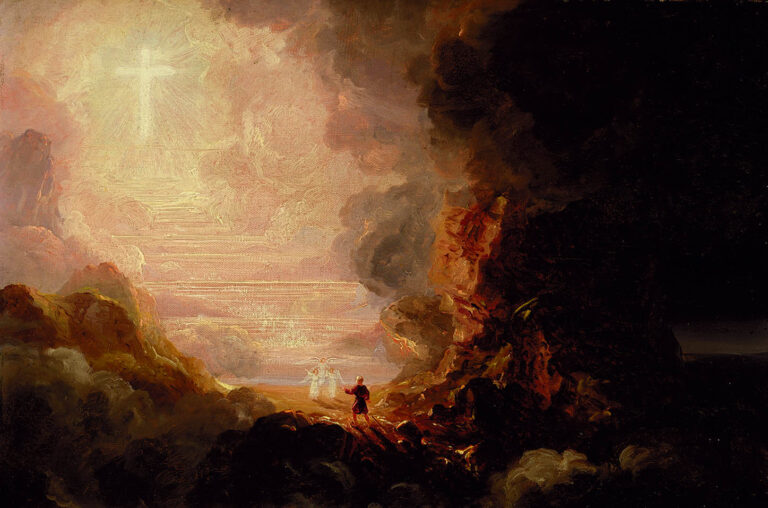
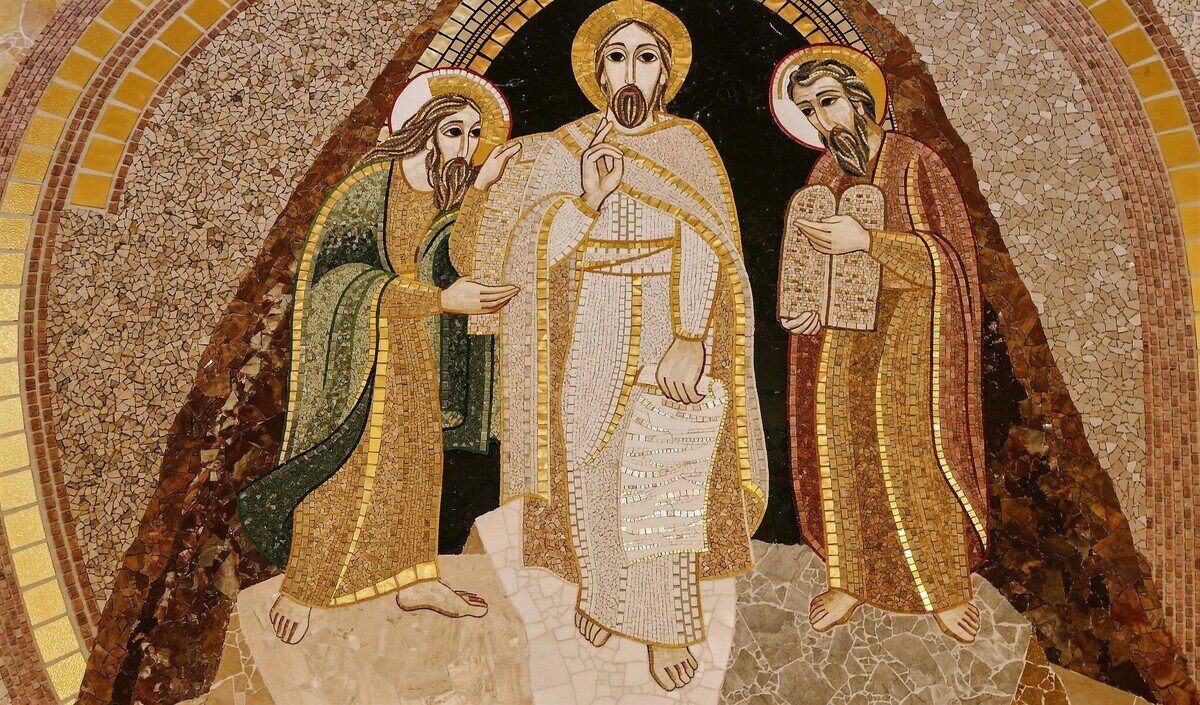
We catch a glimpse of this “glory” in Jesus’ transfiguration. “His face shone like the sun, and his clothes became dazzlingly white.” As the Church says in the Preface of the Mass, God filled “with the greatest splendour” the bodily form Jesus shares with us, to show us how what first “shone forth” in the Church’s Head “is to be fulfilled” in the Church’s Body.
We cannot imagine it. “We are already God’s children,” St. John says, but “what we shall later be has not yet come to light.” All we know is that “we shall be like him.”
In the Bible, salvation is associated with palms, crowns, white robes, thrones, and splendour like the sun and stars, notes C.S. Lewis.
That splendour suggests “glory” in the sense of “luminosity,” but also in the sense of “fame” – good report or appreciation. God will say to us, “Well done, good and faithful servant,” just as he says about his begotten Son, “With him I am well pleased.”
“No one can enter Heaven except as a child; and nothing is so obvious in a child – not in a conceited child, but in a good child – as its great and undisguised pleasure in being praised,” Lewis points out.
It is not vanity to want God to praise us, for we were created to please him. The glory, or fame, we acquire by pleasing him is the happiness we were made for. As St. Paul says, “If anyone loves God, that man is known by him.” Not to be noticed, or known, by God is the ultimate tragedy, as when the bridegroom shuts out the foolish virgins, saying, “I tell you, I do not know you.”
At our death we shall stand before God to be examined and judged. The promise of “glory” is the promise that we will be able to survive that examination, to find approval, to please God as his begotten Son pleases him.
“To please God” means “to be a real ingredient in the divine happiness,” Lewis says. It means “to be loved by God; not merely pitied, but delighted in as an artist delights in his work or a father in a son.”
It is almost incredible. It is “a weight or burden of glory which our thoughts can hardly sustain,” says Lewis. In fact, it will be impossible unless we are members of Christ’s Mystical Body, the Body of the only Son begotten by God the Father, in whom he already delights.
We cannot even begin to imagine “what God has prepared for those who love him,” St. Paul says. We can only trust that God will keep his promise.
In the meantime, we must join St. Paul “in suffering for the Gospel.” From the day Peter recognized Christ for who he was, “the Master began to show his disciples that he must go to Jerusalem and suffer many things,” the Catechism says. It is “in this context that the transfiguration takes place on a high mountain.”
For us, this Sunday, it is in the context of Lent: a time of repentance, prayer, fasting, and almsgiving; a desert experience, not a mountaintop experience.
Father Hawkswell is again teaching The Catholic Faith in Plain English, with new insights in both print and YouTube form at beholdvancouver.org/catholic-faith-course. He is also teaching the course in person on Sundays from 2 to 4 p.m. at the John Paul II Pastoral Centre (4885 Saint John Paul II Way, 33rd Avenue and Willow Street, Vancouver) and on Mondays from 10 a.m. to noon in St. Anthony’s Church Hall, 2347 Inglewood Avenue, West Vancouver. Next week’s topic is “The First Three Commandments.”