


The Oscar nominations for Best International Feature Film (formerly known as Best Foreign Language Film) often go largely unpatronized by the general film audience, in all likelihood because audiences are unwilling to attend showings of films with subtitles.
It is indeed something of an anomaly that Everything Everywhere All at Once may actually win the Academy Award for the best picture category, even though it might well have been considered as a competitor in the International Film category.
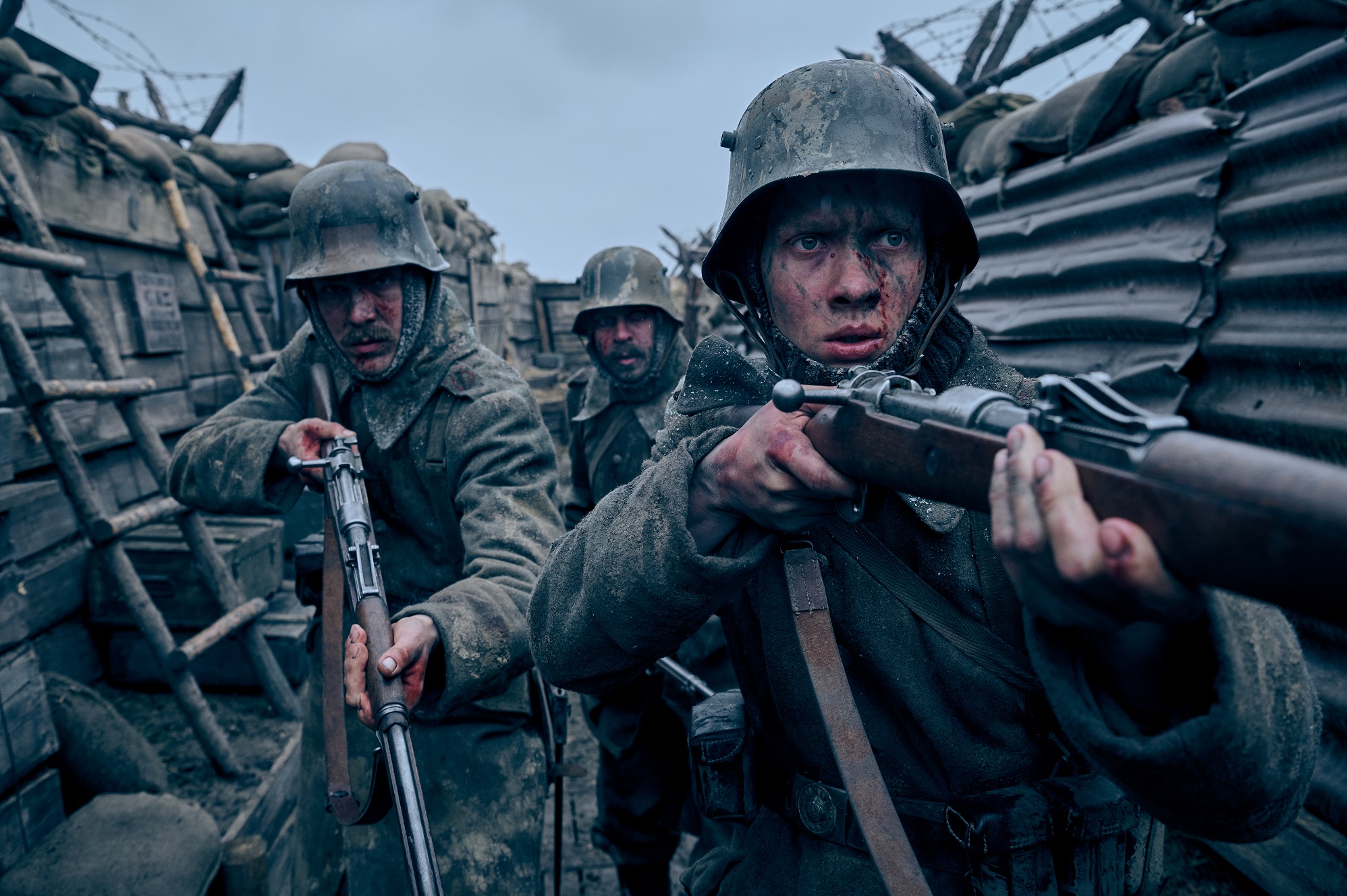
This not only makes one question why there are two categories for best film, one based on country of provenance, but also leaves the International Film category wide open for conjecture. The probable winner, however, is the German film All Quiet on the Western Front, which is so superbly dubbed that there is no problem with language. The result is that this film this too may prove, in its own way, to be something of an anomaly as it is a film which is not only streaming on Netflix, but one which could also do well in theatres.
One of the reasons for its potential success is that it belongs to a genre that is an eternal fan favourite: war movies. In addition, it is a superbly made film.
Based on Erich Maria Remarque’s 1928 novel, which presented a negative view of the First World War from a German perspective, there have already been two film versions of the book: one, an Oscar winner in 1930, is regarded as a classic, iconic movie; the other, less successful, was made in 1979. Now in its third cinematic version, despite its cinematic excellence, one might well ask if yet another version is necessary.
World War I has already generated some outstanding films – not least among them Paths of Glory and Gallipoli – as well as some less successful efforts, such as the more recent and, in my opinion, over-rated 1917.
Like all of them, this new adaptation of All Quiet on the Western Front illustrates in telling detail the horrors of the First World War in particular, as well as war in general. The film traces the journey of a group of enthusiastic young recruits, anxious to share in the glory of defending the Fatherland, shows in graphic detail the horrors to which they are subjected, and ultimately reveals the disillusionment they experience.
As all this is told, one cannot but wonder if such a film is necessary. Of course it does acquire singular relevance as we are daily reminded of the tragic war in Ukraine; one cannot but think of the young Russian soldiers fighting for a war which in the eyes of the world is not only unnecessary, but downright barbaric. While one applauds the heroic bravery of the Ukrainians and mourns the Russians and Ukrainians caught up in a totally unnecessary conflict, one must conclude that the whole war is as vainglorious as the First World War.
It is in this spirit that All Quiet on the Western Front spells out its message. In this regard, it remains true to the spirit of the novel and makes one aware of the blind inhumanity of the generals who so callously pursued a war which, in the end, nobody won.
Perhaps the most telling realization it brings about is that all wars tend to be tragic failures. However, this point was perhaps made even more forcefully in the stage play Oh What a Lovely War, so brilliantly masterminded by Joan Littlewood in 1963 (and virtually totally ruined by Richard Attenborough in his later film treatment of the material).
In fact, one does not need to turn to the dramatic arts to find works of a similar nature. One incident in the film reveals the horror of gas warfare, but perhaps no more forcefully than Wilfred Owen’s bitter poem Dolce et Decorum Est, while another incident in which the main character engages in a hand-to-hand fight with a French soldier recalls Hardy’s ironic poem The Man He Killed.
In other words, All Quiet on the Western Front takes us to a place we have already visited several times – yet still the bloody, tragic battles rage. What does remain true, however, is that, whether on stage, screen, or written page, the message at the end of most war-centred works is as has famously been said, “War is hell” – and largely a senseless hell.
Perhaps in response one cannot help but ask the question posed in the 1970 film, Suppose They Gave a War and Nobody Came.







