

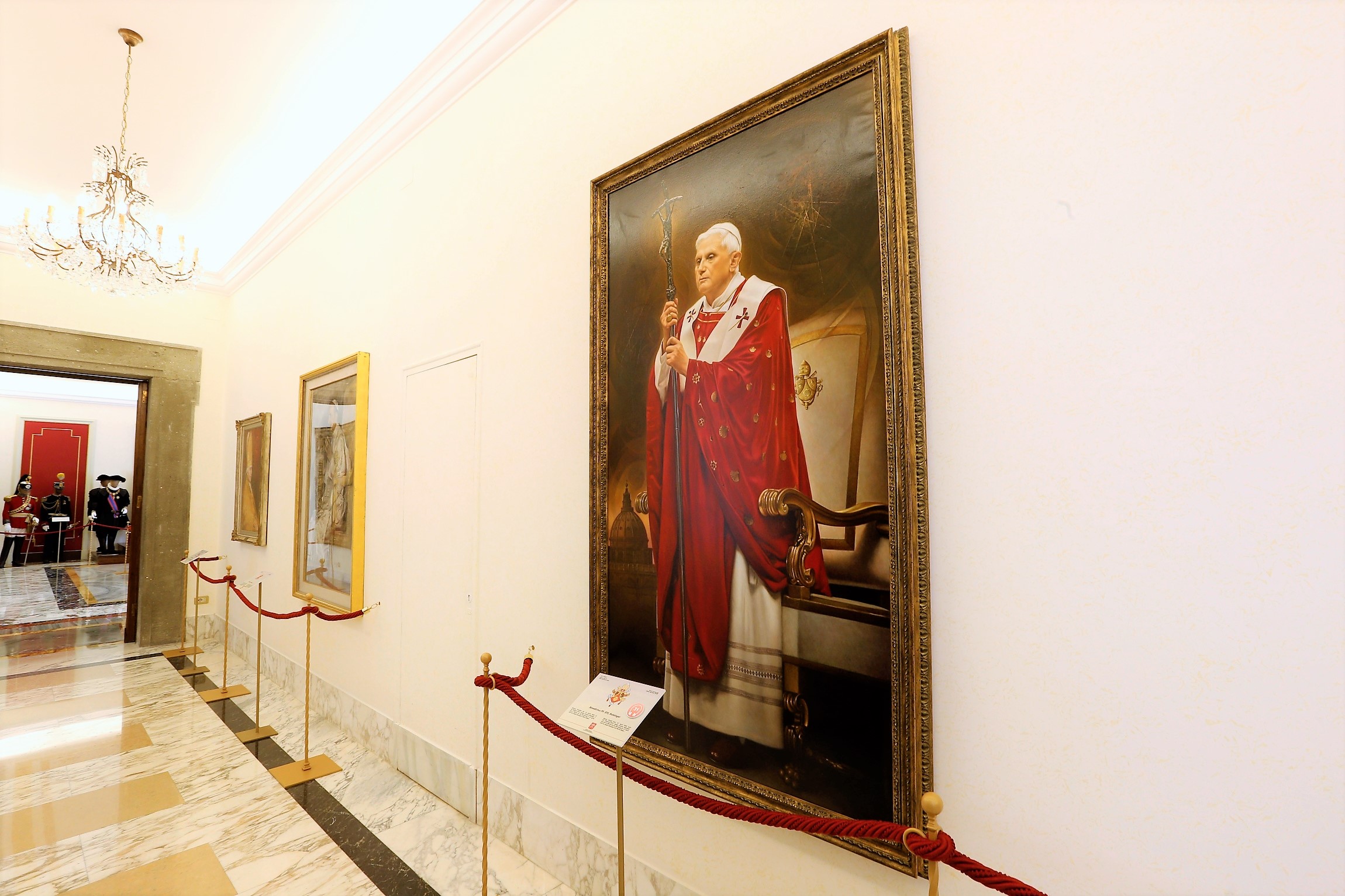

“The world offers you comfort, but you were not made for comfort. You were made for greatness!” ~ Joseph Ratzinger.
The death of Pope Emeritus Benedict XVI has prompted many discussions recently. Reflecting on his writings, his theology, his leadership, and his retirement from the papacy has urged me to revisit some of his writings and homilies. In his memory, I wish to reflect on his faithful spirit and share some beautiful quotes from his descriptions of love.
Joseph Ratzinger was well known for his theological writings and his work in this regard did not end when he became Pope Benedict XVI. His encyclical, Deus Caritas Est from Dec. 25, 2005, articulated the great love God has for us. He reminds us that God “loved us first” and that although we cannot see him, God is not inaccessible to us: “Indeed, God is visible in a number of ways. In the love-story recounted by the Bible, he comes towards us, he seeks to win our hearts, all the way to the Last Supper, to the piercing of his heart on the Cross, to his appearances after the Resurrection and to the great deeds by which, through the activity of the Apostles, he guided the nascent Church along its path.”
The late Pope went on to remind us that this love which has been in existence from the beginning continues far beyond the early Church. In discussing the relational aspect of this love, he reminded us that even today we are invited to love God back! “[God] encounters us ever anew, in the men and women who reflect his presence, in his word, in the sacraments, and especially in the Eucharist … He has loved us first and he continues to do so; we too, then, can respond with love.”
In Deus Caritas Est, we are reminded that love is not merely a fleeting “sentiment” but a process. Pope Benedict referred to the ongoing purification and maturation inherent in love. The joy of being loved by God appeals not merely to our hearts, but to our intellects and wills as well, which influences our actions. Love is not temporary, but a life-long journey which will result in God’s great influence on us. As Pope Benedict described, the goal is to reach a point where “God’s will is no longer for me an alien will, something imposed on me from without by the commandments, but it is now my own will, based on the realization that God is in fact more deeply present to me than I am to myself.”
Thoughts on love were likewise reflected in the late Pope’s homily on the Feast of the Presentation of the Lord on Feb. 3, 2013. Encouraging the faithful to “treasure, as on an inner pilgrimage, the memory of the ‘first love,’” he reminded people to embrace the joy of God’s love and allow it to influence our entire lives, ultimately affecting our actions towards others.
In this homily, he likewise invited his followers to “recognize the wisdom of weakness.” Just days before announcing his own resignation due to his age and declining health, he reminded his people that “in our limitations and weaknesses as human beings we are called to live conformation with Christ.” He spoke of the necessity to go against society by embracing “humility,” “frailty of the lowly,” and having “empathy for those who have no voice.”
Although I was surprised when he resigned from the papacy, I truly admired his honesty and his humble willingness to surrender to his own frailty. There was wisdom in his weakness, and Pope Benedict’s loving relationship with God allowed him to consider the present and future needs of the Church by stepping down, as uncomfortable as that may have been for him on a personal level.
The notion of the future was reinforced in Pope Benedict’s Feb. 2, 2013, homily, as well. His final words in this homily asked the faithful to consider the future by renewing their faith and keeping God’s love alive as we seek him. He closed with this prayer: “May this [quest to see God’s face] be the constant yearning of your heart, the fundamental criterion that guides you on your journey, both in small daily steps and in the most important decisions.” What a beautiful blessing and prayer to end his own papal journey.
In his decision to resign, Pope Benedict modelled humility. In welcoming Pope Francis to his former role, he embraced change. In retiring, he shared the love of God through his prayers for the world.
In his death, we are saddened to know that the world has lost a faithful and loving shepherd; however, Pope Emeritus Benedict XVI has left this world to see the face of the God who loved him first. We pray that he has finally found the “greatness” for which he was made.
Click here to send us a letter to the editor about this or any other article.







