

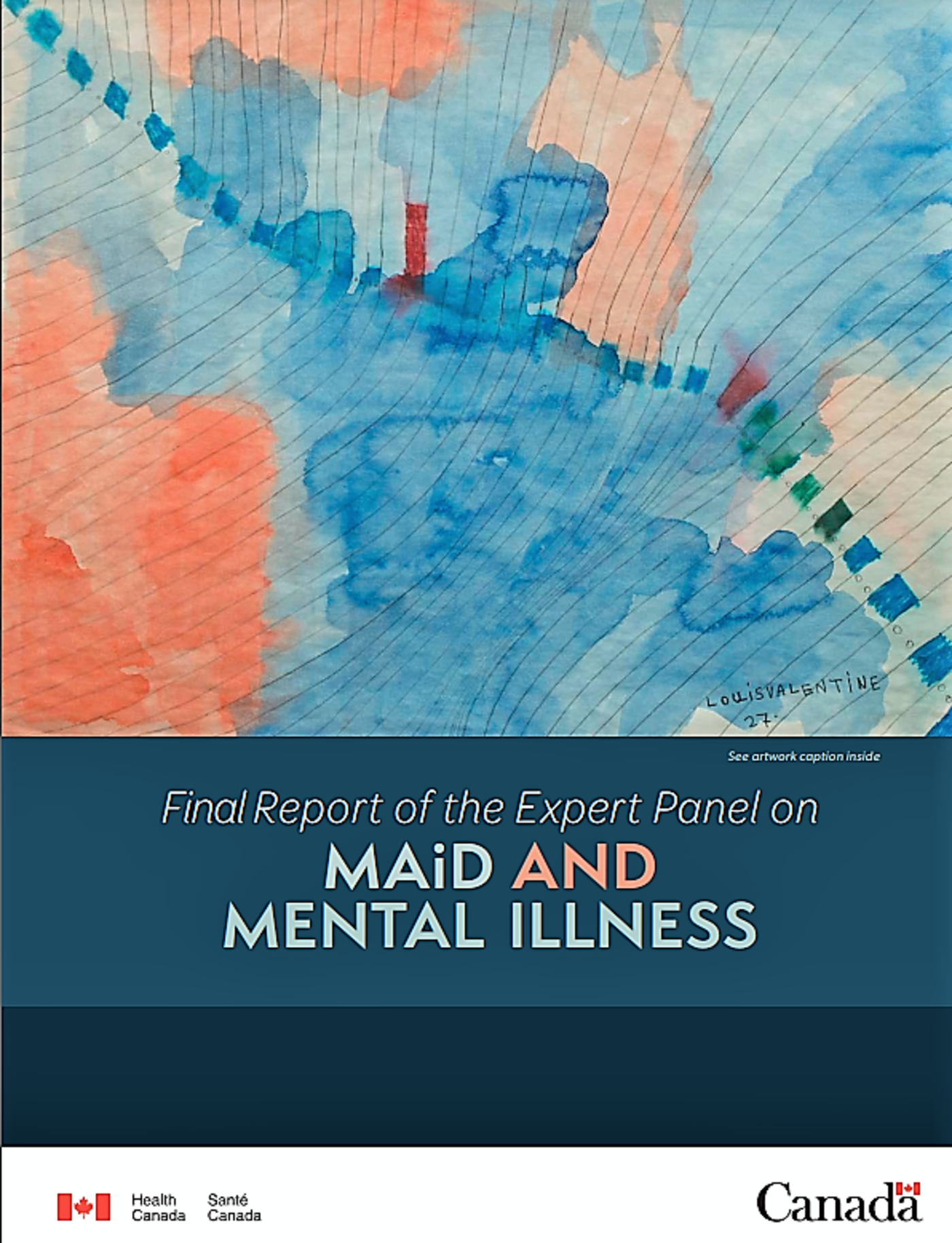

This latest expansion of euthanasia to include mental illness is an excuse to legitimize genocide and to expect medical professionals to carry it out.
Is it all an effort to empty hospital and palliative care beds? As a Canadian society we need to make a careful reassessment of what we are doing. What has happened to our moral values? I am becoming less and less proud to say I am Canadian.
The federal government needs to take stock of what it is doing. Shame on them for not being leaders but perpetrators. Have we forgotten what history has shown us? Who gave any of us the right to say who should live and who should die?
Carol Hardardt
Duncan
Having recently returned from the Holy Land, it is heart-rending to recall, 2,000 years later, those words of Our Lord, uttered now with no less sorrow, “Jerusalem, Jerusalem, how often would I have gathered your children together … but you would not.” (Mt. 23:27)
Given the Canadian government’s almost insatiable drive to expand access to MAiD, I couldn’t help feeling Our Lord’s same sorrow for our own country. He could easily be saying “Canada, Canada, how often would I have gathered your children together, but you would not.”
Based on livability, Canada ranks as one of the most desirable countries in the world. Ironically, we are now among those countries whose laws permit the greatest access to death by assisted suicide. We await the final report in February 2023 of a special government committee that is expected to recommend further expansion to include mental illness, and by advance directive. Next year, the inclusion of mental illness is very likely.
Our laws already extravagantly favour those who feel socially pressured or who cannot access necessary medical help to choose death by euthanasia instead. Even Delta MP Carla Qualtrough, Minister of Employment, Workforce Development and Disability Inclusion, said, “It should not be easier to access a medically assisted death than to get a wheelchair – but it is.”
Please write to your MPs and Senators. It is never too late to try to save a life.
Barbara Stuart
North Vancouver
Thank you for standing for life. We all need to be more vocal in saving lives. After I was asked to give up on my husband he lived 3 ½ more years, overcoming his stroke, witnessing his granddaughter getting married, and seeing two grandchildren born.
MAiD is only about saving money. My prayers are with you.
Joyce Gueret
Powell River
Monica Perry’s Oct. 13 book review of The Crowded Table gave an interesting overview that feels like someone just opened up the window and let in fresh air. The subject of the crisis of declining birth rates has been given new hope!
Angela Connelly
Author, The Crowded Table: The Brave and Beautiful Choice to Mother Many
Thanks to Alan Charlton for his Nov. 14 and Nov. 21 columns inviting readers to watch two documentaries: The Tragic Fentanyl Problem, and Vancouver is Dying.
It was interesting to see the Downtown Eastside through the lens of an outsider in The Tragic Fentanyl Problem (although it was disappointing that Insite – the first of its kind in North America – was somehow not included).
It seems, by the comments left on the YouTube site, that two of the people in the documentary have since died.
Unfortunately, I wouldn’t classify Vancouver is Dying as a documentary, as it wasn’t very balanced and it was used in a campaign pushing for bigger policing budgets during Vancouver’s recent civic election. The filmmaker has a flimsy grasp on what constitutes systemic racism (diversity in Vancouver Police Department has nothing to do with whether systemic racism exists).
Charlton also refers to a recent Vancouver Police report showing millions of dollars a day already being spent “on the problem” in Vancouver. In actual fact, the report included all sorts of money being spent on all Vancouver residents – the Canada Pension Plan, Old Age Security, Employment Insurance, etc.
Renee Bernard
Vancouver
I lived in North Vancouver from 2005 to 2017 and attended Mass at Holy Trinity Parish and remembered our parish and the Archdiocese of Vancouver were quite good at fundraising. I’ve been trying to contact anyone I think might be able to help, and that’s why I reached out to you.
I grew up in a parish in Nova Scotia that has the largest wooden church in North America (the second largest in the world). It’s now in danger of being torn down unless something miraculous happens.
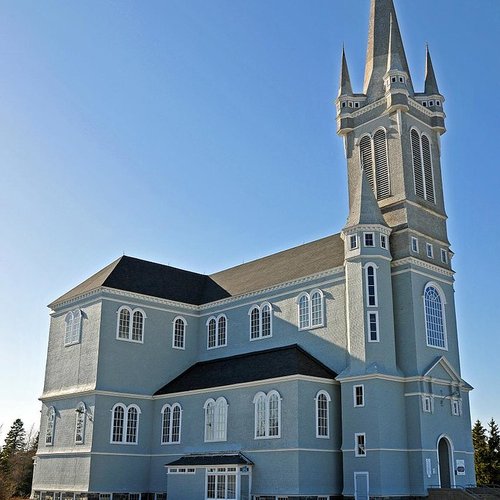
St. Mary’s Church in the Yarmouth and Acadian Shores region was constructed over a two-year period starting in 1903. A preservation society worked over the last seven years to show the Archdiocese of Halifax-Yarmouth that it could raise the funds to restore the church and provide a plan for its use. The goal was to raise $3 million but inflation has ballooned that cost to nearly $10 million and the group recently abandoned its efforts.
If you check the YouTube video at bccatholic.ca/yarmouth, I’m sure that you’ll agree that it would be an enormous shame if this building were torn down.
The group’s efforts will come to an end on Dec. 31 unless someone comes forward with a plan. Although I currently live in New Brunswick, I can’t imagine going home and not seeing that church any more. It has a special place in my heart since it’s where I was baptized, received First Communion, and was married.
I was wondering if anyone may have ideas or know someone who could help. I believe in the power of prayer, so even that would be appreciated.
Marc LeBlanc
Miramichi, N.B.
Send us a letter to the editor about this or any other article.







