

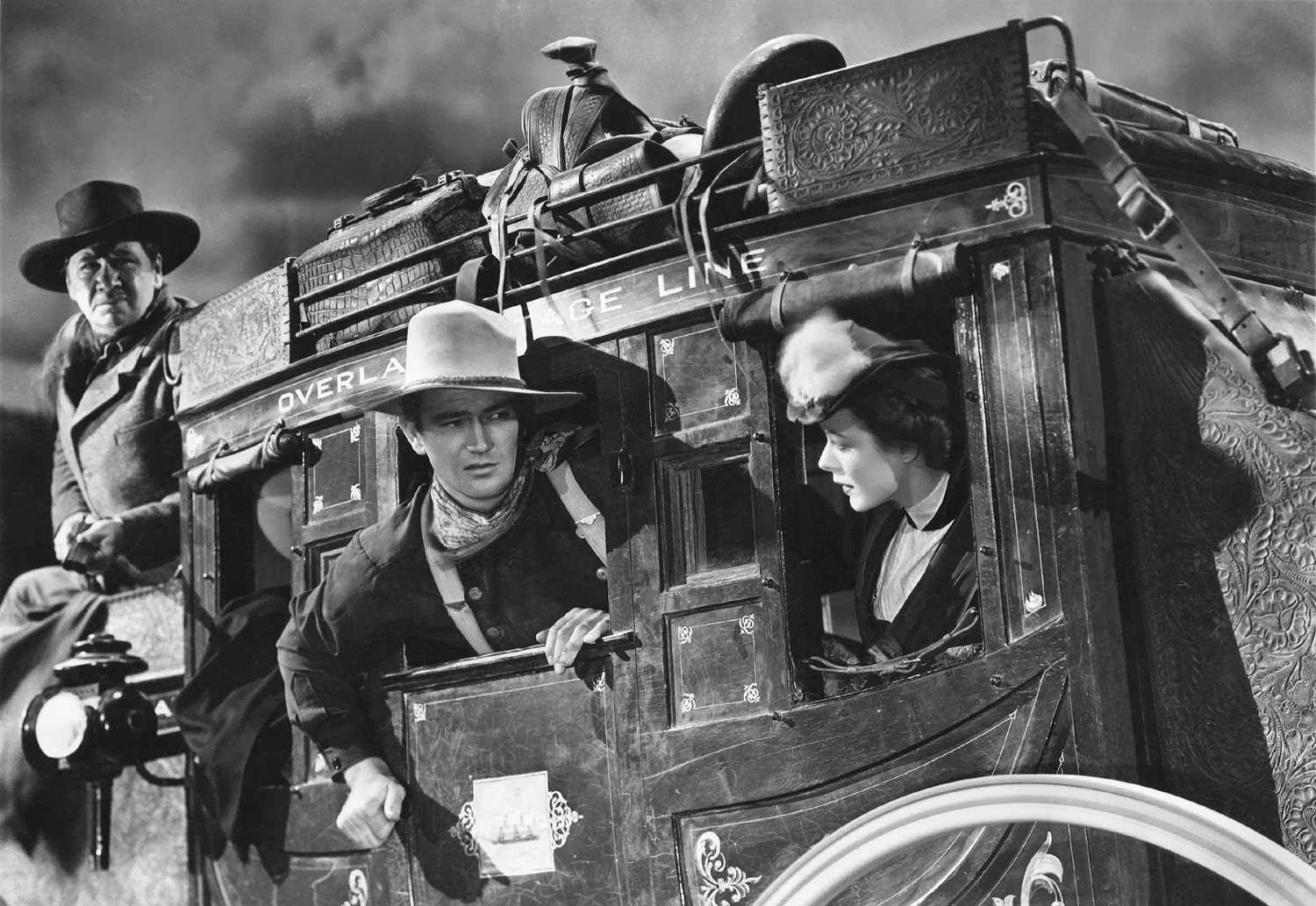

When I still find few films appealing enough to draw me to an actual movie theatre, I find myself more and more reflecting on and revisiting some of the multitude of movies that resulted in my becoming a life-long fan of the art form. I was recently jolted into such a reflection by the informative documentary John Ford: The Man Who Invented America, shown on the Knowledge Network.
Of course, like many, particularly those of a certain age, I associate the brilliant director, winner of many Oscars, with the Western genre so popular in the 1940s and 1950s.
At the time. as was usual for young people, I, along with my friends, attended numerous Saturday matinees at which we eagerly followed the exploits of Bill Boyd, Gene Autry, and of course, Roy Rogers (probably singing to his horse Trigger) – with Gabby Hayes as comic relief. Sadly, many such films which we found so entertaining were variants of the formulaic “Cowboys and Indians” movies, movies in which the brave white settlers, their wagons circled, attempted to drive off the fearful attacks of the “savage” Indians. We, predictably, cheered noisily for the white people!
Of course, in our ignorant British schooldays naivete, we had no idea that such films were undoubtedly sowing the seeds of racism – perhaps less so in Britain (where there were, of course, no Indians and few blacks) than in North America. The reality was that racist attitudes did become more overt later on in the United Kingdom, though we youngsters were unaware that they did in fact always exist towards certain peoples. Such racism has had sadly predictable results that unfortunately still are in much evidence today.
The documentary, however, made me aware that, while Ford’s films, probably unintentionally, promoted such prejudiced views, he himself was very aware of the social injustices of his time. This aspect of the artist is very apparent in his iconic The Grapes of Wrath. However, prompted by the thesis of the documentary, I decided to return to some of Ford’s other movies (through the agency of DVDs borrowed from the public library, though many of them can be downloaded through various streaming services). There was an obvious place to start such a review of the man’s work: the 1939 film that made Ford famous, Stagecoach.
When viewing the film again from any perspective, it is, of course, apparent that Ford was responsible for much cinematic myth making: the anti-hero (the character played by John Wayne who is both an outlaw and an admirable person), the “prostitute with the heart of gold,” the purportedly comical, harmless drunk, and a totally inaccurate vision of the “Wild West” having taken place in the gloriously cinematic Monument Valley.
However, viewed through a socially relevant lens, the machinations of a corrupt and self-serving plutocrat in the form of a hypocritical banker, certainly indicates Ford’s political views – which were more fully illustrated in several Frank Capra films, especially the beloved It’s a Wonderful Life. Sadly, however, there is in Stagecoach a decidedly negative portrayal of the Indigenous people so unfairly treated by the white invaders. Despite its racial shortcomings and an unlikely plot development, as well as an annoyingly repetitious musical theme, the film is well worth viewing. This is especially true because of Ford’s stunning use of landscape and his masterly control of close-ups, necessitated by much of the film taking place within the confines of the stagecoach. It is indeed a cinematic classic and, its implied racism aside, amply rewards a revisit.
That Ford certainly came to view exploited Indigenous peoples differently is one of the main themes of the above-mentioned documentary. According to it, he apparently returned continually to Monument Valley to film, not only because he understandably fell in love with its scenic magnificence, but also because it gave him the opportunity to give employment to the Navajo extras. This well-intentioned effort ultimately resulted in the disastrous Cheyenne Autumn, made when Ford was past his prime. While the film starts out with a sympathetic portrayal of the Navajos defying the government and undertaking their famous and tragic journey to their current home, Ford takes the film through a series of irrelevant and tedious other scenarios. Worse still is that he employed Apaches to stand in for Navajos and used actors such as Ricardo Montalban and Sal Mineo for Indigenous speaking parts. This is hardly evidence of Ford’s artistic excellence, let alone his apparent concern with addressing social injustice.
At least one other Ford Western, Sergeant Rutledge (available on YouTube), is truly socially significant. When black actors were generally consigned to roles such as maids and butlers, this film gives its central character true heroic significance. Its account of a black cavalry officer being tried for rape and murder predates the beloved To Kill a Mockingbird by two years.
Without engaging in further plot spoilers for those unfamiliar with the film, suffice it to say that Woody Strode in the title role superbly dominates (often quite literally) the film, while many of his lines presage the Black Lives Matter movement. The involving courtroom entertainment still has much social relevance today. Although the film admirably pleads for racial justice, it further reflects the attitudes of the time that Strode, despite his stellar work, was barely given credit, either in the film titles or in the publicity surrounding its release. Nor, sadly, can Ford be given any credit for a non-racist view of the Indigenous people. Today one would hope that things would be different. To Ford’s credit, Sergeant Rutledge demands a viewing, and one can generally view it without disapproval of the attitudes to black people it reflects.
It is also a reminder to me of the point at which I began. So few of the films to which we were innocently exposed in the past addressed the real social problems of the age. Without our realizing it, we were (in the trenchant words of Oscar Hammerstein) being “carefully taught.” Unfortunately, many have been unable to rid themselves of those lessons. At the same time, one wonders if future generations will look back on the films which are popular today and find expressed in them tropes and themes which they will find reprehensible. It reminds us that it is difficult to be objective about that which is popular, immediate, and entertaining. It is certainly a further reminder of the advice “Viewer beware!”







