


29th Sunday in Ordinary Time, Year C
First reading: Ex 17:8-13
Second reading: 2 Tim 3:14-4:2
Gospel reading: Lk 18:1-8
“Be persistent,” St. Paul urges St. Timothy in this Sunday’s second reading, “whether the time is favourable or unfavourable.” He is talking to a fellow bishop about their work: to “convince, rebuke, and encourage, with the utmost patience in teaching.”
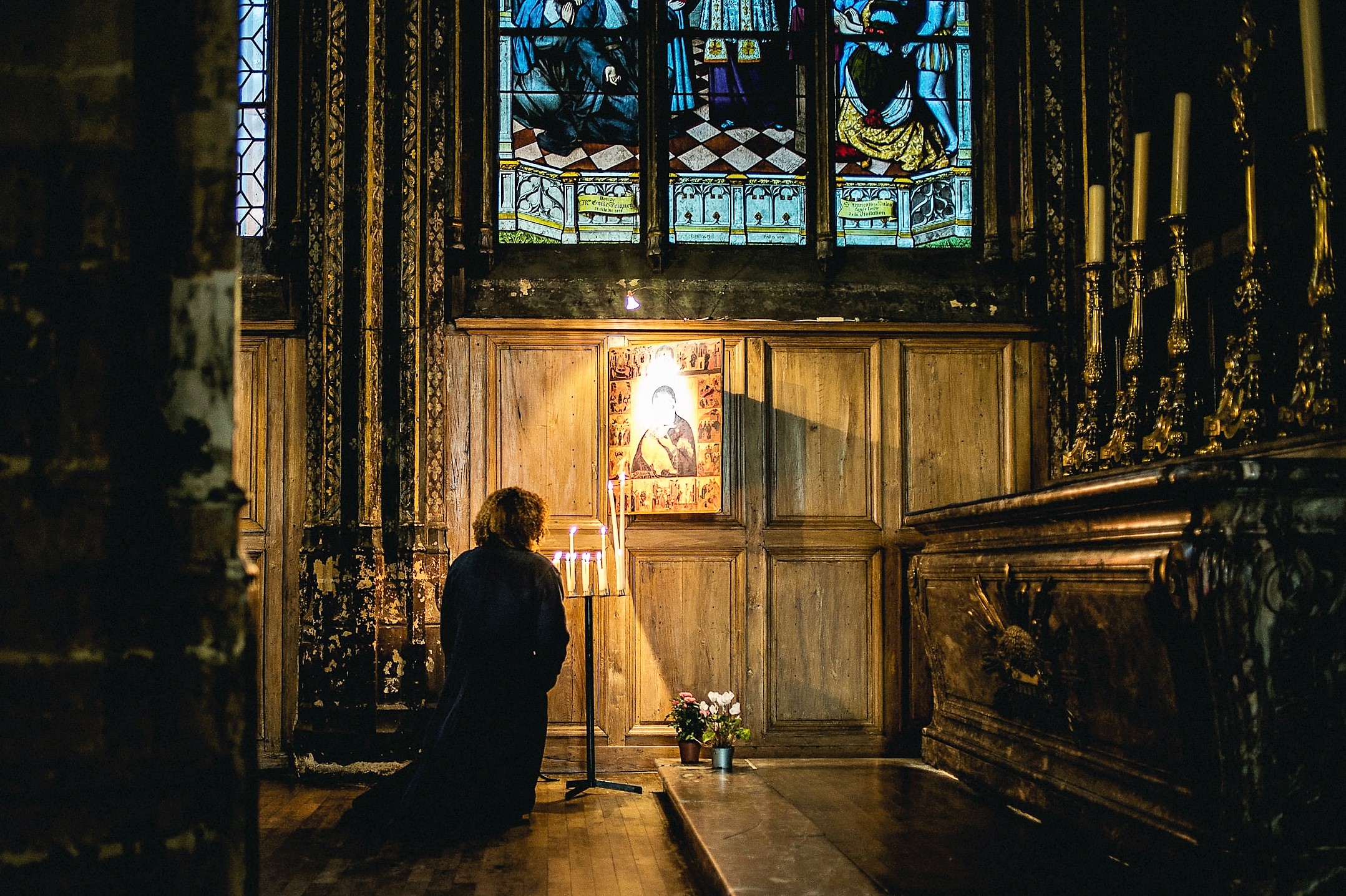
Actually, “be persistent” sums up the other two readings as well: the Israelites prevail in battle as long as Moses holds up his hands in prayer; and Jesus tells the disciples a parable about their need to pray always and not to lose heart.
God himself is persistent. In fact, according to Anglican Sister Penelope Lawson CSMV, who studied Hebrew at Oxford, the name “Israel” is properly “yisra-El,” where “El” means God and “yisra” means “persists.”
Now surely, we feel, the object of petitionary prayer is to get what we ask for. If we are asking for something good, why does God not give it to us at once? If we are asking for something bad, why does Jesus tell us to go on asking for it?
The Catechism of the Catholic Church explains that it is more important to ask than to get what we ask for. By asking, “we express awareness of our relationship with God,” the Giver, Who, “in giving, gives the far more precious gift of himself.” God wants us to exercise our desire in prayer, so “that we may be able to receive what he is prepared to give.”
In fact, as any supplicant knows, the assurance that we are being heard is far more important than getting what we ask for. We know that often, in selfishness or ignorance, we will ask for things that are not good, so we can accept the fact that God sometimes says “No,” provided we are sure that he is listening and taking our requests into account. That is why we speak not about the “results” of prayer, as if prayer were magic, but about our prayers’ being “answered” or “heard;” we are making a request of a Person.
God “desires our well-being, our life,” says the Catechism. In fact, he wants to do “something even greater” than what we are asking for. To this end, while we “cling to him in prayer,” he transforms our “praying heart.”
For example, consider the man who asked Jesus to cure his son “if you can.” Jesus replied, “‘If you can?’ Everything is possible to a man who trusts.” The man immediately exclaimed, “I do believe! Help my lack of trust!” Then Jesus cured the boy, but his first response to the man’s prayer was the gift of faith.
We should persevere in petitionary prayer, for when we ask God for things, we admit our dependence on him, says the Catechism. We can petition him about every need, not just those that “influence the march of history,” but also our basic, everyday needs. However, “there is a hierarchy” in our petitions; we should pray first for the coming of God’s Kingdom, and second for what we need in order to “welcome it and co-operate with its coming.”
“Do not worry about your livelihood: what you are to eat or drink or use for clothing,” Jesus said. “Is not life more than food? Is not the body more valuable than clothes? … Your heavenly Father knows all that you need. Seek first his kingship over you, his way of holiness, and all these things will be given you besides.”
Here Jesus condemns our passion for security, our desire to be self-sufficient, our fear of dependence on God, all of which were present in the original sin of Adam and Eve, as well as every subsequent sin. In contrast, said Pope Emeritus Benedict XVI, “only the person who entrusts himself totally to God finds true freedom.”
God is never outdone in generosity. No matter what we ask for, he will always give us “something even greater,” provided we persist.
Father Hawkswell is again teaching The Catholic Faith in Plain English, with new insights. The whole course is available in written form and, one session per week, in YouTube form at beholdvancouver.org/catholic-faith-course. Father is also teaching the course in person: on Sundays at 2 p.m. in the John Paul II Pastoral Centre, 4885 St John Paul II Way, Vancouver (33rd and Willow); and on Mondays at 10 a.m. in St. Anthony’s Church Hall, 2347 Inglewood Ave., West Vancouver. Next week’s topic is “The Light of Faith.”







