



At a time when it seems that major crisis rapidly follows major crisis, it is all too easy to become numb to the suffering that accompanies each one. Fortunately, there are people who find it in their hearts to respond to emergencies. Nowhere has that been made more evident than in the recent works of one of today’s most talented movie directors.
Ron Howard, of course, became famous as a child actor, perhaps best remembered for his performance as Opie Taylor on The Andy Griffith Show. As an adult, graduating to the rank of director, he has demonstrated his skill in many award-winning films, ranging from Apollo 13 to A Beautiful Mind.
While he has successfully directed many fiction-based films, it is apparent that he is often attracted to films based in true stories. Moreover, he makes those films both artistically successful and enormously engaging. This is especially true of the fact-based We Feed People (available on Disney+ and National Geographic) and Thirteen Lives (available on Prime) – both of which have the added appeal that they are a reminder of how many rush to the aid of others at a time of crisis.
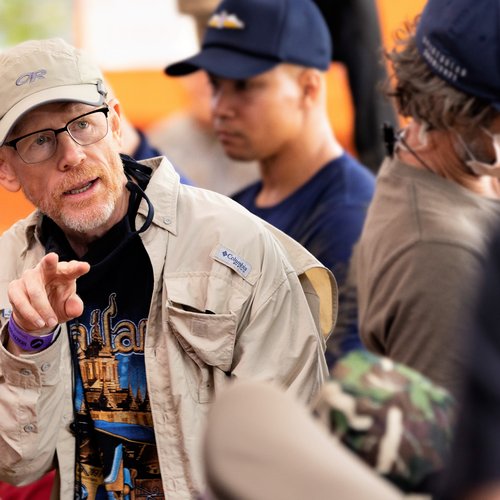
We Feed People is a fascinating and often comical documentary about the work of World Central Kitchen and its founder Jose Andres. Andres, a famous and award-winning chef, hearing of the plight of victims of the 2010 earthquake in Haiti, felt that the one thing he could do was to help provide them with food. In doing so, he took the most direct approach possible; instead of wasting time coming up with a plan, he simply decided that the Haitians needed food and the obvious thing to do was to get on and supply them with food.
What followed was nothing short of miraculous. From Andres’ work in Haiti the World Central Kitchen grew and flourished. Today it is a multi-million-dollar organization which has served many millions of people in places as diverse Puerto Rico, Beirut, Australia, Poland, Ukraine, and the United States.
The organization has come to the aid of people suffering from war, floods, fires, earthquakes, tornados, and COVID. The work has relied on thousands of volunteers, both from among those directly affected and others who have simply stopped their lives to travel to the scenes of disaster.
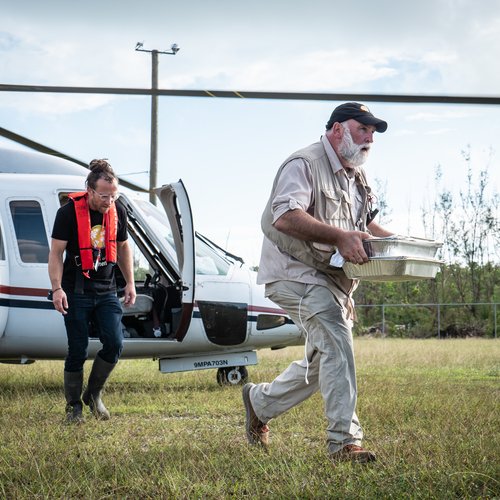
Jose Andres carries trays of food in Ron Howard’s We Feed People. (National Geographic/Sebastian Lindstrom)
This is clearly an aspect of such noble work that intrigues Ron Howard. He clearly shows the impact on the personal life of Andres, who frequently has to sacrifice his own personal inclinations by leaving wife and family to engage in his great work.
This theme is also one of the underlying motifs of Thirteen Lives, a gripping, star-studded account of the rescue in Thailand of a group of boys and their soccer coach when they were trapped in a cave for over two weeks.
Many will doubtless remember the event, which was given world coverage. It is part of the genius of Howard that he is nevertheless able to make the account both gripping and suspenseful – much as he did in Apollo 13.
As the essentially historically true narrative unfolds, William Nicholson, the screenwriter, reveals details of the myriad challenges the rescuers faced and shows how determination and ingenuity made the ultimate outcome possible. Moreover, thanks to the skills of writer and director, that narrative is always clear and compelling.
Above all, there is emphasis on the volunteer aspect of the undertaking and the many hundreds of people – locals and others – who interrupted their own lives, flying in from around the world or travelling across the country to join in the rescue effort at great self-sacrifice.
Ron Howard’s We Feed People and Thirteen Lives amply fulfill that basic task of all good cinema: to involve and entertain the audience. Above all, however, both films serve as a timely reminder of our obligation to come to the aid of others less fortunate than ourselves. They are indeed salutary examples and impressive reminders of what is meant by Christianity in action.







