

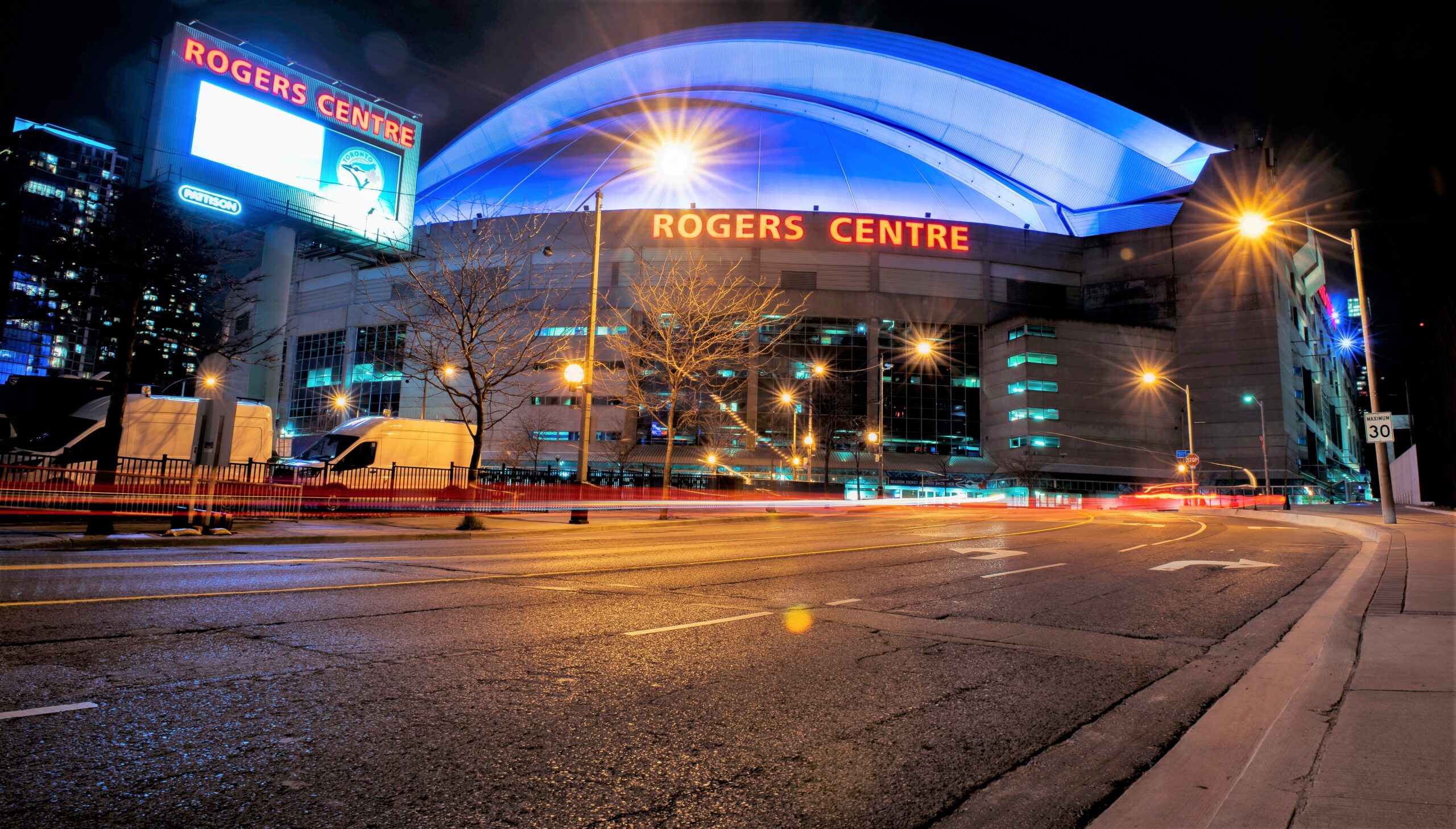

A Canadian telecom’s service outage doesn’t typically make international headlines. But when Reuters runs a piece with the headline “Canadians’ fury over Rogers outage may complicate its merger hopes,” you know that it was no ordinary outage.
On Friday, July 8, for about 15 hours, aspects of the Canadian economy and of people’s day-to-day lives ground to a halt as the biggest of the Big 3 telcos in the country, Rogers Communications, saw its infrastructure grind to a halt.
Customers were unable to make phone calls, get internet service, or make use of seemingly unrelated services such as Interac or e-transfer payments. Businesses were forced to close in some cases, some service businesses such as restaurants began taking IOUs (many reported the next day how pleasantly surprised they were that nearly all were repaid in short order), and others in the gig economy either couldn’t work or saw roughly a third of their potential work evaporate.
Government services became inaccessible, 911 no longer worked for some customers, some major concerts couldn’t go ahead, and even Air Canada’s already overloaded call centre became unusable.
Although the outage is unrelated to the Rogers plan to take over Shaw Communications, you can be sure that it will become a point of consideration in antitrust negotiations with federal regulators. Somewhat ironically, Rogers might argue that it needs to get bigger to help combat this sort of technical service outage.
Canada’s telecommunications sector is basically an oligopoly of three players: BCE Inc. (better known as Bell Canada), Rogers Communications, and TELUS Inc., which together control some 90 per cent of the market. Each has roughly 10 million cellphone customers (Rogers leads with around 11 million) and differing, but large, numbers of TV and fixed internet subscribers.
Although any regulatory fallout from the lengthy Rogers service outage may be some time off, the potential Shaw acquisition was already facing intense scrutiny. Canada’s fourth cellphone provider, Shaw-owned Freedom Mobile, was almost certainly not falling into Rogers’ hands. Although dwarfed by the other three, with just around a million customers, Freedom is seen by regulators, and federal politicians, as important from a competition perspective.
One aspect that has garnered some attention following the Rogers outage is the notion of bundling, combining all of a household’s telecom services with one provider. That was a problem in this case and saw some forced to go to coffee shops that had Wi-Fi internet from another provider. Watch for “unbundling” to become a de rigeur term over the next few years.
With Interac and e-transfer systems also severely impacted this time, it may be a moment to reassess having at least some cash on hand. Perhaps we aren’t as ready for the cashless society COVID-19 has accelerated over the past couple of years.
Federal industry minister Francois-Philippe Champagne, after a showdown with executives from the major telcos, called for them to take immediate action to improve the resiliency and reliability of their networks. In his words: “The national outage of telecom services that millions of Canadians experienced in the last few days is unacceptable. Full stop.”
Furthermore, mindful that this may not be the last such outage, the minister said the telcos must have an emergency roaming policy in place within 60 days so that customers experiencing an outage could jump on a network of one of the competitors.
Meanwhile, Rogers CEO Tony Staffieri, only in the job a short while following a major Rogers family showdown, said the outage was a network system failure after a maintenance update. He ordered national advertising to be run, apologizing for the outage. With social media posters having a field day with the corporation’s recent slogan, “Canada’s most reliable 5G network,” Staffieri ordered store placards taken down. Some remained around the Metro Vancouver area on bus shelter billboards weeks afterward.
At the time of writing Rogers was offering its customers five days of billing credit, up from an initial suggestion of one day’s credit. This won’t sit well, particularly with business customers, many of whom were working hard to earn back some of what they’d lost during the pandemic. Rogers flanker brands, Fido and Chatr, also offered the five-day credit, as did some brands, such as Teksavvy, which are dependent on Rogers infrastructure in certain locations.
You can bet that the class action lawsuit specialists are eager to get a piece of Rogers over this outage. Such suits generally take years to resolve, let alone be certified, but paperwork for the first one has already been filed. Basically the complainant wants $200 for loss of service and another $200 because of false representation in Rogers’ now-hidden slogan “Get on Canada’s Most Reliable 5G Network.”
What does Rogers do going forward to head off this sort of problem? That isn’t clear at this time but it would seem that the company may want to completely separate its wireless and wireline infrastructure after essentially the entirety of Rogers networks, from cable TV to cellphones, ground to a halt.
Class action news
Sign up before Nov. 14, 2022, to claim $20 from a settled class action involving optical disk drives and devices containing such drives (laptops, desktop computers, video game consoles, etc.). No supporting paperwork is required. For details and to sign up visit oddclassaction.com.
Follow me on Facebook (facebook.com/PeterVogelCA), or on Twitter (@PeterVogel)
pvogel@outlook.com







