


About once a year I have occasion to pull out a piece of ancient technology, a slide projector, to use with students competing in an engineering contest, now in its 42nd year.
And each time I pull out that projector I know I’m on borrowed time with its light bulb. I bought one maybe twenty years ago at a local camera shop, but nowadays the bulbs are fairly elusive.
Of course this year my luck ran out and the bulb gave up, fortunately at the end of one of two presentations I was giving over two days. That meant I only had overnight to locate either another bulb, or another projector.
At about 4:15 p.m., following a suggestion in response to a plea I made on Facebook, I received a tip to try Leo’s Camera Supply on Granville Street in Vancouver.
Yes, said the person at Leo’s on the phone, they did indeed have some projector bulbs. He asked for specifics and, presto, we had a match. It was quite a journey in rush hour traffic, but with five minutes to spare before closing I was in the store.
Leo’s Camera Supply is a throwback to yesteryear. The manager said slide projectors, while no longer in production, are still in demand at film schools, and of course with aficionados. I purchased several lightbulbs, for two models of Kodak projector that I have.
Two or so generations ago, say about 40 years, it was relatively commonplace to shoot photos on slide film, particularly under name brands such as Kodachrome and Fujichrome. Some households had stacks of slide trays, either of the linear or circular (carousel) variety. You don’t need to hear it from me that the days of slide film are basically gone. The Kodak company has essentially vanished. Fuji still lives on in a variety of areas, including in digital cameras, which of course pretty much ended the role of slide and print photograph cameras.
All these years later, it is baby boomer offspring in many cases who find themselves wanting to digitize collections of slides. I’ve given it a try myself but the process can be very time-consuming and labour-intensive.
Recently, B.C. Catholic editor Paul Schratz decided to have a go at it for his own family collection. Over the years he’d tried various ways but the results were not the best. Recently he came across an app that he decided to try.
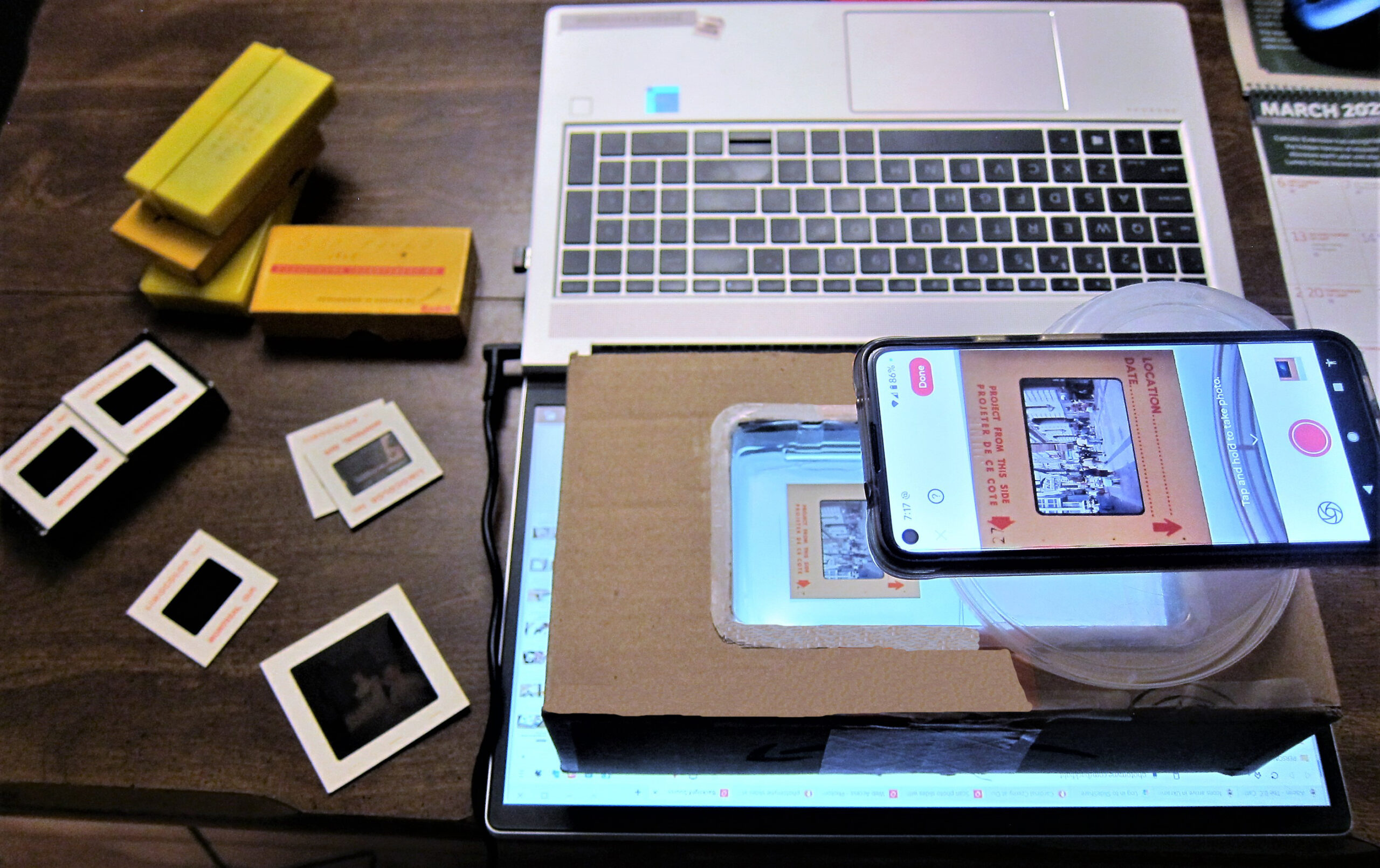
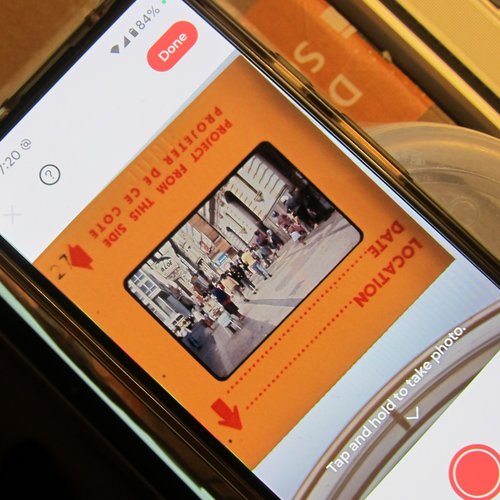
SlideScan, available for both Android and iOS platforms, makes use of the illumination from a white or blank page laptop screen. A slide is held or positioned several centimetres from the screen while the app and phone scan the slide to produce a digital version of the physical medium. SlideScan automatically crops, rotates, and enhances the scanned image as needed.
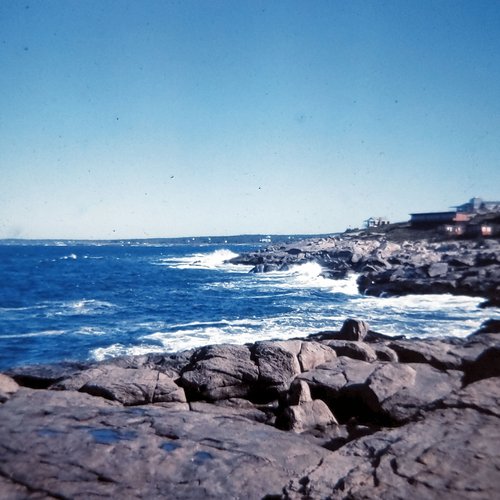
Schratz was immediately captivated by the relative ease of the process, and, more importantly, with the results it produced. However, he found holding a slide and photographing it a bit awkward, so he built a self-described Rube Goldberg contraption from a shoebox and a Tupperware container, one to hold the slides, the other the camera.
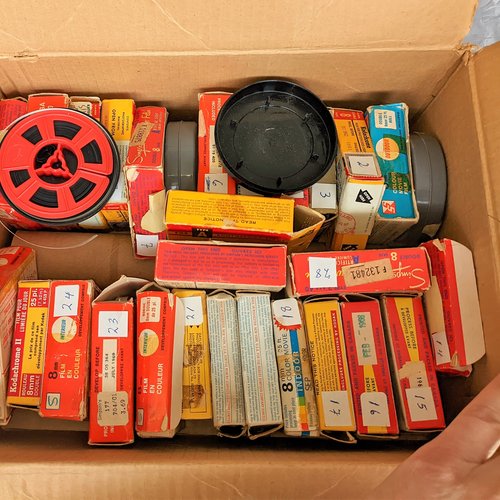
A commercial service might charge on the order of fifty cents to a dollar or so per slide for digitization. In this case, Schratz digitized some 400 slides, going back to the 1950s, taken by his father and grandfather. He has fond childhood memories of relatives gathering around after dinner to view slides and 8mm movies of vacations and other family events. (Those movies are still in a box and will likely require professional help to be digitized.)
Enter Our Lady of Assumption parishioner John Romein who runs Lifetime Heritage Films. He specializes in digitizing all sorts of physical media, whether for family customers or for institutions such as museums.
Romein said he’s seen a steady increase in demand for digitization of slides in particular. Not only do people want to free up physical storage space, they want to be able to share the memories in those slides with relatives and friends around the globe.
Although there are do-it-yourself approaches such as that used by Schratz, Romein said his customers generally don’t have the time or inclination to do it themselves. And they know that a commercial service may be able to produce a better overall result.
Commercial services such as Romein’s use bulk-loading scanners with high quality optics. The holy grail of this sector is the Nikon Super Coolscan 5000, which hasn’t been made since 2009. They command quite a price on the resale market, around $2,500.
Romein says a typical slide conversion for around 200 35mm slides will run around $120, and that includes digital dust removal and colour correction. He observes that not all slides are created equal. Some can be very finicky, particularly those that have glass holders.
Schratz is happy with his slide conversion efforts. The company behind SlideScan, Photomyne, offers additional applications and tools to aid in the conversion process. There are numerous positive reviews for the product, but no shortage of negative ones as well. SlideScan isn’t free and the test version is quite limited. At around $40 for a two-year subscription, you’ll want to be sure this is for you.
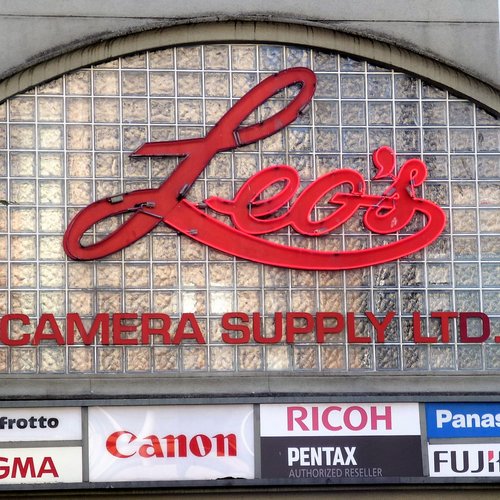
Update: Leo’s Camera Supply, a Vancouver fixture since 1955, has unfortunately closed its doors. An announcement on the company website says it has temporarily suspended all operations. This could be a euphemism for a return as a web-only business.
Follow me on Facebook (facebook.com/PeterVogelCA), on Twitter (@PeterVogel), or on Instagram (@plvogel).
pvogel@outlook.com







