

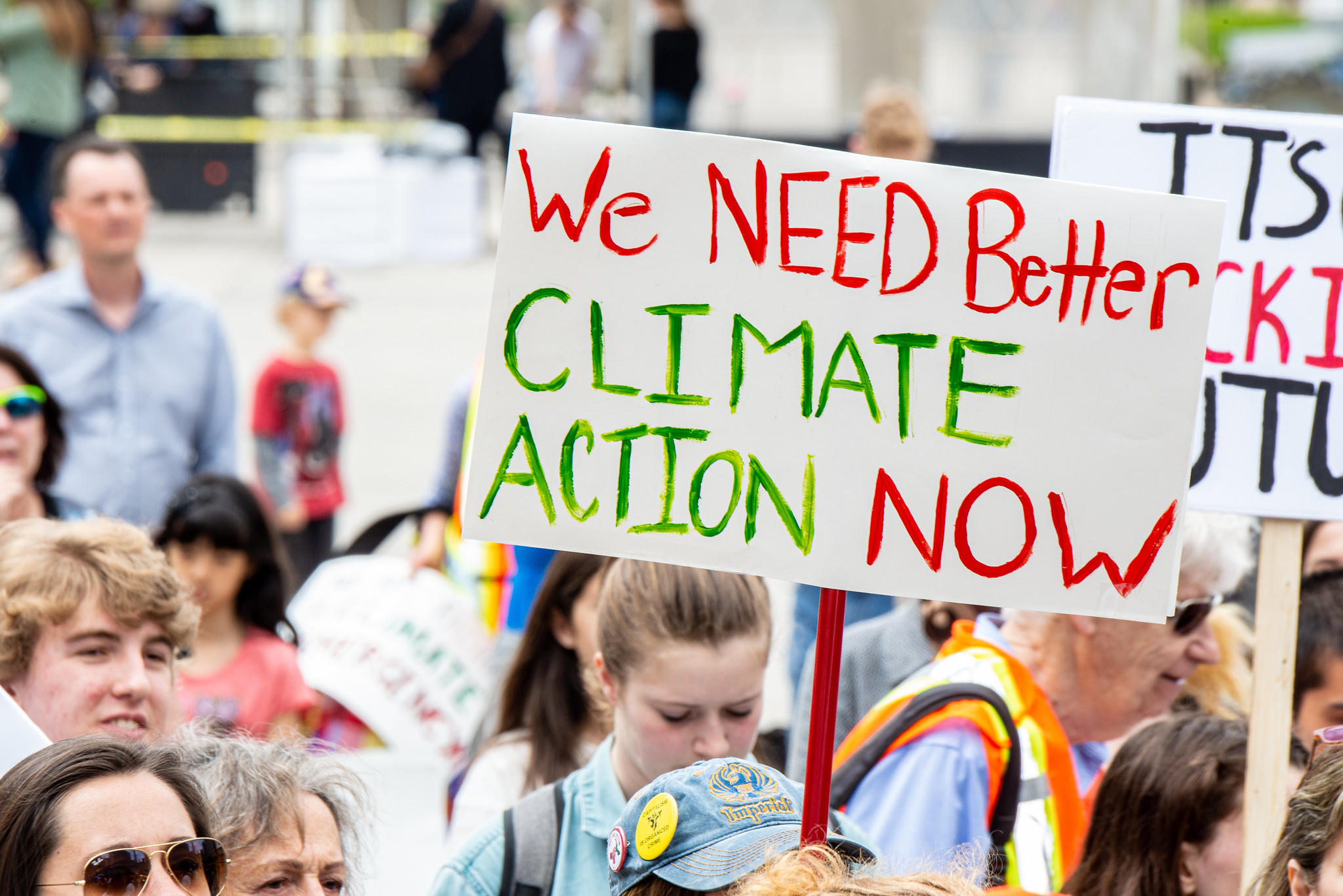

The B.C. Catholic invited local academics to comment on Pope Francis’ Apostolic Exhortation Laudato Deum, which was released Oct. 4.
By Dr. John Martens
There is good reason to concentrate on Laudato Deum only as an exhortation focused on the physical environment, which is certainly a central part of the document, and for critics of Francis that might be the only part they see of this apostolic exhortation.
For me it is important to keep in mind that Pope Francis in Laudato Deum, and Laudato Si’ before it, sees the care of the environment as the care of all of God’s creation, including the whole natural world – plants, trees, animals – and human beings (LD 3).
The Pope understands the unique value of human beings as a “situated anthropocentrism” (LD 67), in which “God has united us to all his creatures” (LD 66). If we, as human beings, are failing to care for the good creation that God gave to us, the reasons for it are located in a spiritual crisis.
Pope Francis also sees the spiritual roots of this crisis in the “technocratic paradigm” that values the wealth and power of the few over the human dignity of the many and the interconnectedness and interdependence of all creation (LD 21, 25, 66).
Climate change impacts the whole physical environment, and that includes the economy and how it harms the poorest countries and the poorest people (LD 31). Any change in how we treat the earth, Francis seems to be saying, will only emerge from a spiritual conversion in which we take seriously our role as stewards of God’s creation and take seriously the human dignity of all people.
Instead of treating “nonhuman reality (as) a mere resource” at the disposal of unbridled power, we need to see the danger of not paying attention to the limits God has set on us, says Francis. (LD 22)
Pope Francis says that our power “has frenetically increased in a few decades,” and although we have made “impressive and awesome technological advances,” we fail to realize “we have turned into highly dangerous beings, capable of threatening the lives of many beings and our own survival” (LD 22).
To turn from the brink of disaster requires people working together at individual as well as social and political levels, Francis says, but at our core we need to see ourselves as creatures and not gods: “For when human beings claim to take God’s place, they become their own worst enemies” (LD 73).
The title of this apostolic exhortation sums it up: Laudato Deum, Praise God. We must not worship the earth, our technology, or our human power, but God alone.
Praise God.
Dr. John Martens is Director of the Centre for Christian Engagement at St. Mark’s College, which held last May’s Pope Francis conference and inaugural Laudato Si’ lecture.
A clear appeal to our religious commitments for the care of creation
By Father Robert Allore, SJ
With the publication of Laudate Deum, Pope Francis returns with a heightened sense of urgency to the subject of climate change.
Building on the material presented in his 2015 encyclical Laudato Si’, the Pope notes that we have arrived, through a combination of our inaction and the course of environmental changes already in motion, at a critical moment in our response to the global reality of climate change.
Rejecting the temptation to despair, the Pope suggests that as people of faith and hope, committed to the care of our neighbour, we must act now. The richest nations of the world have a significant burden of responsibility to act. Yet, since we are speaking of a global challenge, there must be a global response. The demands of our age require the engagement and, indeed, the collaboration of all people and nations. We must be a people of hope and of action.
In recent decades, international bodies have made commitments to adopt the policies needed to combat the growing challenge of climate change (e.g. the Rio Conference of 1992 and the 2015 Paris Agreement). Pope Francis notes that while promises made at climate change conferences have been praiseworthy, proposals mandating the rapid transition to alternative and less polluting forms of energy have made little progress (Laudate Deum #49).
Today, Francis asserts, there is an urgent need for action. The next United Nations Conference of Parties on Climate Change (COP28), scheduled for November in Dubai, must set ambitious goals with clear monitoring protocols and a real sense of pressure for nations to meet their commitments. “If we are confident in the capacity of human beings to transcend their petty interests and to think in bigger terms, we can keep hoping that COP28 will allow for a decisive acceleration of energy transition, with effective commitments subject to ongoing monitoring (Laudate Deum #54).”
Though much of Laudate Deum has a political tone, appropriate to the task at hand, Pope Francis warns against solutions based solely on technological thinking or short-term economic planning. Francis makes a clear appeal to our religious commitments to care for creation which God has declared to be so very good. The Pope is clear about the duty of Catholics to do what we can to care for our neighbour and our common home. We are reminded that we are all together as one in God’s creation (Laudate Deum #54). All is connected.
For Canadians familiar with the challenge to respond to the calls to action set by the Truth and Reconciliation Commission (2015), and the Pope’s “Pilgrimage of Penance” to Canada in 2022, we recognize a sense of unity in the mission call of Laudate Deum, urging us to engage a pilgrimage of reconciliation for the earth and all its inhabitants.
The challenge before us is truly urgent. As people of faith we must respond with hope and energy, and a sense of the sacred mission we have to heal, to care for our neighbour and our common home that supports all life.
Father Allore is pastor of St. Mark’s at UBC and a researcher at UBC.
(Updated from a previous version that appeared in the Oct. 9 print edition.)







