


Is it an age thing? Shakespeare’s Henry V summed it up in his St. Crispin’s speech: “Old men forget … yet all shall be forgot … but (they’ll) remember with advantages what feats they did that day.”
And in my old age, I must confess to remembering the past “with advantages.” The forlorn cry, “Things ain’t what they used to be” is certainly something which I am guilty of re-echoing as I approach my dotage. Too often this is reflected in my viewing of current movies, as I recall past viewings with inordinate pleasure and find myself singularly at odds with many current productions.
This is particularly true of the latest in the Indiana Jones series. I still recall the sense of exuberance I felt when in 1981 I exited the Strand movie theatre on Georgia Street opposite the Bay after viewing the ground-breaking Raiders of the Lost Ark. I had thoroughly enjoyed its energy, its humour, its over-the top action and, of course, Harrison Ford’s entertainingly laconic performance.
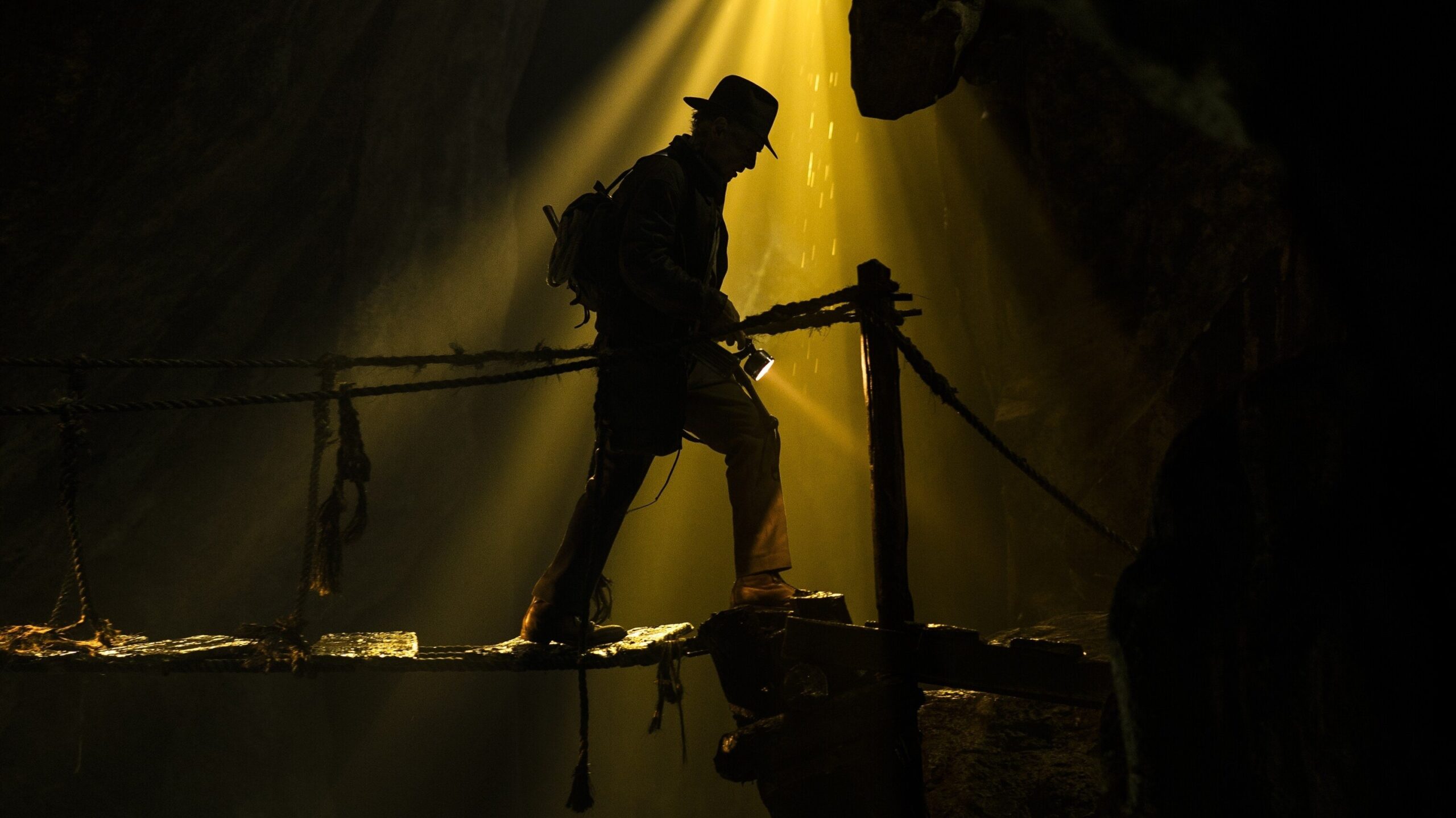
While time has not dulled the memory, it has perhaps lent it a glow that is not deserved. I was made particularly aware of this when watching the latest (and presumably the last) film in the franchise: Indiana Jones and the Dial of Destiny. In many ways, the film stays faithful to the familiar tropes: a series of wild action sequences which defy logic, a suitably nasty villain, and, of course, Professor Jones’ world-weary attempt to pursue archaeological discoveries while battling the forces of evil.
In this case, thanks to the wonders of film technology, the whole thing starts with a reasonably convincing de-aged Ford involved in a lengthy battle on a fast-moving train as he attempts to steal from a nasty Nazi a device invented by Archimedes, a device which would allow for time travel.
As expected, Jones triumphs and the narrative switches to 1969 and a reunion with Ford’s goddaughter, and, of course, further pursuit of Archimedes’ “dial of destiny.”
So it launches into two further hours of unbelievable action sequences, until the inevitable final conflict.
Not having viewed the first Indiana Jones film for several years, I must admit to a decidedly hazy (and certainly rosy) remembrance of it. While I recognize the same formula in this new offering, instead of embracing its outrageous sequences in exotic locales punctuated with world-weary reflection by the aged hero, I found myself impatient with it all.
Instead of marvelling at the wild invention of scenes of action-filled conflict, I was simply aware of how impossible and inane all of it was. On the other hand, wasn’t that always the case? Isn’t that the entire basis of the series?
Furthermore, I found myself wondering why so much was being made of Archimedes. We all know about his bath time moment of “Eureka,” but if one is going to ascribe to him the invention of a time travel machine, surely it could be used to travel to some more meaningful moment in history than a largely unknown siege of Syracuse by the Romans in the second century.
So it was that I viewed Indiana Jones and the Dial of Destiny with an overwhelming sense of disappointment. The whole thing for me simply became tiresome. It is true that Harrison Ford, despite the trepidations of old age, at 80 years still manages to provide an engaging portrait of determination against the ravages of time, while e is given more than adequate support by his fellow cast members, including trying not to give in to a sense of disillusionment.
In this, he is given excellent support by the rest of the cast, especially Phoebe Waller Bridge as the plucky, ever optimistic goddaughter, and Mads Mikkelsen as a conventionally nasty villain.
Yet in the end, I heaved a sigh of relief that it was all over and I won’t have to sit through any more films in the series.
Yet I must confess that perhaps the problem lies not with the film, but with me. Perhaps what I need to do is to stop looking at the world through time-dimmed spectacles and embrace the present with all the enduring determination and persistent optimism of the intrepid Indiana Jones. Maybe the problem is not with the film, which in many ways is exactly what one would expect, but with me, with my reaction simply boredom occasioned by an overwhelming sense of déjà vu.
Maybe I simply needed to be 50 years younger to be able to engage happily in the proceedings. In short, is my reaction simply an age thing?







