

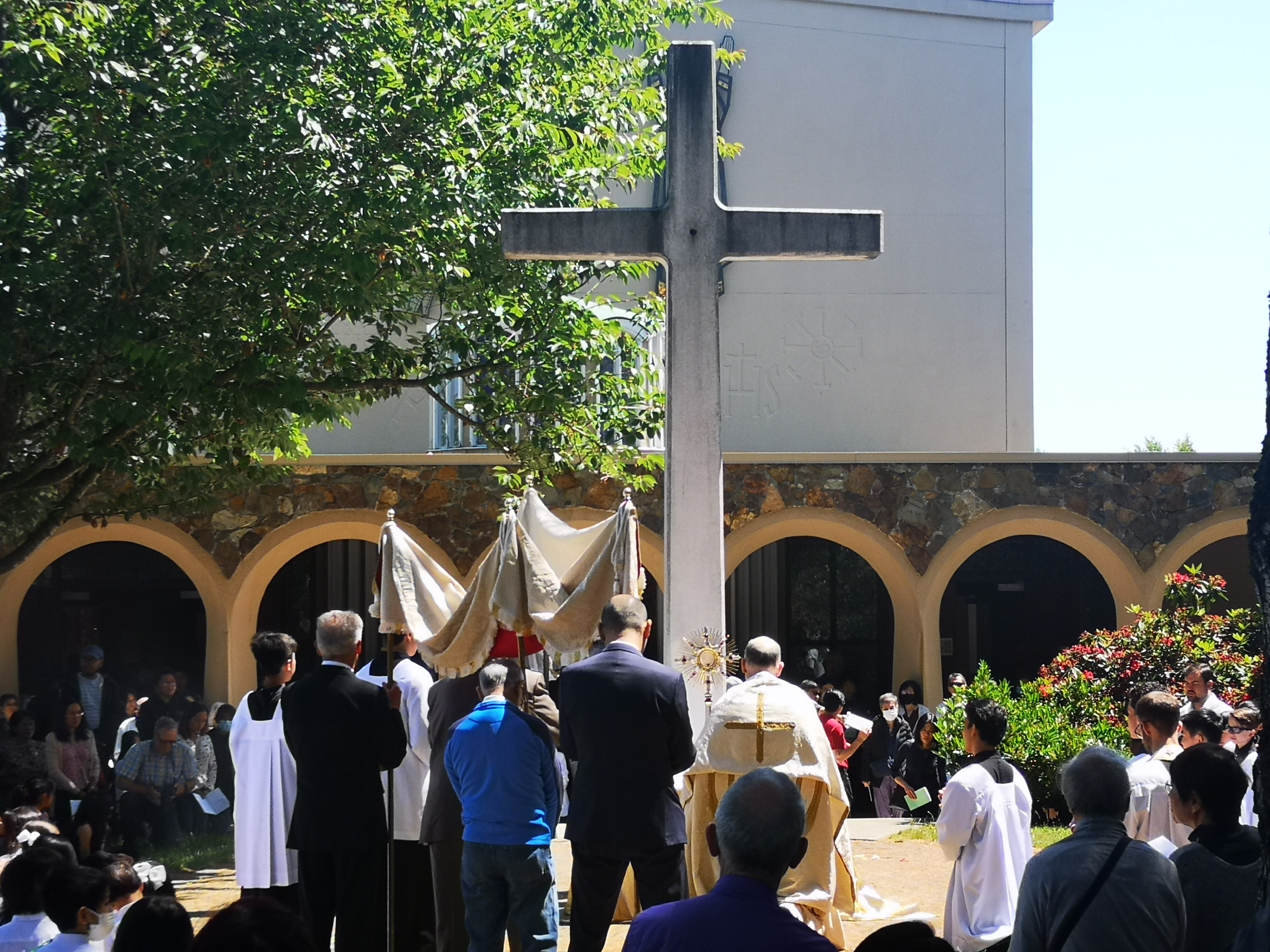

In several conversations lately, I have noted a desperation in people struggling to find answers to problems within their families, their schools, and society in general.
While I am no expert or psychologist, I do often recognize a lack of what is known as the “sacramental worldview,” even among people of faith.
In her book These Beautiful Bones: An Everyday Theology of the Body, Emily Stimpson clarifies what is meant by the term “sacramental worldview.” In this worldview, God who created everything likewise permeates everything: every person, every action. Everything in existence has meaning and purpose, as part of God’s plan.

Sadly, the Age of Enlightenment darkened people’s ability to see our connectedness to God. Christ came to redeem our fallen state and “impart[ed] his divine nature to us, body to body, soul to soul;” however, the dawning of the Age of Reason, when many believed in measurability, Stimpson explains, created a new worldview. She refers to Immanuel Kant, David Hume, Rene Descartes, and others as influencing the belief that anything that could not be proven must not be real.
Stimpson speaks of this modern worldview and the disorder and damage it has caused. She likewise shares her passion for reigniting the flame of the sacramental worldview and the importance of faith.
When we live our lives deliberately aware of our thoughts and actions – not just in times of worship, but also in times of working, playing, eating, dressing, and engaging in acts of service – as ways of uniting ourselves with God, we are adopting a sacramental worldview.
Focussing on the minute details of our lives in purposeful ways should help to ground anyone, as we often see in modern self-help strategies; yet, as people of faith, we must strive to recognize God in each of these details. Furthermore, as believers, we have a special responsibility to bring an awareness of God into the world.
As Stimpson explains, our Church’s sacraments are signs which “in the natural order do to our bodies, what in the supernatural order, they do to our souls;” they are not merely signs or symbols, for “by God’s grace, they’re ‘efficacious signs’ … that … symbolize and signify a reality.” We do not just go through the motions of the sacraments; they change us. Sacraments are Christ’s way of existing in us physically, as well as spiritually.
Although we are fallen, Stimpson writes, the real, tangible signs of the sacraments change us within, allowing Christ to work through us, as we go forth from our churches and enter the world. As members of the Church, we must become these visible and efficacious signs, changing others by adopting and exercising a sacramental worldview.
It is true that our Church has been criticized for the grave errors of its leaders and members, making our attempts at being “signs” of God’s presence in the world less than effective in some circumstances. However, the Church does recognize that humans are imperfect.
In reflecting on the Vatican II document Lumen Gentium, Francis A. Sullivan states that “the Church is always an imperfect sign of salvation” on this side of heaven. As humans, we can never fully represent the perfection of God, but “the more effectively [the Church] realizes its gifts of holiness, unity, love and peace among its own members, the more convincing a sign it will be of the reconciliation that God is offering to the world.”
As people of faith, we must recognize that God alone is a balm to the wounds and problems of this world. Furthermore, when imperfect members of the Church not only attempt to live with integrity, but likewise acknowledge their human sinfulness and admit their need for God’s saving love and mercy, the Church has the potential to be relatable to others. Therefore, the sacramental worldview not only helps individuals approach the joys and challenges of daily life with personal trust and faith, but it also likewise allows Christ’s love to permeate the world in subtle, everyday ways.
We may not see the results of our witness during our lifetime, but those who live with a sacramental worldview – and the integrity and humility this encompasses – are definitely working to bring God into the modern world.
We welcome letters to the editor about articles in The B.C. Catholic.







