

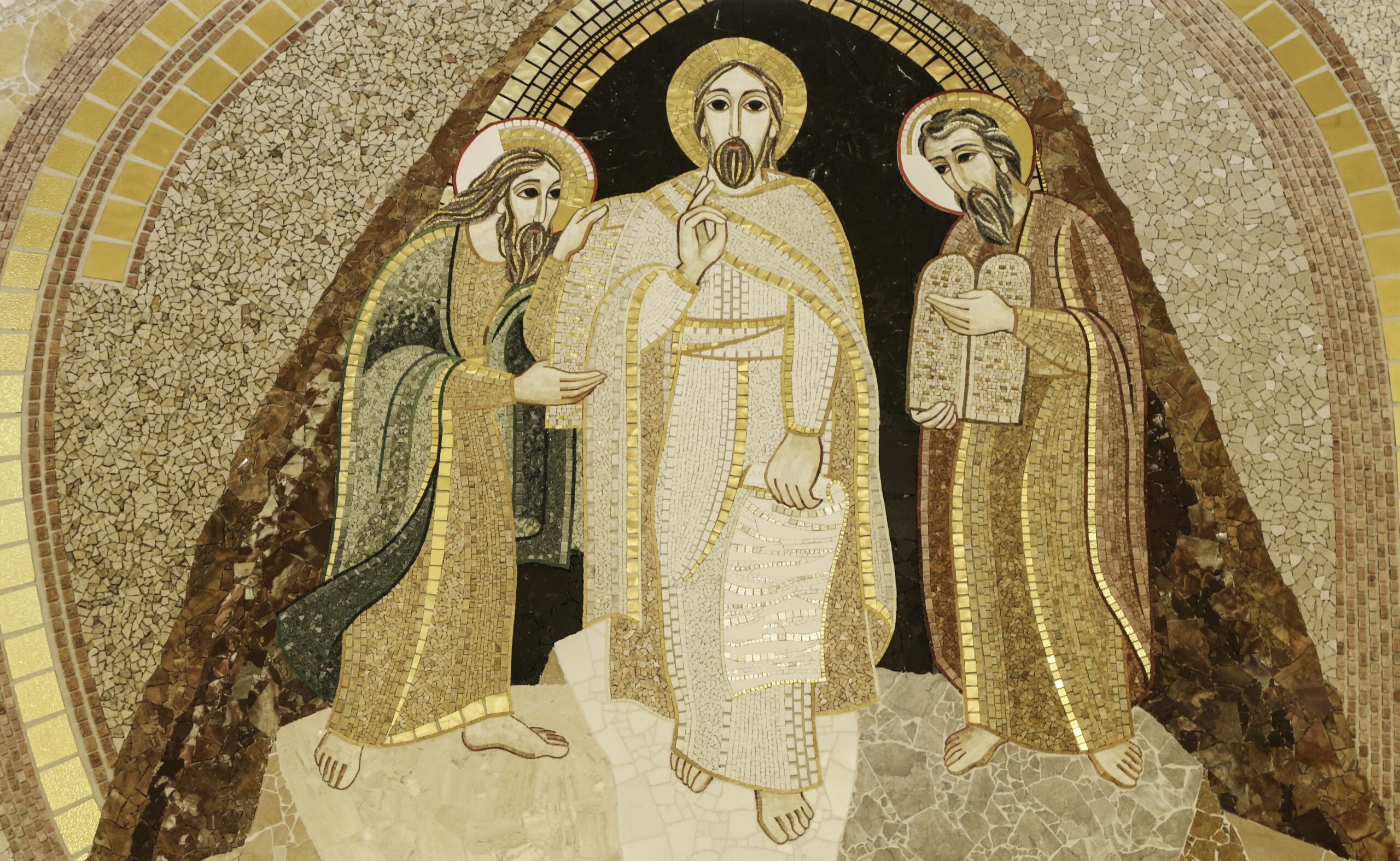

The Transfiguration, Year A
First Reading: Dn 4:9-10, 13-14
Second Reading: 2 Pt 1:16-19
Gospel Reading: Mt 17:1-9
In a homily, Pope Leo the Great (Pope 440-461) pointed out how Jesus’ Transfiguration bridges any misunderstanding we may have about the two natures in Jesus or the two testaments in the Bible.
It is “dangerous,” he said, to believe that Jesus is God without manhood, or Man without Godhead. However, it is difficult for us to keep the whole truth in our minds at once.
Accordingly, Jesus asked his apostles, “Who do you say that I am?” and Peter replied, “You are the Messiah, the Son of the living God.” Peter was right, said Jesus: God the Father had revealed Jesus’ divinity to him.
Immediately, however, Jesus began to tell them that he must “go to Jerusalem,” “suffer greatly there,” and “be put to death, and raised up on the third day.”
Peter, “illumined with light from above” and excited by Jesus’ commendation, said, “May you be spared, Master! God forbid that any such thing ever happen to you!”
Having recognized Jesus’ divinity, Peter could not accept his humanity, and Jesus rebuked him: “You are judging not by God’s standards but by man’s.”
To make it clear, he continued: “If a man wishes to come after me, he must deny his very self, take up his cross, and begin to follow in my footsteps.”
Nevertheless, he added, “I assure you, among those standing here there are some who will not experience death before they see the Son of Man come in his kingship.”
He fulfilled that promise six days later, when he led Peter, James, and John “up a high mountain by themselves” and “was transfigured before them.”
They had already “recognized the majesty of God in him,” said Pope Leo; but they did not yet know “the power of his body,” in which “his deity was contained.” Accordingly, he invested “that bodily shape which he shared with others with such splendour that his face was like the sun’s brightness and his garments had the whiteness of snow.”
Jesus’ principal object, the Pope said, was to remove “the scandal of the cross from their hearts, to prevent their faith being disturbed by the humiliation of his voluntary passion.”
At the same time – as the Church says in the Preface – he wanted to show all of us how what first “shone forth” in the Church’s head “is to be fulfilled” in the Church’s body, as he had already promised: that “the righteous” shall shine “as the sun in their Father’s Kingdom.”
However, he wanted to give them “even more instruction,” the Pope said, “for Moses and Elijah” – the Law and the Prophets – ”appeared, talking with him.
In this vision, “the documentary evidence of the ancient witnesses” combined with “the teaching of the Gospel,” the Pope said, for Jesus teaches the truth of the prophecies by his presence, and makes obedience to the law possible through his grace.
Again, Peter, overwhelmed by Jesus’ divinity, said, “Lord, it is good for us to be here; if you wish, I will make dwellings here: one for you, one for Moses, and one for Elijah.”
What Peter wanted was good, but he was “jumping the gun,” so to speak. He – and all of us, said the Pope – ”must ask for the power of endurance rather than the glory, because the joyousness of reigning cannot precede the times of suffering.”
Accordingly, Jesus did not answer Peter. However, the three disciples heard his Father’s voice: “This is my Son, the beloved; with him I am well pleased; listen to him!”
They fell on their faces, “trembling at the majesty not only of the Father, but also of the Son,” for now they had “a deeper insight into the undivided deity of both.”
“Listen to him,” the Father said, for in order to “carry out our common plan for the restoration of mankind, he lowered the unchangeable godhead even to the form of a slave.”







