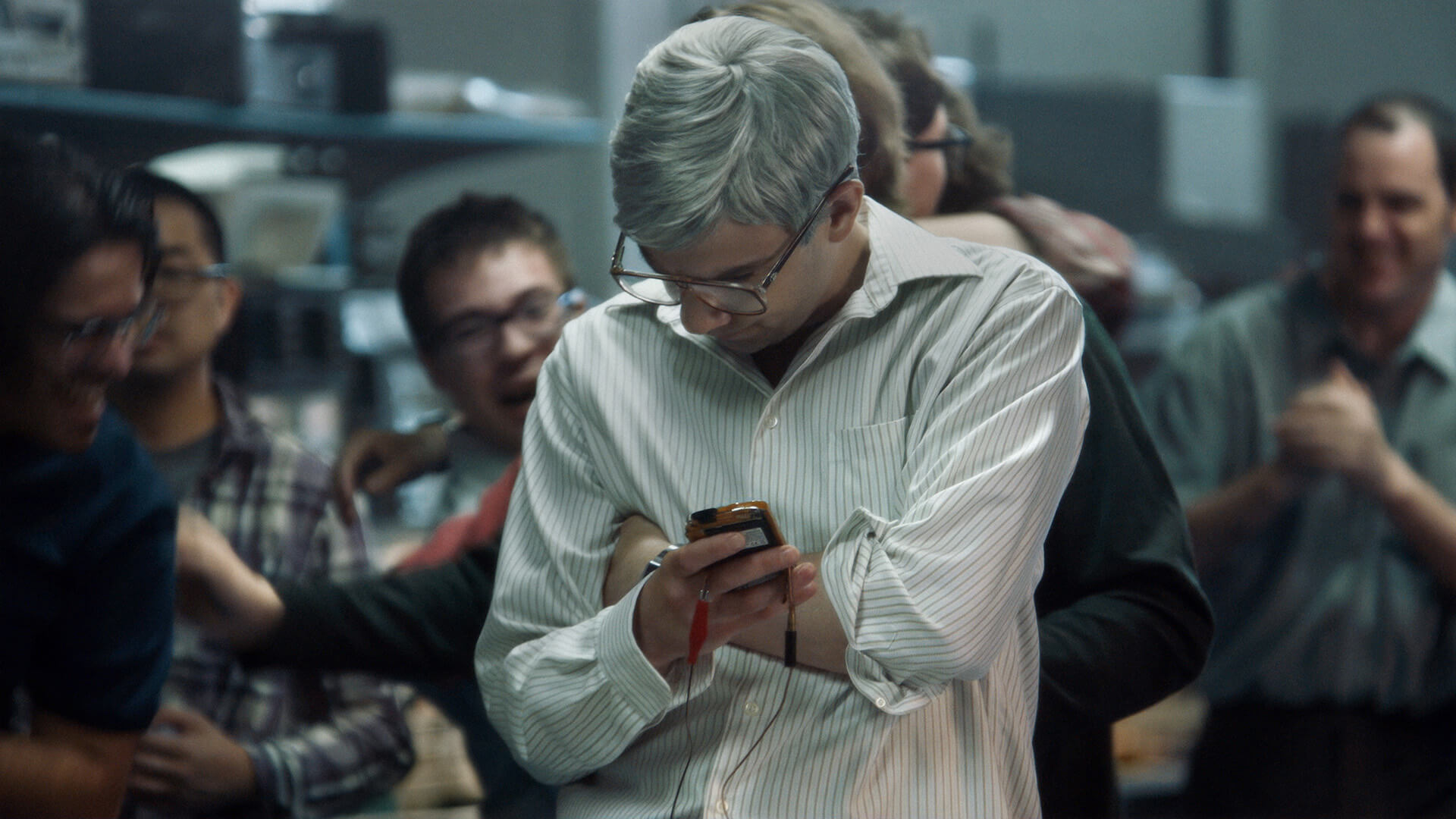

Filmgoers frequently are notified at the beginning of a film that it is “based on” actual events. Rarely does a screenwriter simply state that the events in the film are a “fictionalized” version of the events on which they are based. Such is the case, however, with the movie Blackberry, which addresses the rise and fall in popularity of the hand-held device once so widely used throughout the world.
The most unusual thing, here, however, is that screenwriters Matt Miller and Matt Johnson, basing their work on Jacquie McNish and Sean Silcoff’s book Losing the Signal, appear to have found inspiration in the oddest of places: Morality Plays of the Middle Ages. These plays, the most famous of which is Everyman, grew out of the earlier Mystery Plays which were an attempt to dramatize Biblical stories for the benefit of the illiterate masses.
Despite their virtuous ambitions, the writers of the Morality Plays started making their plays more entertaining than morally instructive, particularly in the development of comic characters. Indeed, it is possible to draw a direct line from such characters to Chaucer’s Miller and Shakespeare’s Falstaff.
The result was that the Church frowned upon the Morality plays and refused to allow their performance on Church grounds. It is, indeed, remarkable that such plays with their two-dimensional stock characters such as Virtue and the Devil (often disguised as Lord of Misrule) should inspire a film about 21st-century technology. Nevertheless, such seems to be the case.
So it is that we are presented with the inventors of Blackberry as two-dimensional characters, one being an innocent techie, a kind of Everyman who goes on a steep learning curve from unsophisticated naivete to disillusioned failed businessman. His friend and co-inventor is depicted as an even more immature, fun-loving, trusting chap who fits into the “boys with toys” category and whose principal concern at the messy workplace where they tinker on their inventions is movie night with his co-workers.
Leading them on to their well-known catastrophic business denouement is the Big Business Man, ambitious for money and power and totally amoral. Later he is joined by the Big Bad (and ruthless) Boss.
It seems obvious that things were not quite that simple, though the film does generally follow in broad outline what most of us know about Blackberry. We see how such a truly innovative invention combined in a small device the wonders of cell phone and computer. For a number of years, it sold in the millions and made the producers multi-millionaires.
And just as Morality Plays taught a moral lesson, the film Blackberry does also.
As the device is swept out of popularity by the Apple iPhone, which included the keyboard in the phone itself and boasted other communication advantages, the owners of Blackberry are portrayed as, above all, paying the price of ambition and arrogance, relying far too much on what they had achieved and failing to progress beyond that. It’s a Morality Play for and of our times.
Clearly this is an over-simplification of what happened to the Blackberry world and counter to many of the facts. As indication, one needs to know only that the developers of Blackberry, so far from being ruined victims of their own lack of business no-how and inability to adapt to changing demands, came out of the situation very wealthy men and were clearly not the simple, two -dimensional figures portrayed in the film.
However, like the Morality Plays, Blackberry is entertaining, engaging and, often broadly comical, as well as a reminder of yet another moral lesson for the technological experts: one cannot rest on one’s achievements, but one must always be advancing, innovative, and ground-breaking.
(And there was a lesson for me. As a geriatric who is already more than enormously challenged by the current technology, I am grateful that I won’t be around much longer to have to deal with the inevitable future developments, especially as the spectre of artificial intelligence looms before us.)
Meanwhile I embrace the fact that I can find temporary escape from the current challenges and instead spend a couple of simple, relaxing hours watching a film as entertaining as Blackberry, especially as it takes a few friendly jokes at the expense of Canada.
Like our Medieval forebears, it’s sometimes preferable to ignore the problems, overlook the challenges, and concentrate on the comical. We all need a little fun – even if it’s at the expense of the serious.
This article originally misstated the screenwriters’ names. It has been corrected.
We welcome letters to the editor about articles in The B.C. Catholic.