

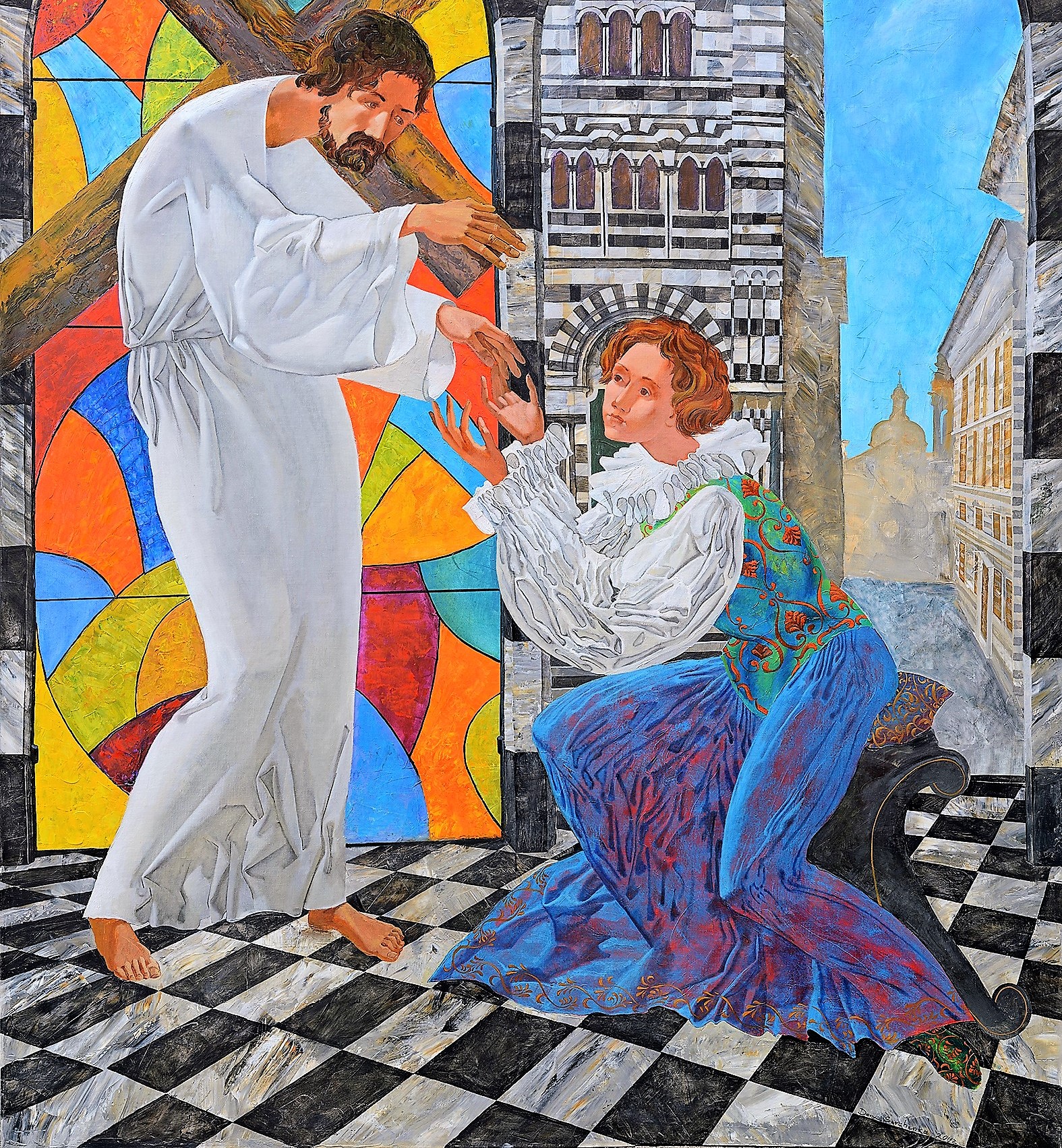

There were at least three saints with the name Catherine who lived in Italy during the late Middle Ages: St. Catherine of Siena (1347-1380) and St. Catherine of Bologna (1413-1463), whom I wrote about in the previous two columns, and St. Catherine of Genoa (1447-1510).
Catherine of Genoa was born of a noble family. A very pious child, she found herself at 16 promised in marriage to a young nobleman who was given to gambling and treated her with harshness. After suffering for five years, Catherine spent the next five years seeking comfort by leading a worldly way of life. However, she couldn’t find peace and her heart was heavy with a deep sense of emptiness and bitterness.
Conversion came suddenly at 26. Pope Benedict XVI described: “A unique experience on 20 March 1473 sparked her conversion. She had gone to the Church of San Benedetto in the monastery of Nostra Signora delle Grazie [Our Lady of Grace], to make her confession and, kneeling before the priest, ‘received,’ as she herself wrote, ‘a wound in my heart from God’s immense love.’ It came with such a clear vision of her own wretchedness and shortcomings and at the same time of God’s goodness, that she almost fainted. Her heart was moved by this knowledge of herself – knowledge of the empty life she was leading and of the goodness of God. This experience prompted the decision that gave direction to her whole life. She expressed it in the words: ‘no longer the world, no longer sin.’”
Writer and historian John Gilmary Shea, who some regard as the Father of American Catholic History, wrote, “Enlightened by divine grace as to the danger of her state, (Catherine of Genoa) resolutely broke with the world and gave herself up to a life of rigorous penance and prayer.”
Catherine dedicated herself to serving the sick and the poor at the largest hospital in Genoa. She helped her husband to abandon his sinful way of life, and he became a member of the Third Order Franciscans, joining his wife in serving the sick at the hospital.
Pope Benedict said, “From her conversion until her death there were no extraordinary events, but two elements characterize her entire life: on the one hand her mystical experience, that is, the profound union with God, which she felt as spousal union; and on the other, assistance to the sick, the organization of the hospital, and service to her neighbour, especially the neediest and the most forsaken. These two poles – God and neighbour – totally filled her life, virtually all of which she spent within the hospital walls.”
Catherine wrote profoundly and beautifully on purgatory. Pope Benedict said, “It is important to note that Catherine, in her mystical experience, never received specific revelations on purgatory or on the souls being purified there. Yet, in the writings inspired by our Saint, purgatory is a central element and the description of it has characteristics that were original in her time.”
The Holy Father added: “Catherine did not see purgatory as a scene in the bowels of the earth: for her it is not an exterior but rather an interior fire. This is purgatory: an inner fire. The saint speaks of the soul’s journey of purification on the way to full communion with God, starting from her own experience of profound sorrow for the sins committed, in comparison with God’s infinite love.”
Regarding purgatory, the Catechism of the Catholic Church states: “All who die in God’s grace and friendship, but still imperfectly purified, are indeed assured of their eternal salvation; but after death they undergo purification, so as to achieve the holiness necessary to enter the joy of heaven.”
From the beginning, said Benedict, “the Church has honoured the memory of the dead and offered prayers in suffrage for them, above all the Eucharistic sacrifice, so that, thus purified, they may attain the beatific vision of God. The Church also commends almsgiving, indulgences, and works of penance undertaken on behalf of the dead.”
We welcome letters to the editor about articles in The B.C. Catholic.
加大肋納內心充滿了對天主的愛
中世紀晚期至少有三位名叫「加大肋納」的聖人住在義大利:錫耶納的聖加大肋納(1347-1380),博洛尼亞的聖加大肋納(1413-1463)和熱那亞的聖加大肋納(1447-1510)。
熱那亞的加大肋納出生於一個貴族家庭。她是一個非常虔誠的孩子。16歲時,她發現自己被許配給一個年輕的貴族,這個貴族沈醉賭博,對她苛刻。在經歷了五年的痛苦之後,加大肋納在接下來的五年裡通過沈醉世俗化的生活方式來尋求安慰。然而,她找不到平靜,她的心充滿了深深的空虛和苦澀。
皈依在26歲時突然到來。教宗本篤十六世描述道:『1473年3月20日,一次獨特的經歷激發了她的皈依。她去了聖本篤聖堂,恩寵聖母的修院,領受修和聖事,跪在神父面前,「接受」—正如她自己所寫的那樣—「從天主無限的愛內,我心中受傷」。她對自己的不幸和缺點以及天主的良善有著如此清晰的視野,以至於她幾乎暈倒了。她的心被這種對自己的認識所感動—對她所過著的空虛生活和天主的良善的認識。這段經歷促使她做出了決定,為她的一生指明了方向。她用一句話來表達:「不再要世俗,不再要罪惡」。』
一位聖人傳記的作者寫道:『她被神聖的恩典所啟發,意識到她危險的處境,她堅決地與世俗決裂,遵行了嚴格的懺悔和祈禱的生活。』加大肋納致力於在熱那亞最大的醫院為病人和窮人服務。她幫助她的丈夫放棄了罪惡的生活方式。他成為三階方濟各會的成員,並與他的妻子一起在醫院為病人服務。
教宗本篤說:『從她皈依到去世,沒有非凡事件,但有兩個要素是她一生的特徵:一方面是她的神秘經歷,即與天主的深刻結合,她覺得這是配偶的結合,另一方面,幫助病人,組織醫院和服務鄰人, 尤其是最需要和最被遺棄的人。天主和鄰人這兩極完全填滿了她的生活,幾乎她的一切都在醫院的圍牆內渡過的。』
加大肋納對煉獄的描寫深刻而優美。教宗本篤十六世說:『值得注意的是,加大肋納在她的神秘經歷中,從未收到過關於煉獄或在那裡被凈化的靈魂的具體啟示。然而,在受聖人啟發的著作中,煉獄是一個核心元素,對煉獄的描述具有她那個時代原創的特徵。』
教宗補充說:『加大肋納並不認為煉獄是地球深處的場景:對她來說,煉獄不是外在的,而是內在的火。這是煉獄:內心的火焰。聖人談及靈魂走上淨化的旅程到與天主完全結合中,是從她自己對所犯罪過深感悲痛,跟天主的無限慈愛作比較而開始。』
關於煉獄,天主教教理問答指出:『那些死在天主的恩寵和友誼中的,但尚未完全淨化的人,雖然他們 的永遠得救已確定,可是在死後仍須經過煉淨,為得到必需的聖德, 進入天堂的福樂中。』
『教會自始便紀念亡者,為他們奉獻祈禱,尤其是感恩祭,為使他們得到煉淨,進入天主的榮福直觀中。教會也鼓勵人為亡者行施捨、得大赦和做補贖』
We welcome letters to the editor about articles in The B.C. Catholic.







