


Free ad-supported television. Sounds revolutionary, doesn’t it? Of course, that is exactly how the first generation or three of television operated. Advertisements paid the way.
In the 1960s and extending into the 1980s it was rare to see a Vancouver rooftop without a television antenna. Sometimes more than one antenna, and quite often, fairly sophisticated motorized antennas designed to bring in content from Washington State, in addition to channels from Vancouver and Victoria. KVOS in Bellingham was a staple for Lower Mainland TV viewers, but the real prize was ABC, CBS, and NBC, and a little later, PBS from Seattle.
Cable TV began to make inroads in the early 70s, starting at around $5 a month. Eventually most of the small cable providers amalgamated under more powerful brands. For Metro Vancouver that became the Rogers brand, until that company and Shaw Communications from Calgary agreed to a territory swap.
Fast forward to today and we have the Rogers and Shaw merger, essentially reducing the Western Canada cable business to two providers, Rogers and Telus. These two basically divvy up the cable TV and home internet business. Add Bell to the mix, and now Videotron through its acquisition of Shaw’s Freedom Mobile, and you have four players controlling the cellular business.
There’s some evidence that the public appetite for streaming services is beginning to sour. Some thought that cord-cutting – dropping the home TV subscription – was a simple way to save around a hundred dollars a month. The thinking was that a streaming service or two would plug the loss of the cable TV subscription service and its hundred or more channels.
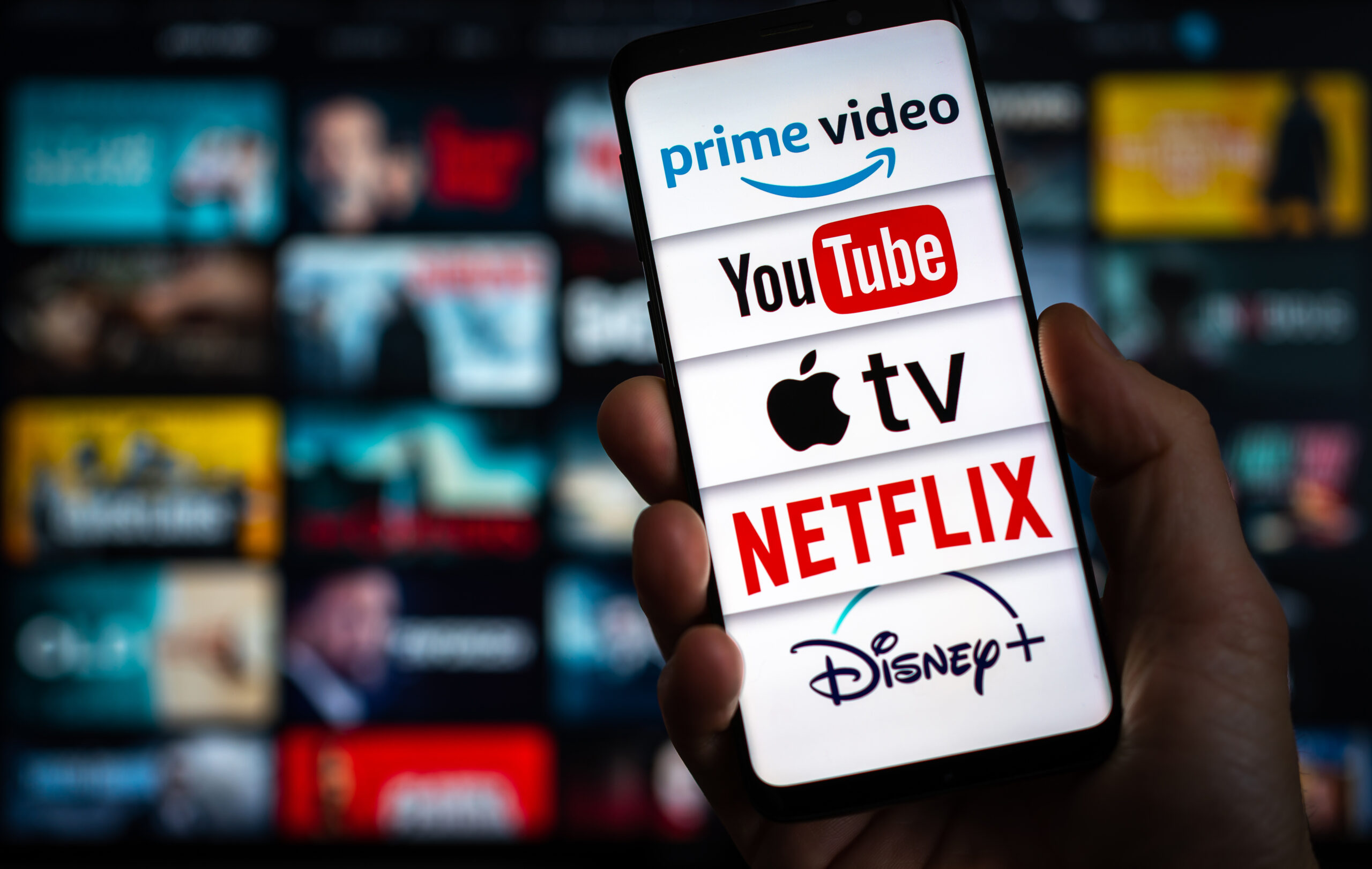
Then the streaming world began to look a lot like TV: multiple services, limited runs, series programming. At first it was basically a Netflix world (remember the days when it was $5 a month?). Now it’s not unusual to find households with several streaming subscriptions, even as many as a dozen. Think Apple TV, Paramount+, Disney+, Prime, DAZN, to name but a few. Once again, TV costs are running up towards that hundred-dollar-a-month level.
For some the solution, or at least a partial solution, is a free streaming service such as the recently launched Pluto TV. In Canada, Pluto TV is a joint partnership of Corus Entertainment and Paramount. Its interface looks very similar to a standard cable TV channel guide. There are blocks of channels organized by genre (Classics, Crime, Drama, Movies, Comedy, Live News (Global and CBS), as well as Canadian content. Pluto is the latest in a long line of so-called FAST TV – free ad-supported television.
If you are used to commercial-free streamed programming, FAST can take some getting used to. And unlike regular ad-driven TV programming, FAST ads can appear at odd points in a program, making the experience somewhat jarring. Commercial TV programming is created with ad breaks taken into account. FAST may not always operate that way.
Accessing Pluto TV is much like accessing any number of streaming services. There is a website, but most are likely to use an app for Apple TV, Amazon Fire TV, Roku, Android TV, and others, or, for mobile devices, an app from the Google Play Store or the Apple App Store.
Pluto TV offers around 120 channels, with about a quarter of those having Canadian content. It’s early days yet to judge the impact of the service in Canada but in the United States it has had solid uptake.
Another contender in this space is the Roku Channel, part of the popular world of Roku streaming hardware. However, Roku has a bit of a checkered history when it comes to channel stability. The revamped Roku Channel includes free and premium TV programming.
Also worth a look is longtime player Tubi TV, billed as “Tubi free movies and TV” and owned by Fox. It offers a huge array of TV shows and movies, along with tools for personalizing content.
FAST looks to be here to stay. While the regular cable TV providers may not like the medium, in Canada at least they will attempt to make up the loss of TV subscription revenues through ever-increasing internet rates.
As for Netflix, well, the days of $5 a month are long gone. The days of password- and account-sharing are mostly gone as well. In fact, as of just two weeks ago, the company killed off its most basic $ 10-a-month plan.
So no more 720p one-stream accounts. It’s either ad-supported $6 a month, or the standard plan at $17 a month.
As those streaming rates continue to spiral upwards, FAST can only look more appealing.
Follow me on Facebook (facebook.com/PeterVogelCA), or on Twitter (@PeterVogel)
pvogel@outlook.com
We welcome letters to the editor about articles in The B.C. Catholic.







