

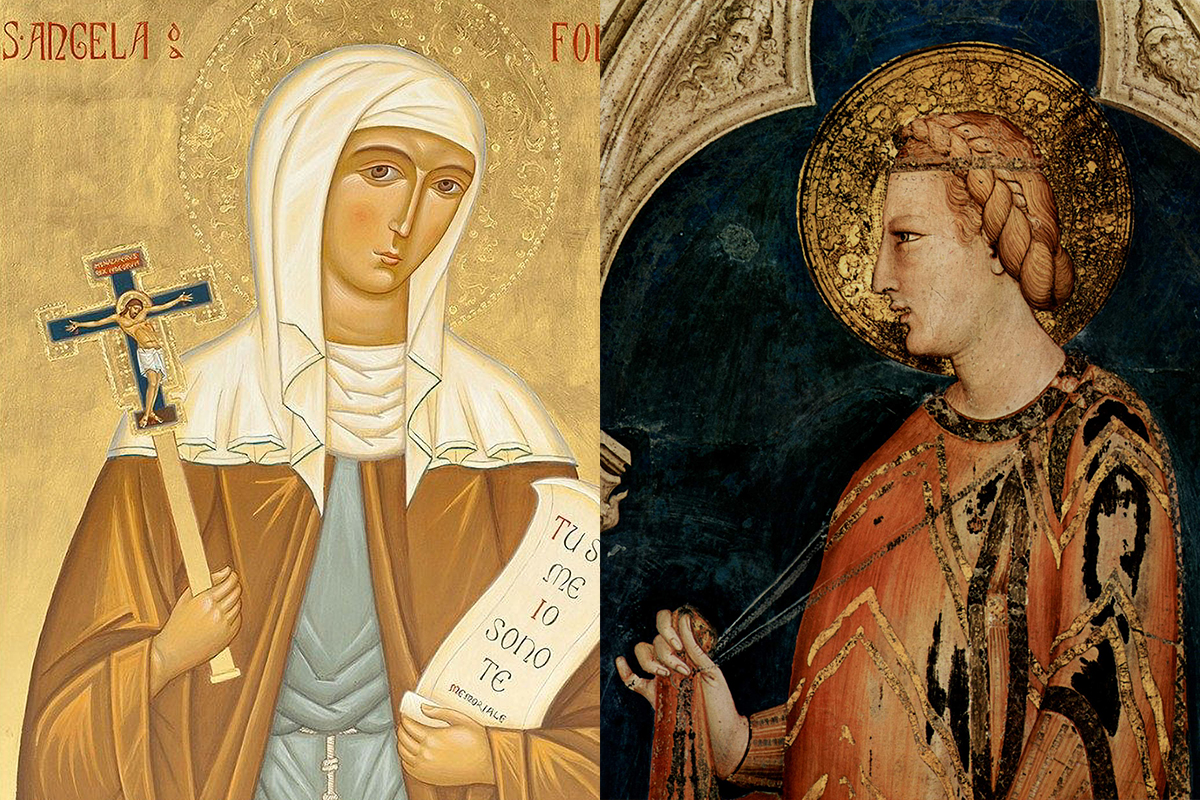

St. Elizabeth of Hungary (1207-1231) and St. Angela of Foligno (1248-1309) are secular Franciscan saints of the 13th century, both of them widows who did charitable works.
Elizabeth was very pious since childhood, whereas Angela was converted to a devout way of life later.
Elizabeth was born in 1207. She is called St. Elizabeth of Hungary because she was the daughter of Andrew II, the rich and powerful King of Hungary. She is also called St. Elizabeth of Thuringia, for already at the age of one she was engaged to the future Ludwig IV or Louis IV of Thuringia in central Germany. At the age of four, Elizabeth moved to Thuringia to be raised in the same castle with Ludwig. When Ludwig came of age, he married Elizabeth.
Pope Benedict XVI said, “Elizabeth diligently practised works of mercy: she would give food and drink to those who knocked at her door, she procured clothing, paid debts, cared for the sick and buried the dead. Coming down from her castle, she often visited the homes of the poor with her ladies-in-waiting, bringing them bread, meat, flour, and other food. She distributed the food personally and attentively checked the clothing and mattresses of the poor. This behaviour was reported to her husband, who not only was not displeased but answered her accusers, ‘So long as she does not sell the castle, I am happy with her!’”
Elizabeth bore three children. However, Ludwig died of a fever in 1227 as he was setting out on a crusade. Elizabeth and her children were banished by a usurping brother-in-law and experienced poverty. When reinstated she provided for her children and became a Franciscan tertiary.
Her spiritual director reported the following event to Pope Gregory IX: “On Good Friday in 1228, having placed her hands on the altar in the chapel of her city, Eisenach, to which she had welcomed the Friars Minor, in the presence of several friars and relatives Elizabeth renounced her own will and all the vanities of the world. She also wanted to resign all her possessions, but I dissuaded her out of love for the poor. Shortly afterwards she built a hospital, gathered the sick and invalids and served at her own table the most wretched and deprived. When I reprimanded her for these things, Elizabeth answered that she received from the poor special grace and humility.”
In the last three years of her life, Elizabeth served the sick in the hospital she founded. She died on Nov. 17, 1231, and after four years Pope Gregory IX canonized her.
Born on Jan. 4, 1248, Angela of Foligno soon lost her father and received little supervision from her mother. She married at the age of 20 and lived a worldly and carefree life.
Pope Benedict XVI said, “Certain events, such as the violent earthquake in 1279, a hurricane, the endless war against Perugia and its harsh consequences, affected the life of Angela who little by little became aware of her sins, until she took a decisive step. In 1285 she called upon St. Francis, who appeared to her in a vision and asked his advice on making a good general Confession. She then went to confession with a Friar in San Feliciano. Three years later, on her path of conversion she reached another turning point: she was released from any emotional ties. In the space of a few months, her mother’s death was followed by the death of her husband and those of all her children. She therefore sold her possessions and in 1291 enrolled in the Third Order of St. Francis. She died in Foligno on 4 January 1309.”
Regarding her mystical experience, Pope Benedict commented: “Angela understood the central reality in a profound way: what would save her from her ‘unworthiness’ and from ‘deserving hell’ would not be her ‘union with God’ or her possession of the ‘truth’ but Jesus Crucified, ‘his crucifixion for me,’ his love.”
God told Angela: “Write that anyone who wishes to preserve grace must not lift the eyes of his soul from the Cross, either in the joy or in the sadness that I grant or permit him.”
Share your thoughts by sending us a letter to the editor.
聖潔的寡婦服侍被釘者
匈牙利的伊撒伯爾(1207-1231)和弗利尼奧的安琪拉(1248-1309)是13世紀聖方濟各的俗世聖人。兩人都是做慈善工作的寡婦。伊撒伯爾從小就非常虔誠,而安琪拉到後來才皈依了虔誠的生活方式。
伊撒伯爾出生於1207年。她被稱為匈牙利的聖伊撒伯爾,因為她是匈牙利富有而強大的國王安德魯二世的女兒。她也被稱為圖林根州的聖伊撒伯爾,因為她一歲時就已經與位於現在德國中部圖林根州未來的路德維希四世或路易四世訂婚。四歲時,伊撒伯爾搬到圖林根州,與路德維希在同一座城堡中長大。路德維希成年後,便娶了伊撒伯爾為妻。
教宗本篤十六世說:『伊撒伯爾勤奮地實踐憐憫的工作:她會給那些敲門的人食物和飲品,她購買衣服,替人償還債務,照顧病人並埋葬死者。從城堡下來後,她經常和侍女們一起去窮人家,給她們帶來麵包、肉、麵粉和其他食物。她親自分發食物,並仔細檢查窮人的衣服和床墊。她這行為被告知了她的丈夫,丈夫不僅沒有不高興,反而回答她的控告者:「只要她不賣了城堡,我就對她感到滿意!」』
伊撒伯爾生了三個孩子。然而,路德維希在1227年出發進行十字軍東征時死於發燒。伊撒伯爾和她的孩子們被篡位的夫弟放逐。她經歷了貧窮。光復後,她按排供養孩子的事情後便成為方濟各會第三成員。
她的神師向教宗額我略九世報告了以下事件:『1228年的耶穌受難日,伊撒伯爾將手放在她所在城市艾森納赫小堂的祭台上,她歡迎方濟會士來到那裡,在幾位會士和親戚面前,伊撒伯爾放棄了自己的意志和世界上所有的虛榮。她也想放棄她所有的財產,但我出於對窮人的愛而勸阻了她。不久之後,她建了一家醫院,聚集了病人和殘疾人,在她自己的餐桌上服侍最可憐和最貧困的人。當我因為這些事情訓斥她時,伊撒伯爾回答說,她從貧窮人得到特殊恩典和謙卑。』
在她生命的最後三年裡,伊撒伯爾在她創立的醫院裡為病人服務。她於11月17日去世,四年後教宗額我略九世為她封聖。
出生於 1248 年 1 月 4 日弗利尼奧的安琪拉,很快就失去了父親,幾乎沒有受到母親的監督。她20歲結婚,過著世俗無憂無慮的生活。教宗本篤十六世說:『某些事件,例如 1279 年的猛烈地震、颶風、對佩魯賈的無休止的戰爭及其嚴重後果,影響了安琪拉的生活,她逐漸意識到自己的罪惡,直到她邁出了決定性的一步。1285年,她呼求聖方濟各,聖方濟各在神視中向她顯現,她請教聖方濟各如何辦一個好的總告解。然後她去了聖費利西亞諾的一方濟會士作告解。三年後,在她的皈依道路上,她到達了另一個轉捩點:她從一切情感的聯擊中解脫出來。在幾個月的時間裡,她母親去世後,她的丈夫和她所有的孩子都相繼去世了。她賣掉了自己的財產,並於1291年加入了聖方濟各第三會。她於1309年1月4日在弗利尼奧去世。』
關於她的神秘經歷,教宗本篤十六世評論道:『安琪拉深刻地理解了核心現實:能把她從「不配」和「該下地獄」中拯救出來的不是她「與天主的結合」或她擁有「真理」,而是耶穌被釘在十字架上,「祂為我被釘在十字架」,祂的愛。』
天主告訴安琪拉說:『寫下任何希望保守恩寵的人,無論是在我賜予或允許的喜樂還是悲傷中都不能將他靈魂的眼睛從十字架上移走。』







