

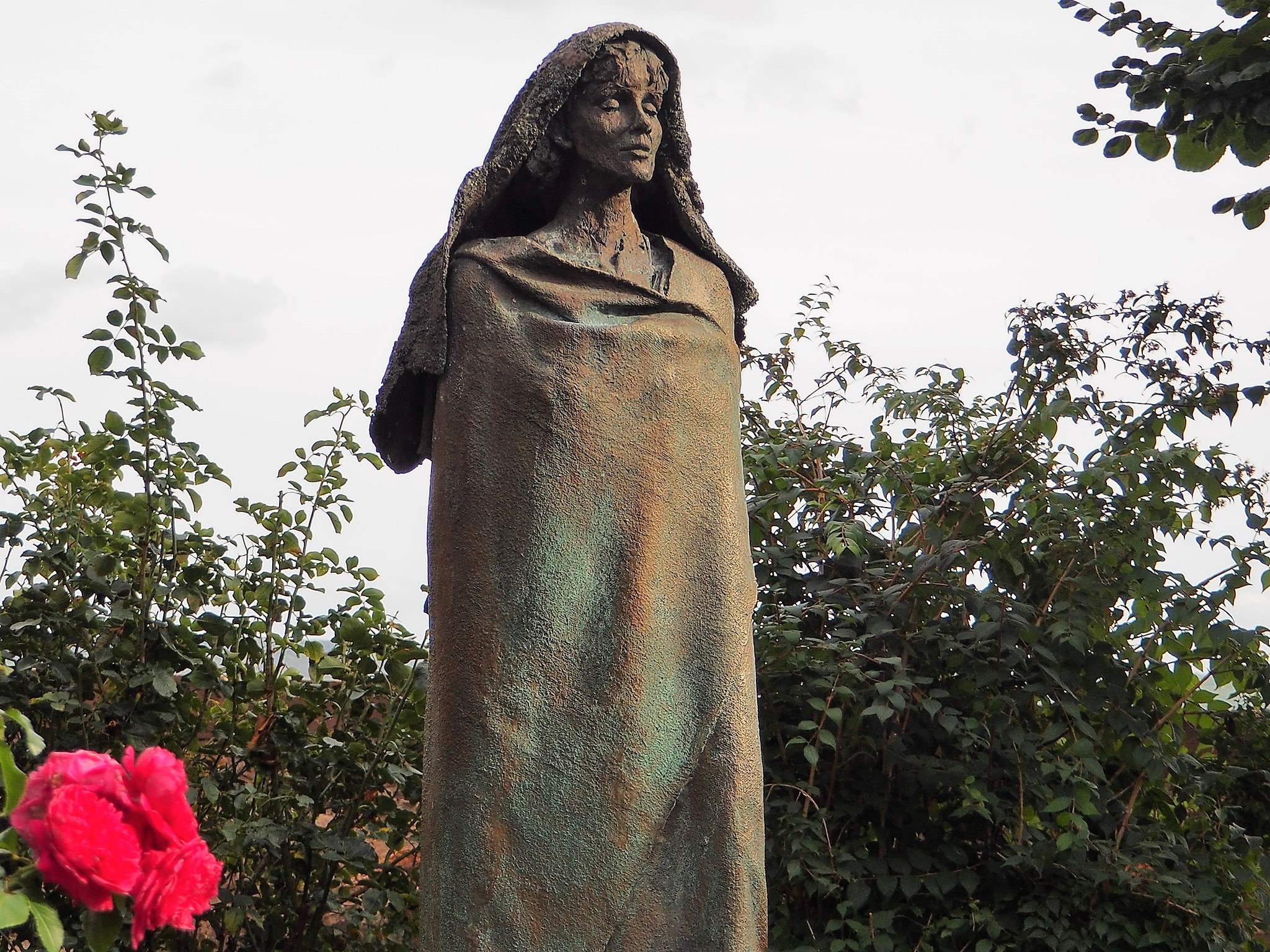

St. Hildegard of Bingen was born in 1098. From the age of 8, she was educated in the monastery of the Mount of St. Disibode in Germany.
In spite of having always been in poor health, Hildegard lived to age 81 and died Sept. 17, 1179. For centuries she had been honoured as a saint locally. On 10 May 2012, Pope Benedict XVI gave her “equivalent canonization,” thus extending the liturgical cult of Hildegard to the entire Catholic Church. Five months later, on Oct. 7, 2012, the same Pope named her a Doctor of the Church. Pope Benedict talked about St. Hildegard during two General Audiences in September 2010, introducing us to the life and writings of this remarkable German mystic.
Hildegard was favoured with heavenly visions. Fearful of being a victim of illusions, Hildegard sought the advice of St. Bernard of Clairvaux, who calmed and encouraged her. In 1147, Pope Blessed Eugene III authorized Hildegard to write down her visions and to speak in public. Pope Benedict XVI commented: “This, dear friends, is the seal of an authentic experience of the Holy Spirit, the source of every charism: the person endowed with supernatural gifts never boasts of them, never flaunts them and, above all, shows complete obedience to the ecclesial authority. Every gift bestowed by the Holy Spirit is in fact intended for the edification of the Church and the Church, through her Pastors, recognizes its authenticity.”
Three famous written works of Hildegard recorded her mystical visions: Scivias (which means You Know the Ways), Book of the Rewards of Life, and Book of Divine Works.
In Scivias, Hildegard summed up in 35 visions the events of the history of salvation from the creation of the world to the end of time. Benedict XVI said, “Hildegard develops at the very heart of her work the theme of the mysterious marriage between God and humanity that is brought about in the Incarnation. On the tree of the Cross take place the nuptials of the Son of God with the Church, his Bride, filled with grace and the ability to give new children to God, in the love of the Holy Spirit.”
In the Book of the Rewards of Life, Hildegard described the vision of God giving life to the cosmos with his power and light. Benedict XVI said, “Hildegard stresses the deep relationship that exists between man and God and reminds us that the whole creation, of which man is the summit, receives life from the Trinity. The work is centred on the relationship between virtue and vice, which is why human beings must face the daily challenge of vice that distances them on their way towards God and of virtue that benefits them. The invitation is to distance themselves from evil in order to glorify God and, after a virtuous existence, enter the life that consists ‘wholly of joy.’”
Regarding the Book of Divine Works, Pope Benedict XVI said, “She once again describes creation in its relationship with God and the centrality of the human being, expressing a strong Christo-centrism with a biblical – Patristic flavour. The Saint, who presents five visions inspired by the Prologue of the Gospel according to St. John, cites the words of the Son to the Father: ‘The whole task that you wanted and entrusted to me I have carried out successfully, and so here I am in you and you in me and we are one.’”
In the last years of her life, Hildegard spoke with spiritual authority. Pope Benedict XVI said, “She called above all the monastic communities and the clergy to a life in conformity with their vocation. In a special way, Hildegard countered the movement of German cátari (Cathars). The cátari means literally ‘pure’ and advocated a radical reform of the Church, especially to combat the abuses of the clergy. She harshly reprimanded them for seeking to subvert the very nature of the Church, reminding them that a true renewal of the ecclesial community is obtained with a sincere spirit of repentance and a demanding process of conversion, rather than with a change of structures. This is a message that we should never forget.”
Share your thoughts by sending us a letter to the editor.
聖神賜神示予神視者
賓根的聖希德嘉生於1098年。從8歲起,她在聖迪西博德山修道院接受教育。儘管一直健康情況不佳,希德嘉還是活到了81歲,並於1179年9月17日去世。幾個世紀以來,她一直被當地尊為聖人。2012年5月10日,教宗本篤十六世給予她「同等的封聖」,從而將希德嘉的敬禮擴展到整個天主教會。五個月後,即2012年10月7日,同一位教宗任命她為教會聖師。教宗本篤十六世在2010年9月兩次接見群眾中談到了聖希德嘉,向我們介紹了這位傑出的德國神視者的生平和著作。
希德嘉被賦與來自天上的神視。由於害怕成為幻覺的受害者,希德嘉尋求明谷的聖伯爾納鐸的建議,後者安撫並鼓勵她。1147年,教宗真福恩仁三世授權希德嘉寫下她的神視並在公開場合講話。教宗本篤十六世評論說:『親愛的朋友們,這是聖神真實經歷的印記,是每一種神恩的源泉:被賦予超自然恩賜的人從不誇耀它們,從不炫耀它們,最重要的是,表現出對教會權威的完全服從。聖神賜予的每一份恩賜,實際上都是為了教會的熏陶,教會通過她的牧者意識到其真實性。』
希德嘉的三部著名著作記錄了她的神示。這些作品是:Scivias(意思是:你知道方法),《生命賞報之書》(Book of the Rewards of Life)和《神聖工作之書》(Book of Divine Works)。
在Scivias中,希德嘉用35個神示總結了從世界創造到時間終結的救贖歷史事件。本篤十六世說:『希德嘉在她作品的核心發展了天主與人類之間奧秘婚姻的主題,這種婚姻是在道成肉身中帶來的。在十字架的樹上舉行了天主子與教會的婚禮,祂的新娘充滿了恩典和在聖神的愛中給與她能力去為天主增添新的子女。』
在《生命的賞報之書》中,希德嘉描述了天主用祂的力量和光賦予宇宙生命的神示。本篤十六世說:『希德嘉強調了人與天主之間存在的深刻關係,並提醒我們,以人類為頂峰的整個創造界從天主聖三獲得生命。這著作以美德與惡行之間的關係為中心,這就是為什麼人類必須面對美德與惡習的日常挑戰,惡習使他們遠離通往天主的道路上,美德使他們受益。這邀請為光榮天主去遠離邪惡,並在修得德行之後,進入「完全喜樂」的生活。』
關於《神聖工作之書,教宗本篤十六世說:『她再次描述了創造與天主的關係以及人類的中心地位,表達了強烈的以基督為中心主義,並帶著聖經和教父的味道。根據聖約翰的說法,聖人展示了五個受聖若望福音序言啟發的異象,引用了聖子對聖父的話語:「袮想要並委託給我的整個任務我已經成功地完成了,所以我在你內,你在我內,我們是一體的」』
在她生命的最後幾年,希德嘉以靈性權威說話。教宗本篤十六世說:『她首先呼籲修道院團體和神職人員過上符合他們聖召的生活。希德嘉以一種特殊的方式反擊了德國卡塔里(Cathars)的運動。他們 cátari 字面意思是“純潔”,主張對教會進行激進的改革,特別是打擊神職人員的弊端。她嚴厲地斥責他們試圖顛覆教會的本質,提醒他們,教會團體的真正更新是通過真誠的悔改精神和艱巨的皈依過程獲得的,而不是通過改變結構來實現的。這是我們永遠不應忘記的訊息。』







