


Recently quite a stir arose when long-time New York Times film critic A.O. Scott quit his job to return to book reviewing. Part of his disillusionment with films arose from the fact that streaming services have resulted in theatres largely devoting themselves to action-hero and children’s movies.
This leaves “smaller,” perhaps more thoughtful, movies to try to find an audience on a streaming service where viewers are often deterred by an over-abundance of choices. It also means that in order to view particular movies it is necessary to subscribe to several such sites.
A further problem for most Canadians is that independent movie theatres are not available. Cineplex tends to show only major films that have large box office appeal.
In Vancouver the so-called “art theatres,” including the Ridge, the Fifth Avenue, the Varsity, and the Park, have either closed permanently or been subsumed by Cineplex. Thus, there is little opportunity to see films which may be superb examples of the art, including many foreign films. It is true that one can access some at the Vancouver International Film Festival, but viewing times are limited.
That all of this is significant to movie lovers is underscored by Sight and Sound magazine’s recent listing of the Greatest Movies of All Time. It’s a once-a-decade list that many movie enthusiasts find interesting and is often cause for disagreement.
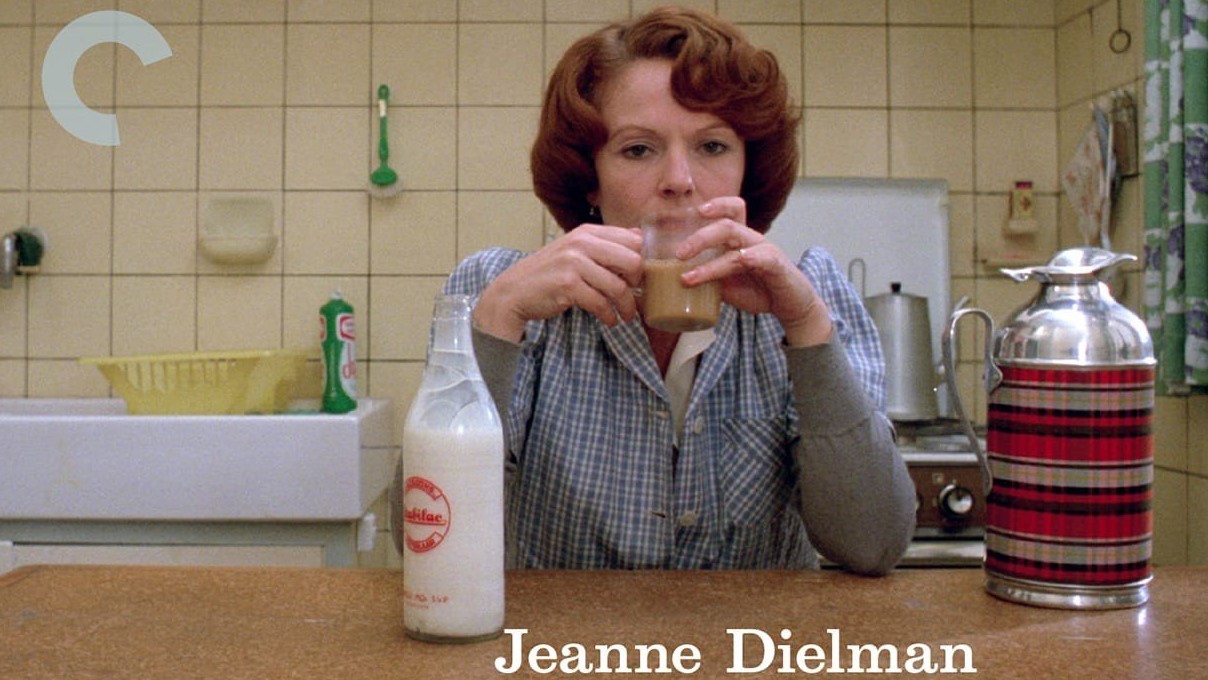
This year many were surprised that Jeanne Dielman, a 1975 Belgian film, has been ranked first by the “experts” polled.
I myself am shocked that Hitchcock’s Vertigo is now listed as the second-best film of all time. It’s a film which I have viewed several times and always found to be tedious, melodramatic, and unconvincing.
At the same time, Citizen Kane – for many years ranked No. 1, as is totally fitting – has been bumped to third place. Having viewed it over a hundred times I still regard it as the most perfect movie ever made.
What is especially noteworthy is that five of Sight and Sound’s Top 10 are foreign films, most of which we have had little opportunity to view.
But what of Jeanne Dielman?
This is a film about which I had only heard rumours, never having had the opportunity to watch it in a theatre. It is streaming on HBO and YouTube, but I decided to purchase the DVD.
I discovered that, with a running time of 201 minutes, it details in three major segments the daily routine of a widow whose son shares an apartment with her.
Jeanne Dielman supports herself by working as a prostitute, though for almost all of the film this aspect of her life is merely hinted at. Instead one watches her as she does her household chores, shops for groceries, cooks meals, and participates in almost no meaningful interaction with her non-communicative son or anyone else.
All of this is told in exacting detail so that the viewer is forced to share in the monotony of her inward-turning, unvoiced life of quiet desperation.
Directed by a woman, Chantal Akerman, whose many works have been much praised, Jeanne Dielman is a film which clearly focuses on the restricted lives of many women – meaningless, routine, and limited. There are references to male oppression (she polishes her son’s shoes every morning; she engages in the sex trade).
Above all, the film is directed to focus on the claustrophobic narrowness of her life. As a result of tight, often-still camera work and framing, the protagonist throughout is closed in by walls, drapes, and doors while she methodically observes her limited routine with obsessive care.
In this regard the film is brilliant, skillfully directed, and meticulous in its observation. It forces the viewer to experience the woman’s narrow life, as is clearly the director’s intent.
But – and it is a big but – the film’s hypnotic concentration on the mundane largely lacks what I regard as essential for film. It really has little narrative in the usual sense of the word, and certainly not enough to sustain it for 201 minutes.
It is creatively filmed and well acted; made in 1975, it is noteworthy that it makes a valid and certainly relevant point in these days when women are still fighting for equal rights. But, alas, I found it boring.
Though it is a superb example of cinematic artistry, I certainly do not regret being unable to see it in a theatre – a feeling which I think others would share.
However, I still wish that we had more opportunities to see a wider range of films in theatres, even if some of them prove to be disappointing.







